Frequently asked questions (FAQs):
Manu or Tambopata?
This is one of the most frequently asked questions among travelers who want to discover the Peruvian Amazon.
Both destinations offer extraordinary experiences, but they are not exactly the same.
Tambopata is generally more accessible for travelers looking for a relatively straightforward Amazon experience from Puerto Maldonado.
Manu, on the other hand, stands out for the immense ecological transition that can be experienced from the Andes to the Amazon and for the remote character of much of its territory.
The choice will depend on the time available, budget, desired level of adventure, and the type of wildlife or ecosystem you want to experience.
If you have several days and are looking for a deeper nature experience, Manu can be an exceptional option.
Manu, Cusco and Machu Picchu: An Extraordinary Combination
One of the great advantages of Manu is that it can be incorporated into a broader trip through southern Peru.
An itinerary could combine:
- Cusco → Paucartambo → Manu → return to Cusco
- Or, for travelers with more time:
- Lima → Cusco → Machu Picchu → Paucartambo → Manu → Puerto Maldonado
This combination allows you to discover three major dimensions of Peru:
- Andean history.
- Archaeological heritage.
- Amazonian biodiversity.
Machu Picchu showcases the extraordinary ability of Andean societies to build and organize a mountainous territory.
Manu reveals another side of Peru: a monumental natural environment where rivers, forests, mountains, and wildlife dominate the landscape.
Is It Worth Traveling to Manu National Park?
Yes, especially if you are looking for an experience that differs from Peru’s traditional tourist circuits.
Manu is not the ideal destination for travelers who want to move quickly from one attraction to another.
It is a place to observe, walk, navigate, listen, and wait.
Here, the journey itself is part of the experience.
- The landscape changes.
- The temperature changes.
- The sounds change.
- The vegetation changes.
And after several hours of travel, the Andes eventually become the Amazon.
That contrast is precisely one of the greatest attractions of Manu National Park.
Frequently Asked Questions About Manu National Park
Where is Manu National Park located?
It is located in southeastern Peru, between the departments of Cusco and Madre de Dios. It encompasses territories within the provinces of Paucartambo and Manu.
How large is Manu National Park?
According to SERNANP, the park currently covers an area of 1,716,295.22 hectares.
Is Manu a UNESCO World Heritage Site?
Yes. UNESCO inscribed Manu National Park as a World Heritage Site in 1987.
What animals can be found in Manu?
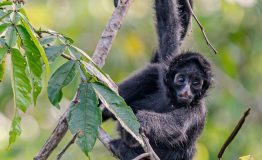
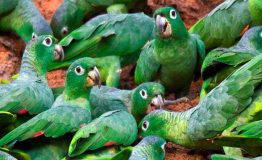
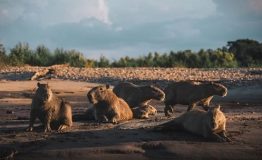
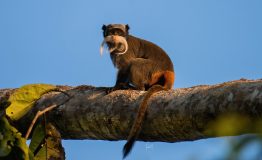
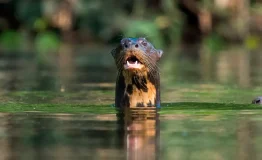
Among the most iconic species are jaguars, giant otters, giant armadillos, monkeys, caimans, and an enormous variety of birds. UNESCO records more than 200 mammal species and more than 800 bird species.
Can Manu be visited independently?
SERNANP indicates that visitors to this protected natural area are required to use authorized tour operators.
What is the best time to visit Manu?
SERNANP mainly recommends the period from April to November.
Can you see a jaguar?
It is possible, but it should never be guaranteed. Jaguars live in the wild, and sightings depend on conditions and the animal’s behavior.
What is Tres Cruces?
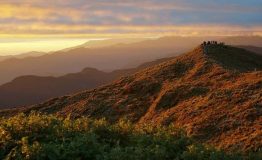
Tres Cruces is a viewpoint located in the transition zone between the Andes and the Amazon. It is famous for its sunrises over the Amazonian landscape and is known as the “Balcony of the East.”
Manu: A Journey That Begins in the Andes and Ends in the Amazon
There are places you visit.
And there are places you experience.
Manu National Park belongs to the second category.
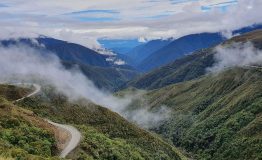
The journey begins among mountains, Andean villages, and high-altitude roads. It continues through Acjanaco and the cloud forests. Then the landscape becomes increasingly green and humid until you reach the great rivers of the Amazon.
- Along the way, travelers discover that Peru does not end in the Andes.
- On the other side of the mountains, a completely different world begins.
A world of rivers, giant trees, colorful birds, monkeys, caimans, otters, and forests that still hold secrets for science.
That is why, more than just a simple excursion, traveling to Manu is an opportunity to understand Peru’s enormous natural and cultural diversity.
Manu does not need to be tamed to be enjoyed. It needs to be explored with respect.
And perhaps that is the best way to discover one of Peru’s most extraordinary natural territories.
- Essential Information Before Traveling
- Location: Cusco and Madre de Dios, Peru.
- Area: 1,716,295.22 hectares.
- UNESCO recognition: World Heritage Site since 1987.
- Recommended season: April to November.
- Rainy season: December to March.
Highlights along the route: Paucartambo, Acjanaco, Tres Cruces, Pilcopata, and different tourist sectors of Manu.
Type of experience: Nature, biodiversity, wildlife observation, photography, hiking, river navigation, and responsible tourism.
Important: Access conditions, authorized areas, opening hours, and fees may change. Always check the official SERNANP information before planning your trip.





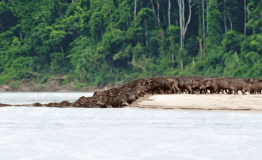




Review Manu National Park Peru.