Full 1
MANU TOURS
MANU TOUR ZONE RESERVED 4 DAYS
Full 1
previous arrow
next arrow
Shadow

Sandoval Lake

SANDOVAL LAKE:

Sandoval Lake National Reserve.

It is a tourist destination and paradise that is most visited by nature lovers, which is the Sandoval Lake Reserve,

located in the Madre de Dios River Basin. Lake Sandoval has a beautiful mirror of very clear crystalline water, it

has 127 hectares. Sandoval lake is very surrounded by many palm trees of different species

, full of birds such as macaws, herons, cormorants. Eagles, kingfishers and the prehistoric bird (shansho), river

otters, turtles, caiman and dwarf caiman and different species of monkeys such as the friar capuchin, musmuki,

emperor, spider and howler monkeys, and a variety of reptiles, batrachians, amphibians, insects,

butterflies and many mammals, Lake Sandoval natural paradise of biodiversity

Entrance to Lake Sandoval.

To enter the Sandoval Lake reserve, we have to register at the checkpoint with their respective passports and

guides or companies that provide the service.

Hike along the Sandoval Lake trail.

From the control post, walk along a boarded path 3 km from the pier, which includes a visit to the Interpretation

Center and where there are numerous species of wild flora and fauna.

Sandoval Lake Ride in a rowing cone.

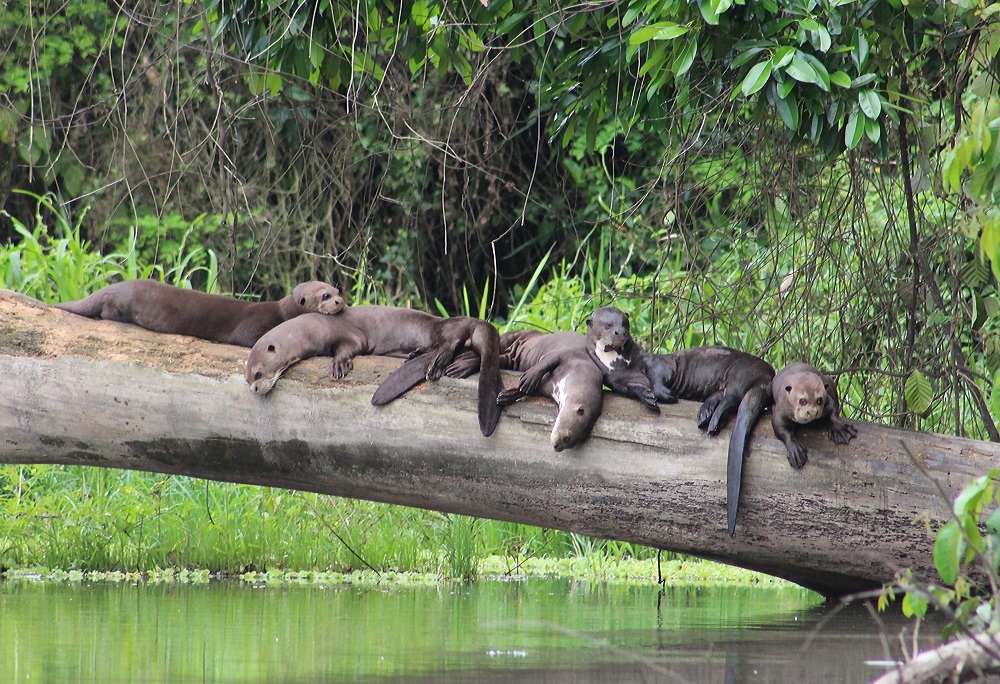
The walks or tour that are carried out in a rowing canoe. that has the capacity of 8 people, observing the wild

fauna. How it is inhabited by a large family of otters that it observes hunting and others on the logs of trees

basking in the sun and a variety of turtles basking on logs or fallen trees that are in the middle or on the edges of the lake.

Observation tower.

In the Sandoval Lake reserve we can appreciate an observation tower for a panoramic view and take the best

photographs of this Sandoval Lake, countries like sunrise and sunsets that are magical and the rides in our canoe.

Tambopata river basin upstream, we can see different lakes that are very important for the flora and fauna.

1: Coco Cocha Lake, which is located 2 hours from Puerto Maldonado, to get there we have to travel upstream

from the Tambopata reserve. It has a very incredible flora and fauna and more endemic species. How to observe

river wolves, birds and many mammals in their natural habitat. TOUR AMAZON  PERU

Tambopata river camping.

For those who love adventure, want to explore incredible flora and fauna, doing fishing, hiking trails and lakes in

the middle of the jungle. We have many opportunities to observe mammals and reptiles up close.

To the Tapir, anaconda, family of capybaras, caimans, monkeys and the king of the jungle (jaguar) that we mostly

observe on the beaches sunbathing or waiting to hunt their prey,

camping to spend the night on the beaches

del rio tambopata magical adventures. Just listening to the sounds of the forest, birds, animals and including the

noisy howler monkey, which is in charge of transporting the visitor to a magical dream and full of natural life that the Amazon jungle has

The macaw clay licks of the Tambopata Reserve.

This lick (mineral salts) is the main attraction for visitors, this place is very special as it is located on the edge of

the Tambopata River. where animals come to eat like deer, wild pig The wild boar, monkeys, Tapir and many

birds, especially the macaws, the 7 species, are clay licks or called mineral salts, have certain types of nutrients.

Clay licks are natural and are found in the clayey soils of a virgin forest where there is not much contact with humanity.

Show of the macaws in the clay licks of Tambopata.

The Chuncho clay lick is located to the left of the Tambopata river, 4 hours by river beyond the sea at Sentenciados

lakes, Colorado and a clay lick one and a half further on. The latter is considered the largest clay lick known in the

entire Peruvian Amazon. Sandoval Lake.

Also licks in La Torre A mammal clay lick just 15 min away by the La Torre and Nas river, peccaries and deer. A

parrot lick, a 5 min control job, with hundreds of parrots to dawn Finally,

SAKE SANDOVAL HOSTEL:

The great vastness and impenetrability of the Amazon basin has protected its diverse flora and fauna in this

Amazonian sandoval lake from the outside world since time immemorial. In its depths there are native peoples

who have never had contact with outside civilization. As the 21st century humbly dawns on this enticing expanse

of jungle territory, the abundance of The natural resources it contains, from oil to ranch land, threatens and

possibly changes it forever. The  Amazon jungle Lake Sandoval here comprises 50% of the nation, yet only 5% of Peruvians’

Lake Sandoval wildlife live in it.

Stretching from below the eastern flank of the Andes for thousands of kilometers to the Atlantic Ocean, this desert

has long been synonymous with the word “adventure” and Peru’s portion has been judiciously preserved.

More types of plants flourish here in a single hectare of rainforest than in any other European country. Some of

the world’s most diverse nature reserves the Amazon’s Lake Sandoval beckons, making it one of the continent’s top

wildlife viewing spots.

Divided into three main areas,

Sandoval Lake in the Peruvian Amazon not only offers a mix of bird and animal watching, jungle treks, and river

life, but also a dash of raucous urban life in the rainforest. There are only three towns of any size Pucallpa can be

reached by a paved road, Puerto Maldonado

It is accessible mainly by dirt roads and Iquitos is connected to the rest of Peru only by water and air. This lush

region begs the attention of adventure seekers, but it also begs for protection. Its natural wealth also attracts loggers,

energy companies, slash-and-burn farmers, and developers.

This is a border country. Travel is hard, but the rewards are limitless: making your way through rugged roads,

raging rivers and overgrown roads, you will feel like the first explorers who brought attention to this region in Puerto

Maldonado Sandoval Lake

LAKE SANDOVAL – VIDEOS – TRIPS TO THE JUNGLE OF MANU

Amazon Birding Peru

Amazon Birding Peru

PERUVIAN RAINFOREST  AMAZON BIRD

We have discovered 16 new species of birds in the Amazon Birding Peru over the past 10 years. New additions to the region bird cover a wide range of bird families and include the discovery of a bird of prey south of the Peruvian Amazon.

Birds of the Amazon in 2002 the cryptic wild falcon (Micrastur mintoni) was discovered. This Brazilian species

has bright orange skin around your eyes. It is assumed that the total population of this bird is great, considering its wide distribution, but overall little about this new species of Amazons known.

In 2007, a new bird of the Peruvian Amazonia described. The alitorcido rufous or rufous-fl Autin (Cnipodectes superrufus) has a multitude of variations in their colorful reddish-brownish.

Despite the extensive ornithological research has been conducted in the southeastern region of Madre de Dios, had

not detected this species, largely due to the inaccessibility of their natural habitat. The species is restricted to

the spiny thickets of bamboo (Guadua weberbaueri) reaching five meters in height, a little studied habitat of the Amazon bird.

Originally this bird had been observed only in a few sites in Madre de Dios- Amazon Birding Peru .

  In a nearby region. The known distribution of bird 3400-89000 km2 dominated by bamboos found in Madre de

Dios (Peru), Pando (Bolivia) and Acre (Brazil) forests Then spread; latter area includes the Manu National Park.

Birds of the Amazon according to scientists, the Rufous alitorcido is probably the least abundant of all bamboo

specialist birds in Amazonia. Your risk of extinction in the short term is low, but recent development projects, including the paving of the Inter-Oceanic

Highway will increase the number of human settlements and habitat destruction in the region. In addition, the

socio-economic value of bamboo and the growing tendency to harvest it suggests the extent of suitable habitat for the species may decrease in the future.

It is considered that the perlite Iquitos (Polioptila clementsi), discovered in 2005, is now critically endangered.

Also in the Peruvian Amazon, this new bird discovered in Allpahuayo Mishana-National Reserve, just west of Iquitos in the Peruvian region of  Amazon Bird Manu Jungle Trips .

Loreto Amazon Birding Peru .

Avistarla is rare in white-sand forests they inhabit. In surveys of available habitats within the Reserve are located only fifteen couples. And, since its discovery, every year seems to be more difficult to locate the species. The

species is in real danger of extinction due to its restricted distribution, its extremely small population and deforestation that occurs in the area.

Clearing for agriculture, facilitated by government incentives to promote the colonization of the land around

Iquitos, like forest clearing within a national reserve to boost the construction and fuelwood and charcoal vegetal56 continue to threaten the available habitat Amazon BirdThe ancient forests varillales, slow growth and habitat par excellence Polioptila clementsi are presented in particularly quartzite soils deficient in nutrients, and may never be able to regenerate if destroyed.

Amazonian forests growing on white sand and other nutrient-deficient soils ornithological saved many surprises.

Some years earlier, in 2001, another new species, the tyrant of Messana (Zimmerius villarejoi) described forest again white-sand beach near Iquitos in the Peruvian region of Loreto in the Peruvian jungle.

Among the many birds of the Amazon parrots

are often the most spectacular in their color. The bald parrot (Pyrilia aurantiocephala, originally known as Pionopsitta aurantiocephala), a member of the family of true parrots, caused a sensation when it was reported in 2002,

mainly because it is difficult to believe that such a large and colorful bird could have passed unnoticed in the world. As its name implies, the species has an amazing bald head, devoid of feathers, but other than that is a very colorful bird.

Presents an extraordinary range of colors: “orange head” Live yellowish green nape parrot green body with greenish wings bathed ultramarine blue, cyan, orange, emerald green and scarlet; Orange and yellow legs.

This parrot has been observed only in a few locations in the lower Rio Madeira and Tapajós rivers high in the Brazilian Amazon. Currently it has been only two habitat types and in a relatively small area.

Scientists say that although the region in which collected specimens Pionopsitta aurantiocephala is mainly

dedicated to ecotourism, nearby regions near the headwaters of the Manu Jungle Trips .

Tapajós River and across the southern Amazon Birding Peru .

are constantly threatened by the destructive activities of logging companies in the Peruvian jungle bieding . In lists, the

species is listed as “near threatened” because its population is small and moderately declining due to habitat loss in the birds of the Amazon.

In 2005 a new species of parakeet, Aratinga pintoi, was found in the Amazon River basin. Chest parrot sulfur was found, as the species is commonly known, only in open areas with sandy soils in Monte Alegre, on the north bank of the lower Amazon River, State of Pará, Brazil.

Its plumage is splendid colors is adorned with a green crown, orange front, yellow back mottled with green little

points, sulfur-colored chest and the tips of their wings deep blue. Initially it was believed that the juvenile form of another species or a hybrid of two species,

but surprisingly, scientists have been collecting, examining and identifying the wrong kind from the early twentieth century. Currently, Aratinga pintoi is a fairly common bird in Monte Alegre, easily located along the

main roads in groups of up to ten individuals, and flying over the city.

However, as is usual with new parrot species, scientists

now fear that farmers will soon begin to get and market these birds through illegal markets. Some scientists are

concerned not only for the preservation of the Amazon recently described birds, endangered and threatened, but mainly by “taxa forgotten.”

Many species are desperately waiting for some dedicated ornithologist or an employee of a South American

museum, often poorly funded, spend their own time and resources to formally describe the birds, while there is also a huge

demand for ecological studies to better understand and define the state of threat that are currently a number of species for which there are insufficient data. In a race against time, ornithological research to properly describe

the complex and rich avifauna of this planet is lagging behind the pace at which the region is developed, and many species are already endangered birds of the Amazon. Manu Jungle Trips .

PERUVIAN AMAZON:

The Peruvian Amazon is the largest rainforest on Earth. It is known for its unique biodiversity, with wildlife including jaguars, river dolphins, manatees, giant otters, capybaras, harpy eagles, anacondas and piranhas.

The large number of habitats, unique in its kind in this region hide important globally abundant species, scientists are discovering an incredible rate.

Between 1999 and 2009, have been discovered at least 1,200 new species of plants and vertebrates in the Amazon Biome (see map on page 6, which shows the extent that this biome covers).

The new species include 637 plants, 257 fish, 216 amphi bios, 55 reptiles, 16 birds and 39 mammals. Furthermore,

they have found many new species of invertebrates. Considering the huge number of invertebrate species, this report does not cover in detail.

The conservation of the Peruvian Amazon is essential for the future of humanity:

The multiple threats facing the Peruvian Amazon are increasing the pressure on natural resources and

environmental services on which millions of people depend.

These important threats are linked, ultimately, to international market forces and the everyday practices that depend on the Amazon for their goods and services.

The Peruvian Amazonia affects weather patterns worldwide and helps to stabilize the climate. Therefore it is vital

to conserve Amazonian forests if we are to address global climate change.

Any development in the Amazon should be managed in an integrated and sustainable manner, so that the key attributes and ecological functions of the area are maintained. Historically, each country in the region has only

considered part of the Amazon that is within their national borders, worrying about the benefits it provides to its citizens.

This has resulted in a fragmented policy-

making process, as well as the uncontrolled exploitation of goods and services in the Amazonia Manu Birding . This process has also overlooked the viability of the region as a whole.

Growth in key sectors such as agriculture, livestock and energy sectors, exacerbate the negative effects of this

approach. These economic sectors are expanding in response to global demand. Depend on investment in infrastructure development, such as those contained in the IIRSA.

These are the forces that currently form the basis for the “integration” of the Amazon in national and global economies. They are generating short-term revenue and improving national economic indicators. But should

incorporate consideration of environmental and social costs of such developments on the axis of development planning.

Around the world, are marginalized or minority groups within society, including indigenous peoples and rural communities, who suffer the environmental and social impacts of unsustainable development.

The Amazon is no exception.

The conservation of the Amazon is, first, crucial for the survival of the 2.7 million people in more than 320

indigenous groups have relied on their wealth for centuries. In this context, the fate of the Amazon depends,

ultimately, a signifi cant change in the way we understand the Amazonian countries development.

It is vital to manage sustainably the Amazon as a functional whole.

The desire to protect the functionality of the region for the common good must become the central task of Amazonian nations.

The responsible management of the Amazon

Peruvian Jungle Amazon

Peruvian Jungle Amazon

The Amazon rainforest in Peru, also known as the Peruvian jungle Amazon, is a vast and diverse natural region located in the northern part of the country, which is part of the Amazon River basin. It is one of the richest areas of

biodiversity in the world, hosting a wide variety of flora and fauna species, many of which are endemic and found only in this region.

Some highlights of the Amazon jungle in Peru include:

Biodiversity: The Peruvian Amazon is home to an astonishing diversity of species, including thousands of species of plants, mammals, birds, insects, and fish. Many of these species are unknown to science and have yet to be discovered.

Reserves and natural parks: Peru has established several reserves and natural parks to protect and conserve the rich biodiversity of the region. Among them is the Manu National Park, a Biosphere Reserve recognized by

UNESCO.

Indigenous Communities: The Peruvian Amazon is home to diverse indigenous communities that have lived in

harmony with nature for centuries. These communities have vast knowledge about medicinal plants and the sustainable way of life in the jungle.

Ecotourism: The Amazon jungle in Peru attracts many tourists interested in bird watching, canoeing on the rivers, jungle treks, and the opportunity to learn about indigenous cultures and environmental conservation.

Conservation Challenges: Despite its ecological importance, the Peruvian Amazon faces threats such as deforestation, illegal mining, poaching, and the expansion of agriculture. The conservation of this region is a crucial

issue to protect its rich biodiversity and ensure long-term sustainability.

It is important to remember that the Amazon is a large and complex region, and each part of it may have specific characteristics and challenges. If you are looking for information on a particular article about the Amazon rainforest

in Peru, I recommend that you do an online search using relevant keywords to get up-to-date and accurate information

Peru is a country with a population of almost 31 million people.

The Peruvian Jungle Amazon represents 60% of the national territory but is home to only 9.41% of the population. It is the territory with the greatest ethnic and linguistic diversity in Peru. There are five regions located in the Amazon

Peruvian (also called Peruvian jungle): Amazonas, Loreto, Madre de Dios, San Martin and Ucayali. Although the Peruvian Amazon is rich in natural resources,

this wealth has not translated into us being its inhabitants rainforest manu jungle. Activities such as the extraction

of rubber, oil and gold have exposed the Amazonian population to exploitation, migration and diseases of the western world. Accessing this area by land is difficult, if not impossible.

Providing basic health, education, protection, and water and sanitation services are some of the main challenges facing the Peruvian State. manu jungle amazon tour jungle trips

The exclusion of the communities of the Peruvian Amazon.

Amazon is reflected in the situation of children and adolescents. For example, chronic malnutrition affects 4 out of

100 children under the age of five in Lima (capital of Peru) compared to 29 out of 100 in the rural regions of the Amazon.rainfores jungle trips

The inequities between children who live on the coast, in the mountains and in the jungle are surprising, but they

are still higher when the comparison is made between the urban coast and the rural jungle. jungle trip 68% of

indigenous children and adolescents in the Peruvian Amazon live in poverty. three out of five Amazon regions

have the highest rates of multidimensional child poverty: Loreto (80%), Ucayali (77%) and Amazonas (76%). manu jungle trips

UNICEF  .

works in these three regions. Child Survival and Development, Education, Protection, Public Policies and

Prevention and Risk Management are the main areas of work of UNICEF for children and adolescents in Peru.
Amazon. manu jungle trips


Amazon Wildlife Nature

Amazon Wildlife Tours in Peru: Discover the Biodiversity of the Amazon Rainforest

  Amazon Wildlife Nature : Imagine traveling along a winding jungle river, listening to the calls of tropical birds, watching butterflies flutter through the forest, and discovering wildlife hidden among giant trees. An Amazon wildlife tour in Peru offers an extraordinary opportunity to experience one of the world’s most fascinating natural environments.

From colorful macaws and elusive mammals to caimans, river turtles, and remarkable tropical plants, the Amazon rainforest is a living world of interconnected ecosystems. For nature enthusiasts, photographers, birdwatchers, and responsible travelers, exploring the Peruvian Amazon is more than a vacation: it is an opportunity to appreciate biodiversity and understand why rainforest conservation matters.

One of the most remarkable destinations for this experience is the Manu region of southeastern Peru, where the Andes, cloud forests, and lowland Amazonian rainforest form a spectacular ecological landscape.

Whether you are traveling from another part of Peru or arriving from abroad, this guide will help you discover Amazon wildlife, understand the best time to visit, prepare for your adventure, and plan a meaningful journey into nature.  Manu Amazon Wildlife 

Ready to explore the Amazon? Discover our Amazon and Manu wildlife tour options or contact our team to request a personalized itinerary.

1. Why Choose an  Amazon Wildlife Nature?

The Amazon rainforest is one of the world’s most important centers of biodiversity. Its rivers, wetlands, flooded forests, and dense vegetation support an extraordinary variety of plants, birds, fish, reptiles, amphibians, and mammals.

Peru offers several ways to experience this environment, but the Manu region stands out because of its remarkable transition from the Andes to the Amazon basin.

Manu National Park is a UNESCO World Heritage Site, recognized for its exceptional natural value. The protected landscape encompasses different elevations and habitats, creating opportunities to observe an impressive variety of wildlife. UNESCO: Manu National Park.

An Amazon wildlife tour can combine several rewarding experiences:

  • Guided walks through tropical rainforest.
  • Wildlife observation along rivers and forest trails.
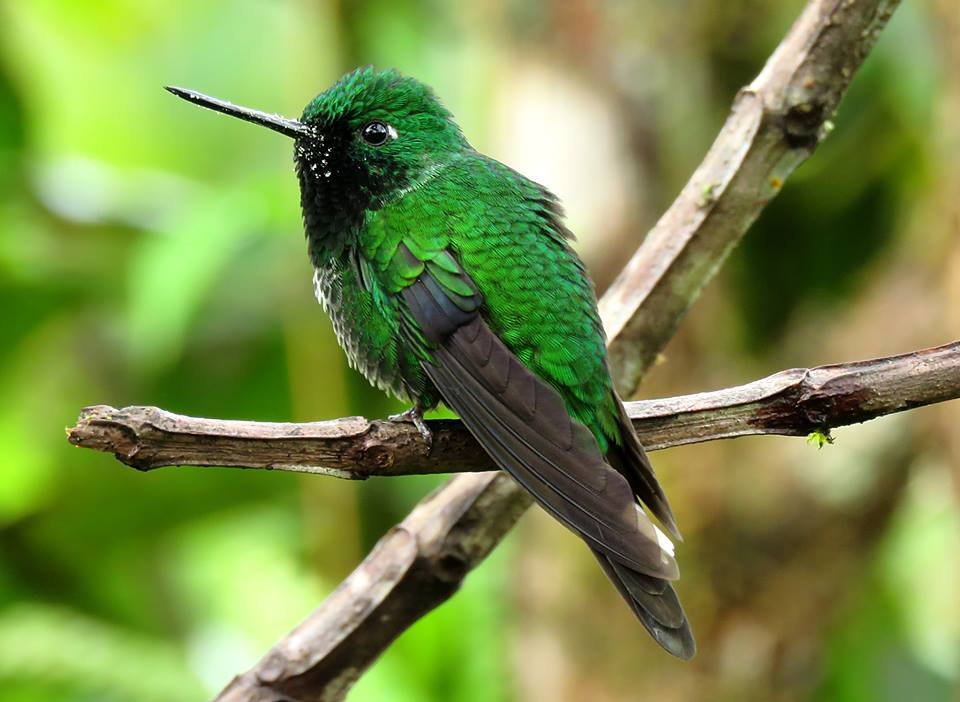
  • Birdwatching for macaws, toucans, hummingbirds, and other tropical species.
  • Photography excursions focused on wildlife and natural landscapes.
  • Nocturnal walks to discover frogs, insects, and other nighttime species.
  • Learning about rainforest ecology and conservation.
  • Cultural experiences arranged respectfully with participating local communities.

Every excursion is different. Wildlife sightings depend on the season, weather, habitat, animal behavior, and the skill of your guide. The reward is not simply seeing a particular animal, but learning how the Amazon’s extraordinary ecosystem functions.

2. Discover : A Biodiversity Paradise Between the Andes and the Amazon Wildlife Nature

Manu is one of Peru’s most remarkable destinations for travelers interested in nature, wildlife photography, and ecological discovery.

Its landscapes extend from high Andean environments through mist-covered cloud forests to warm lowland rainforest. This variation in elevation creates numerous habitats, each with its own plants, wildlife, and ecological characteristics.

During a journey through the region, travelers may encounter:

Cloud forests: Misty mountain forests filled with mosses, orchids, ferns, and colorful birds.
Lowland rainforest: Dense tropical vegetation, enormous trees, lianas, and a rich diversity of animal life.
Riverbanks and wetlands: Important habitats for waterbirds, turtles, caimans, and other aquatic wildlife.
Forest lakes and oxbow lakes: Quiet waterways where patient observers may spot giant otters and other wildlife.
Clay licks: Natural mineral-rich sites where certain parrots and macaws gather to feed.

The protected Manu landscape is home to jaguars, giant otters, monkeys, deer, macaws, and many other species. However, no responsible tour operator can guarantee a sighting of a particular wild animal.

A knowledgeable local guide helps travelers understand animal behavior, recognize tracks and calls, and observe wildlife without disturbing its natural activities.

For travelers seeking an immersive experience, a guided Manu jungle tour can offer much more than a conventional sightseeing trip.

3. Amazon Wildlife Nature : Animals You May Discover

The Amazon is home to extraordinary wildlife, much of which remains difficult to observe in the dense vegetation. Some animals are relatively easy to spot in suitable habitats, while others require patience, favorable conditions, and a little luck.

3.1 Piranhas: Fish of the Amazon Rivers

Piranhas are freshwater fish known for their strong jaws and sharp teeth. Several species inhabit Amazonian rivers, streams, and lakes.

Although piranhas have a fearsome reputation, their diets and behavior vary by species. Many feed on smaller fish, insects, fruits, seeds, or other available food sources.

Their ecological role is important because they participate in aquatic food webs and contribute to the balance of freshwater ecosystems.

During a guided Amazon excursion, travelers may learn about piranhas and other fish through local ecological explanations or supervised fishing activities where permitted.

Photography tip: If observing piranhas, focus on the surrounding aquatic environment, water reflections, and vegetation. Underwater photography requires appropriate equipment and conditions.

3.2 Caimans: Reptiles of the Amazon Wildlife Nature Wetlands .

Caimans are crocodilian reptiles found in many Amazonian waterways. Depending on the species and habitat, they may be seen resting along riverbanks, floating in quiet water, or remaining nearly invisible among vegetation.

Their eyes and nostrils can sometimes be seen above the water while the rest of the body remains submerged. This adaptation helps them observe their surroundings while remaining inconspicuous.

Caimans are important predators in aquatic ecosystems. Their diets vary by species and size and may include fish, crustaceans, insects, and other animals.

Black caimans are among the impressive reptiles that inhabit the wider Amazon basin.

Photography tip: Low-light excursions can offer opportunities to observe the reflective eyes of caimans. Follow your guide’s instructions and maintain a safe distance, especially when traveling by boat at night.

3.3 Anacondas: Powerful Snakes of the Amazon Wildlife Nature .

Anacondas are among the largest snakes in the world. Green anacondas, in particular, are associated with wetlands, marshes, slow-moving waterways, and flooded habitats across parts of tropical South America.

Their coloration helps them blend into vegetation and muddy environments. Their eyes and nostrils are positioned high on the head, allowing them to remain mostly submerged while observing their surroundings.

Anacondas are nonvenomous constrictors. They capture prey and use their powerful bodies to restrain it before swallowing it whole.

These snakes are difficult to find in the wild and should never be handled or approached for a photograph.

Photography tip: If you encounter an anaconda during a guided excursion, prioritize a clear view from a safe distance rather than attempting to move vegetation or get closer.

3.4 Giant  Amazon Wildlife Nature River Turtles

Large freshwater turtles are another fascinating component of Amazonian aquatic ecosystems.

The giant South American river turtle (Podocnemis expansa) is one of the largest freshwater turtle species in the region. Females leave the water to nest on suitable sandy riverbanks, where they lay their eggs.

These turtles feed on plant material and other foods, depending on their life stage and local conditions. Their eggs and hatchlings face threats from natural predators and human activities.

River turtles are important reminders of the close relationship between aquatic habitats, forest vegetation, and the seasonal rhythms of Amazonian rivers.

Photography tip: Use a telephoto lens or photograph turtles from a boat when conditions allow. Never disturb nesting sites, handle hatchlings, or interfere with animals entering or leaving the water.

3.5 Macaws, Toucans, and Other Tropical Birds

For many travelers, birdwatching is one of the highlights of an Amazon wildlife tour.

The region’s birdlife includes colorful macaws, toucans, parrots, hummingbirds, and many less conspicuous species that reveal themselves through their calls.

In suitable locations, clay licks may attract groups of parrots and macaws. These gatherings can provide remarkable opportunities to photograph birds interacting with their natural environment.

Early mornings are often productive for birdwatching because many species become active around dawn. Nevertheless, weather, seasonal changes, and local food availability influence bird activity.

Photography tip: Bring binoculars and a telephoto lens if you have them. Learn to recognize bird calls and allow your guide to help locate species without using playback or other techniques that might disturb wildlife.

3.6  Amazon Wildlife Nature – Monkeys, Giant Otters, and the Elusive Jaguar –

The Amazon’s mammals are among its most fascinating inhabitants.

Different monkey species move through the forest canopy, feeding on fruits, leaves, insects, and other foods. Their calls can reveal their presence long before they become visible.

Giant otters inhabit suitable rivers and lakes, where they hunt fish and often live in family groups. With patience and favorable conditions, travelers may observe them swimming, feeding, or communicating.

The jaguar, one of the Amazon’s most iconic predators, is much more elusive. It occupies a variety of forest and wetland habitats and plays an important role in maintaining ecological balance.

A jaguar sighting is never guaranteed. Responsible wildlife tourism recognizes that an animal’s well-being is more important than obtaining a photograph.

4. Understanding the Amazon River and Rainforest Seasons

The Amazon rainforest is shaped by rainfall, river levels, sunlight, and seasonal changes.

The Amazon River is one of the world’s great rivers, draining a vast basin across South America. Its waterways connect forests, wetlands, and communities while supporting an immense variety of aquatic and terrestrial life.

In many parts of the Amazon, rising water levels inundate areas of forest, creating seasonally flooded habitats. When water levels fall, riverbanks and beaches may become more exposed.

These changes influence animal movement, food availability, boat access, and wildlife observation opportunities.
Rainy Season

The rainy season generally brings frequent rainfall, lush vegetation, and rising water levels. In the Manu region, the main rainy period is commonly associated with December through March, although weather conditions vary.

Potential advantages include:

  • Vibrant green landscapes and dramatic rainforest scenery.
  • Opportunities to observe amphibians and insects.
  • A different perspective on flooded forest environments.
  • Atmospheric conditions for landscape photography.

Possible challenges include muddy trails, changes to transportation schedules, heavy showers, and more difficult wildlife observation in some areas.
Drier Season

The drier period in Manu is generally associated with April through November, with conditions varying from month to month.

Potential advantages include:

  • More favorable conditions for many hiking excursions.
  • Reduced rainfall during some periods.
  • Easier access to certain trails and observation areas.
  • Opportunities for birdwatching and photography in suitable habitats.

Rain can still occur, and wildlife sightings remain unpredictable.

For many visitors, May through October is a practical period to consider, particularly when access and outdoor activities are priorities. Official destination guidance identifies April through November as a recommended visiting season. See SERNANP’s Manu National Park visitor information.

The best travel dates ultimately depend on your interests, itinerary, physical preferences, and the particular area you plan to visit. Amazon Wildlife Trips 

5. Amazon Wildlife Nature Photography: How to Prepare

The Amazon offers extraordinary photographic possibilities, from wide rainforest landscapes to intricate details of insects, flowers, and animal behavior.

However, photographing wildlife in a tropical environment requires preparation, patience, and respect for the natural world. Trvael to Machupicchu
Essential Photography Equipment

Consider bringing:

  • A camera with good low-light performance.
  • A telephoto lens for birds and distant animals.
  • A versatile zoom lens for landscapes and general wildlife photography.
  • Extra batteries and memory cards.
  • Waterproof bags or protective covers for cameras and lenses.
  • A microfiber cloth for humidity, condensation, and rain.
  • Binoculars for locating wildlife before taking photographs.
  • A headlamp with a red-light option for appropriate nighttime activities.

A smartphone can also produce excellent images of landscapes, plants, insects, and close-up details when conditions are favorable.

Best Practices for Wildlife Photography

Prioritize animal welfare. Never chase, corner, feed, touch, or provoke an animal to obtain a photograph.

Use natural light. Early morning and late afternoon can offer attractive light, although the dense forest canopy may remain dark even during the day.

Be patient. Remaining quiet and observing your surroundings often produces better results than moving quickly between locations.

Respect your guide’s instructions. Some habitats and observation sites have special access rules designed to protect wildlife.

Prepare for moisture. Humidity and sudden rain can damage equipment. Store cameras carefully and allow equipment to acclimatize when moving between cold, air-conditioned environments and humid outdoor conditions.

Capture the complete experience. Photograph landscapes, forest textures, leaves, flowers, river reflections, and the work of conservation alongside wildlife portraits.

Responsible photography is not simply about collecting impressive images. It is about documenting nature without compromising the animals and habitats that make the experience possible.

6. Responsible Amazon Wildlife Nature Tourism: Travel That Respects Nature

The Amazon is both a biodiversity treasure and a living landscape that supports Indigenous peoples and local communities.

Responsible tourism can help travelers appreciate this relationship while supporting conservation and local livelihoods.
Choose Authorized and Responsible Operators

When visiting protected areas, check the access requirements for your chosen route and select operators authorized to conduct the relevant activities.

Ask questions about guide qualifications, environmental practices, group sizes, waste management, and how the itinerary supports local communities.

For visits to the Manu River and other restricted sectors, follow the applicable rules of the protected area and its management authority.

Respect Wildlife and Natural Habitats

Never feed wild animals, touch them for photographs, or encourage them to approach people.

Remain on designated trails, respect observation distances, and follow instructions from guides and park rangers.

Avoid loud noises and unnecessary disturbance, particularly around nesting sites, animal shelters, and feeding areas.
Reduce Your Environmental Footprint

Bring a reusable water bottle when appropriate, minimize disposable packaging, and take your waste out of natural areas when no suitable disposal facilities are available.

Use established trails and transport routes instead of creating new ones.

Consider accommodations that demonstrate credible environmental practices rather than relying only on sustainability claims in their marketing.

Support Local Communities Respectfully

Choose locally guided activities and locally produced services when available.

Ask permission before photographing people, respect cultural protocols, and follow community guidance about where visitors may travel.

Indigenous communities are not tourist attractions. Their knowledge, rights, and decisions about tourism must be respected.

The goal of responsible Amazon tourism is to create meaningful experiences while minimizing harm and recognizing the people who live in and care for these landscapes.

7. Suggested Amazon Wildlife Nature Program: Exploring Manu

The following is a sample itinerary framework for travelers who want to combine rainforest exploration, wildlife observation, photography, and environmental learning.

The exact route, duration, accommodation, and activities should be adapted to current access conditions, permits, the chosen sector, and the operating arrangements of your tour provider.

Day 1: Journey from Cusco Toward the Cloud Forest

Begin your adventure in Cusco and travel through the Andean landscape toward the Manu region.

As the road descends, the environment gradually changes from highland scenery to humid mountain forest. Depending on the route and conditions, you may encounter spectacular viewpoints, waterfalls, orchids, and opportunities to observe birds.

Your guide introduces the ecological transition from the Andes to the Amazon and explains how elevation influences biodiversity.

Experience highlights:

  • Scenic stops and landscape photography.
  • Introduction to cloud forest ecology.
  • Birdwatching opportunities along the route.
  • Arrival at your planned accommodation.

Day 2: Discover the Upper Amazon Wildlife Nature  and Forest Trails

Continue toward your designated rainforest destination, following the transport arrangements included in your itinerary.

Explore the forest with a local guide, learning to identify tropical plants, insects, animal tracks, and bird calls.

Depending on the location and conditions, the day may include forest walks, river travel, or wildlife observation from designated viewpoints.

Experience highlights:

  • Guided rainforest walks.
  • Introduction to tropical plant diversity.
  • Wildlife photography and birdwatching.
  • Learning about forest ecosystems and conservation.

Day 3: River Excursions and Wildlife Observation

Spend time exploring suitable waterways and forest habitats.

Boat excursions may offer opportunities to observe riverbank birds, turtles, caimans, and other animals. Some itineraries may include designated lakes or wildlife observation sites where permitted.

Your guide can explain the relationship between seasonal water levels and animal behavior.

Experience highlights:

  • Guided river excursions.
  • Wildlife observation from a safe distance.
  • Photography of birds and aquatic habitats.
  • Discussion of river ecology and seasonal changes.

Day 4: A Deeper Experience of Amazon Biodiversity

Dedicate the day to exploring different rainforest habitats and learning more about their wildlife.

Depending on the itinerary, activities may include an early-morning birdwatching excursion, guided walks, an observation platform, or a supervised nighttime walk.

Your guide helps identify the species encountered and explains their ecological roles.

Experience highlights:

  • Morning birdwatching.
  • Forest photography.
  • Learning about nocturnal wildlife.
  • Understanding conservation challenges and responsible tourism.

Day 5: Return Journey and Reflection

Begin the return journey according to the transport schedule and route included in your program.

Use the journey to review your photographs, reflect on the species observed, and consider how responsible travel can contribute to protecting rainforest ecosystems.

Depending on the selected route and transport arrangements, the full Manu experience may require additional days. Longer itineraries are often more suitable for travelers who want to reach remote lowland habitats.

Important: This five-day outline is a planning concept, not a guaranteed departure itinerary. A trip reaching the Manu River sector may require a longer program, and actual travel times depend on road conditions, river levels, authorized access, and logistics.

Interested in this experience? Request a customized itinerary based on your travel dates, wildlife interests, photography equipment, preferred comfort level, and available time.

8. How to Prepare for Your Amazon Wildlife Adventure

Good preparation makes a rainforest journey more comfortable and helps you enjoy outdoor activities safely.
What to Pack

  • Lightweight, breathable clothing that dries quickly.
  • Long-sleeved shirts and long trousers for forest walks.
  • Comfortable walking shoes or hiking boots suitable for wet conditions.
  • A lightweight waterproof jacket or poncho.
  • Insect repellent and suitable sun protection.
  • A hat and reusable water bottle.
  • Binoculars and photography equipment, if desired.
  • Personal medication and a basic personal first-aid kit.
  • Waterproof bags for electronics and important belongings.
  • A small backpack for daily excursions.

Ask your tour operator for a destination-specific packing list before departure.
Health and Safety

Rainforest environments can involve heat, humidity, insects, uneven trails, and changing weather conditions.

Consult a qualified healthcare professional or travel medicine clinic before departure about recommended vaccinations, malaria prevention where relevant, and other destination-specific health precautions.

Follow local guidance about water, food safety, insect protection, and any required medical precautions.

Inform your tour operator about mobility limitations, dietary requirements, allergies, and relevant needs before travel.

Plan Your Budget and Travel Time

The cost of an Amazon wildlife tour depends on its duration, accommodation, transport, group size, meals, permits, and included activities.

When comparing offers, check exactly what is included rather than choosing exclusively by price.

For international visitors, allow sufficient time for flights, connections, travel to the departure point, and possible delays. Travelers departing from elsewhere in Peru should also consider the distances involved in reaching the selected Amazon destination. Sandoval Lake Lodge 

9. Who Should Choose an Amazon Wildlife Tour?

An Amazon wildlife tour can suit a wide range of travelers when the itinerary matches their interests and abilities.

Nature enthusiasts: Explore rainforest habitats and learn about the relationships between plants, animals, and waterways.

Wildlife photographers: Spend time observing animal behavior and capturing the details of tropical ecosystems.

Birdwatchers: Search for macaws, toucans, hummingbirds, and other birds with the assistance of knowledgeable local guides.

Couples and small groups: Share a guided adventure focused on nature, learning, and outdoor experiences.

Families: Choose an age-appropriate itinerary with suitable accommodation, activity levels, and safety arrangements.

Responsible international travelers: Discover Peru’s biodiversity while learning about conservation and respecting local cultures.

Before booking, discuss your expectations with your tour provider. A trip designed around birdwatching may differ considerably from one focused on remote river exploration or general rainforest discovery.

Amazon Wildlife Peru Ants and Termites

Amazon Wildlife Peru Ants and Termites

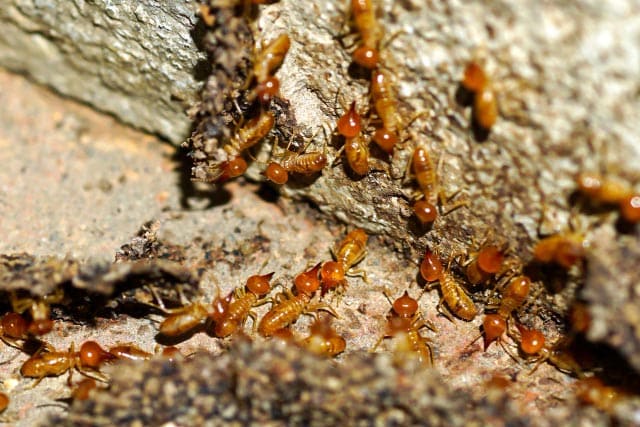
Amazonia Rainforest Termites .

These termites also play a fundamental role in the Amazon Wildlife Peru Ants and Termites as it is in the

conservation of the environment of ecology. As the investigations in recent years have been studying that these

insects are very social in their behavior and in their constructions, they are formidable agronomists. the presence of

these termites and its structures that build and have created a crucial barrier against drought and desertification in

the natural area of ​​the Amazon Sandoval Lake .

Termites in the Forest – Amazon Wildlife Peru Ants and Termites .

The termite colonies that modify their properties that are soils and by decomposing this organic matter. The main

thing is wood and litter, plus they protect these, which are very nutritious and soil moisture is very regular, all these

factors that are to maintain the balance of the tropical ecosystems of the Amazon. That protects the functioning of

the ecosystem of the environment”. Amazon Wildlife Peru Ants and Termites Most of these species of termites

erect huge mounds of hard dry earth in the forests and savannahs and And all of them they build very carefully and

well organized: and each termite mound has six neighbors, about 50 meters apart. these structures more

closely resemble a mosaic of hexagons, erected to optimize the distance between each one. These mounds of dry and

very firm earth can reach more than five meters in height, which allows plants to flourish and prevents the

definitive desertification of the soil of this Amazon.

Amazon  Manu Trips

The Manu National Pair we have numerous species and variety that inhabit this natural area called Manu National

Park Natural Paradise .

It is known that a variety of these creatures have about 30 species that were registered with more than 1,300 species

of butterflies, as they were registered. 136 of dragonflies, was known as a variety of 300 species of ants (more than 40

species were found on a single tree)

and a great variety of 650 species of beetles.

The Peruvian Amazon is one of the richest that has a great diversity of species that inhabits its natural area of the

Manu National Park (wild life of Peru),

Peruvian Amazon Insects -Amazon Wildlife Peru Ants and Termites

Every day, scientists ventured deeper into the tropical rainforest of the Maliau Basin in Borneo, surrounded by

gigantic trees and astonishing biodiversity. However, what they discovered was not just the fascinating world of the

more visible fauna and flora, but an invisible yet crucial protagonist: termites. These small insects, often

misunderstood, play a key role in the fight against climate change and the preservation of forest ecosystems.

In the majestic rainforest of the Maliau Basin, Borneo, the tallest trees in the world rise above a team of scientists led

by entomologist Hannah Griffiths. Each day, they immersed themselves more deeply in a vibrant ecosystem where

birds, insects, and animals such as the Malayan bear and the king cobra roamed the forest floor. However, their

research focused on one of the smallest and least conspicuous creatures in the forest: termites. Amazon Peru Tour

Although termites are often seen as a threat to human homes, in natural ecosystems they play a crucial role in the health of the tropical forest.

But how exactly do these insects help combat the effects of climate change? In a recent study published in Science, a

team of researchers discovered that termites not only help maintain the balance of the ecosystem, but also play a

critical role in the resilience of tropical forests against extreme climatic events such as droughts.

The Impact of Termites on Tropical Forests -Amazon Wildlife Peru Ants and Termites.

Termites are known for their ability to decompose organic material such as leaves and dead wood, which allows them

to recycle essential nutrients back into the soil. This process is vital for the health of the ecosystem, as it helps

maintain carbon balance and improves soil structure. In their study in Borneo, Griffiths’ team discovered that,

during the severe El Niño drought of 2015-2016, termites significantly contributed to the forest’s resilience by

maintaining soil moisture and supporting the growth of new plants. Trips Amazon Peru 

Termites: Vital Insects for Ecosystem Health -Amazon Wildlife Peru Ants and Termites

Despite their bad reputation for causing millions of dollars in damage to properties around the world, in tropical

ecosystems, termites are “invisible guardians” that regulate the environment and facilitate the natural regeneration

of forests. By removing termites from certain areas and observing the results, the researchers were able to see

firsthand how the presence of these insects directly affects the forests’ ability to withstand droughts and other

extreme climatic events. Manu Reserved Zone Tours 

The Crucial Role of Termites in the Climate Resilience of Tropical Forests – Peruvian Amazon Insects

Key terms related to this topic that can be naturally integrated throughout the article include: “termite,” “tropical

forests,” “climate change,” “termite ecology,” “ecological function of termites,” “drought in tropical forests,” and

“biodiversity in Borneo.”