Full 1
MANU TOURS
MANU TOUR ZONE RESERVED 4 DAYS
Full 1
previous arrow
next arrow
Shadow

Manu National Park

National Park Amazon – Peru

Manu National Park :Established: May 29, 1973
Size: 1,716,295.22 Hectares
Location: Cusco and Madre de Dios Regions, Peru

The National Park Amazon in Peru, established on May 29, 1973, is one of the most biodiverse and ecologically significant protected areas in the world. Spanning over 1.7 million hectares across the Cusco and Madre de Dios regions, this vast tropical rainforest sanctuary is home to a rich variety of flora and fauna, including rare species like jaguars, macaws, and giant river otters. The park plays a crucial role in preserving the unique ecosystems of the Amazon Basin, offering unparalleled opportunities for eco-tourism, scientific research, and conservation efforts.

This UNESCO World Heritage site is a must-visit destination for nature enthusiasts, wildlife photographers, and adventure travelers seeking to explore one of Earth’s last great wildernesses.

Core area of the Biosphere Reserve

Records Manu Jungle  Trips.

1025 : species of Birds of the  amazon nature
221 : Species of Mammals  of the rainforest nature.
1307 : Butterfly Species in jungle nature
8     : Species of Wild Felines fields  nature
15   : Primate Species in wild nature
27   : Species of Psittacines
155  :Reptile Species  nature  wildlife
300  : Species of Ants  in tropical  nature forest
650  :Species of Beetles

1,025 Bird Species

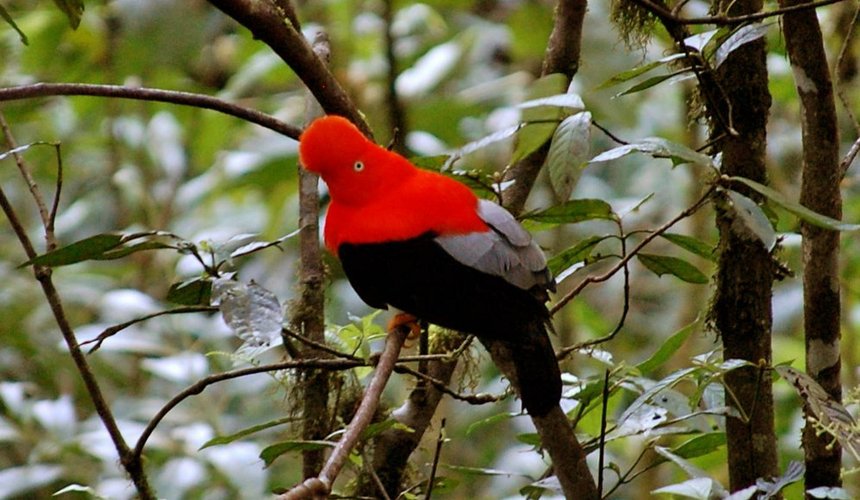
The Manu Biosphere Reserve is a birdwatcher’s paradise, with over 1,025 bird species recorded, including rare and endangered species like the Andean cock-of-the-rock and the harpy eagle. This vast array makes it one of the most important bird conservation areas in the world, attracting researchers and eco-tourists alike.

221 Mammal Species

The park is also a haven for 221 mammal species, ranging from the elusive jaguar and puma to the endangered Brazilian tapir and river otters. The diverse habitats within the reserve support both small nocturnal creatures and large terrestrial mammals.

1,307 Butterfly Species

Manu is a hotspot for lepidopteran life, with an astonishing 1,307 butterfly species. These vibrant insects, including the blue morpho and various species of swallowtail butterflies, play a crucial role in pollination and serve as indicators of the park’s health.

8 Species of Amphibians

With its diverse ecosystems, Manu National Park is home to 8 species of amphibians, including rare and endangered frogs like the poison dart frog and the titicaca water frog, both vital to the region’s ecological balance.

15 Primate Species

Manu is a primate haven, with 15 species of monkeys and apes, such as the spider monkey, howler monkey, and the endangered peruvian spider monkey. These primates are key players in maintaining the health of the forest, aiding in seed dispersal.

27 Species of Psittacines

The park is home to an impressive 27 species of psittacines (parrots), including the macaws and parakeets that are famous for their colorful plumage. These birds are not only a visual delight but also play a significant role in forest regeneration by dispersing seeds.

155 Reptile Species

Manu’s varied habitats support a remarkable diversity of reptiles, with 155 species documented. From the anaconda lurking in the wetlands to the brightly colored Amazon tree boa, these reptiles contribute to the park’s rich food web.

300 Species of Ants

Ants are essential to the ecosystem of Manu, and the reserve is home to over 300 species of ants, including unique leaf-cutting ants and army ants. These tiny creatures are vital for soil aeration and act as food for many other species in the food chain.

650 Species of Beetles

The Manu Biosphere Reserve also boasts an impressive diversity of 650 beetle species, which are crucial for nutrient cycling and maintaining the health of the forest. From glowing fireflies to giant ground beetles, they showcase the incredible variety of life within the park Jungle trips.

Conclusion:

A Biodiversity Hotspot of Global Significance
The Manu Biosphere Reserve is one of the most biologically diverse places on Earth, offering researchers and

conservationists an invaluable natural laboratory. Its vast array of species – from birds and mammals to insects

and amphibians – demonstrates the unmatched ecological value of this Peruvian treasure. Whether you are a

wildlife enthusiast, an eco-tourist, or a scientist, Manu’s core area offers a unique window into the wonders of the Amazon rainforest.

Manu National Park and Manu National Reserve – A Premier Ecotourism Destination in Peru.

Manu National Park, located in the Peruvian Amazon Macaw Clay Lick , is one of the most biodiverse protected areas in the world, offering unique ecotourism experiences for adventure seekers and nature enthusiasts. Recognized by

UNESCO as a Natural Heritage of Humanity in 1987, this expansive park is a vital part of the National System of

Protected Natural Areas (SINANPE) in Peru. The park spans the departments of Madre de Dios and Cusco,

and its Manu National Reserve offers unparalleled access to the jungle’s remarkable wildlife, lush rainforests, and pristine landscapes.

Ecotourism and Sustainable Travel in Manu National Park
Tourism within the Manu National Park is strictly regulated to preserve its extraordinary ecosystems and cultural heritage.

As part of its core objectives, the park encourages sustainable tourism that aligns with the park’s

commitment to environmental conservation. Through Manu Jungle Trips, visitors can enjoy immersive,

responsible travel experiences that highlight the region’s natural and cultural beauty.in manu jungle trips.

This tourism model supports outdoor recreation, leisure, and cultural exploration in a healthy and sustainable way.

Managed by the National Institute of Natural Resources (INRENA), the park ensures that all tourism activities follow stringent guidelines. The Ministry of Foreign Trade and Tourism (MINCETUR) of Peru works in

collaboration with regional and local governments, tourism operators, and private sectors to maintain the park’s

status as a top-tier ecotourism destination. The park’s management evaluates the safety and logistical standards of certified tourism operators, ensuring only authorized Manu Jungle Tours are conducted. These tours focus on

the lower Manu River basin, Andean routes, and other approved circuits within the park, providing an unforgettable ecotourism experience.

Tourism Regulation and Infrastructure Development

Since 1996, tourism activities in Manu National Park have been governed by specific regulations aimed at

balancing human enjoyment with environmental preservation. The Manu National Park Departmental Directive of

1998 formalized the system of activities in key areas such as the Manu Reserved Zone and Acjanaco sector, both known for their stunning landscapes and abundant wildlife. Since 2001, following the Regulation of the Law of

Protected Natural Areas, efforts have intensified to adapt tourism operations to the park’s evolving ecological requirements.

This includes regulating infrastructure, ensuring that tourism facilities like lodges meet environmental standards, and overseeing the operation of authorized river transport services.

A Global Ecotourism Hub in the Vilcabamba Amboró Conservation Corridor

Manu National Park is part of the Vilcabamba-Amboró Conservation Corridor, a critical ecological zone connecting the Andes to the Amazon manu  jungle . The departments of Madre de Dios and Cusco are internationally

recognized for their megadiversity, making them top ecotourism destinations in the world. The Cusco-Manu jungle

ecotourism corridor offers an exciting and accessible route for tourists seeking to experience Peru’s exceptional

biodiversity. Despite the park’s remote location and challenging accessibility, this pristine wilderness remains one

of the most sought-after ecotourism destinations, attracting travelers eager to experience Manu Jungle Trips firsthand.

Manu National Park: A UNESCO World Heritage Site and Ecotourism Gem

The UNESCO designation of Manu National Park underscores its global significance as a sanctuary for both

biodiversity and cultural heritage. With its vast array of flora and fauna, including rare species like the jaguar, giant river otter, and Andean cock-of-the-rock, the park is a paradise for wildlife enthusiasts, photographers, and

nature lovers. Whether you’re exploring the remote Amazonian lowlands or trekking the Andean foothills,

Manu National Park provides the ultimate destination for those seeking an authentic connection with nature wildlife.

By choosing Manu Jungle Trips, visitors are not only immersing themselves in a biodiversity hotspot but also

contributing to the conservation of this ecologically vital region. The park’s carefully regulated tourism industry

ensures that visitors enjoy a responsible, sustainable experience while preserving one of the most pristine natural areas on Earth.

Why Visit Manu National Park?

Biodiversity: Home to over 1,000 bird species, 200 mammal species, and countless other unique creatures.

UNESCO Recognition: A World Heritage Site since 1987, Manu is a global ecotourism destination.

Sustainable Travel: Eco-friendly tours with a focus on conservation and cultural appreciation.

Remote Adventure: Explore one of the most biodiverse and least disturbed regions of the Amazon.

Unique Experiences: Manu Jungle Trips offer unparalleled wildlife sightings and

cultural immersion.

Manu Jungle Tours: A Hidden Gem in Peru’s Ecotourism
Visitantes en la Selva del Manu – Manu National Park, located in the heart of the Amazon rainforest, remains

one of the most biodiverse and ecologically significant destinations in Peru . Although it doesn’t attract as many

visitors as Iquitos or Tambopata, Manu tours continue to offer an authentic and unforgettable experience in one of the world’s most pristine natural environments.

Manu National Park’s Tourism Landscape: A Growing Ecotourism Destination

While Iquitos and Tambopata lead the pack in terms of jungle tourism in Peru, Manu National Park is steadily gaining recognition for its unparalleled natural beauty. Iquitos, often seen as a saturated and well-established destination, offers a range of river tours on modern boats that navigate through the Reserva Nacional pacaya Samiria. In contrast, Tambopata has seen impressive growth thanks to its proximity to Puerto Maldonado and

regular air services. However, Manu National Park offers something different—an untouched, unspoiled

ecotourism experience that is perfect for those seeking to immerse themselves in nature, with specialized Manu Jungle Trips catering to travelers from all over the world.

Manu’s tourism takes place in two state-conceded lodges, namely Conchas Salvador and Otorongo, which

serve as the primary bases for exploration. These lodges offer guided tours that highlight the incredible

biodiversity of the Manu Biosphere Reserve, including the famous Lago Sandoval, a major attraction for tourists

visiting the park. The lower Manu River and the Andean routes provide stunning landscapes, wildlife encounters, and cultural immersion, making it a must-visit for nature lovers.

Tourism Growth and Trends in Manu

Between 1995 and 2000, the growth rate of international visitors to Manu National Park averaged 14.2%,

significantly contributing to the rise of Manu Jungle Trips as an ecotourism option in Peru. Despite its relative

lower profile compared to Iquitos and Tambopata, Manu’s remote and untouched environment continues to draw

eco-conscious travelers. Interestingly, Manu Jungle Tours have experienced increasing popularity, especially

among those seeking a more authentic and sustainable travel experience.

A major portion of Manu tours focuses on activities around Lago Sandoval and nearby forests, which are

known for incredible wildlife sightings, such as macaws, jaguars, and giant river otters. The most common way to

book these tours is through agencies based in Cusco, with many visitors opting for guided trips into the wilds of Manu National Park.

The History of Tourism in Manu National Park

The rise of tourism in Peru during the 1980s saw the Manu National Park gradually gaining attention. Early in the

decade, a surge in interest towards nature-based tourism began, with destinations like Iquitos, Huaraz, and the

Inca Trail to Machu Picchu capturing the spotlight. This period marked the beginning of a growing market for

adventure tourism and eco-tourism, which paved the way for more specialized tours in regions like Manu.

In 1984, Manu National Park officially entered the national tourism scene, attracting scientific researchers,

adventurers, and eco-tourists with the promise of pristine Amazonian forests and the chance to experience one of

the world’s richest ecosystems. Over the years, scientific tourism and adventure travel in Manu have blossomed,

with prominent international researchers conducting studies that have led to the discovery of new species in the region.

Today, Manu Jungle Trips are widely regarded as some of the best ways to experience the Amazon’s unique

biodiversity and untouched beauty. As the park continues to gain recognition for its ecological value, it is fast becoming one of Peru’s premier ecotourism destinations. Manu Jungle Trips

Ecotourism Activities in Manu National Park

Visitors to Manu National Park are treated to a wide array of exciting and immersive activities.

Popular pursuits include:

Wildlife Observation: Spotting rare and endangered species in their natural habitat, such as monkeys, birds, and reptiles.

River Expeditions:
Exploring the Manu River by boat, offering a chance to see the region’s unique flora and

fauna from the water.

Hiking and Trekking:
Navigating through cloud forests and lowland jungles, often with expert guides providing insights into the region’s ecology.

Kayaking and Canoeing:
Exploring tranquil waterways and getting up close to wildlife in a sustainable way.
Additionally, the Andean route leading into Manu offers a unique mountain-to-jungle experience with hiking, llama cart rides, and cultural experiences in nearby communities like Patria and Pilcopata.

Cocha Otorongo: A Natural Refuge in the Heart of Manu

Located in the district and province of Manu, in the Madre de Dios department, Cocha Otorongo is a hidden gem within the Manu National Park, one of the most biodiverse areas on the planet. This impressive natural formation, located on the right bank of the Manu River, is an ancient meander that became isolated after the river changed its course, creating a unique ecosystem that attracts nature lovers and adventurers seeking to experience the true essence of the Amazon rainforest Manu Jungle.

Cocha Otorongo extends for 3 kilometers in length and between 150 and 200 meters in width, with a depth of 1.50 meters. The water, with a constant temperature of 29.6°C, is home to a rich diversity of species. Majestic river

wolves can be observed in its waters and surroundings, while iconic species such as herons, pavas de monte,

eagles, parrots, and vibrant macaws stand out on the shores and in the nearby skies. The trees surrounding the

cocha harbor a variety of mammals, including the enigmatic howler monkeys, spider monkeys, and tapirs, while the majestic jaguars stealthily prowl through the vegetation.

With a warm tropical climate In Manu Jungle Trips.

temperatures reach up to 35°C during the day and cool to 20°C at night, Cocha Otorongo is an ideal destination for tourists wishing to enjoy nature in its purest form. The tourist trails offer unforgettable walking routes, while a

modern observation tower and piers allow visitors to admire local wildlife and flora from a unique perspective.

This spectacular ecosystem is perfect for travelers looking for an ecotourism experience, where the focus is on direct contact with nature and wildlife viewing in its natural habitat.
creating a unique environment that is now home to a rich diversity of fauna and flora. Stretching for 5.5 kilometers

in length and varying in width between 160 and 220 meters, this tranquil water mirror offers stunning natural

beauty. Its water temperature of 32.1°C, along with the warm climate, which fluctuates between 35°C during the day and 20°C at night, provides the perfect environment for exploration.

Cocha Salvador is a sanctuary for a wide variety of species.

In its waters and surroundings, you can observe colorful macaws, parrots, toucanes, and elegant herons. In the

surrounding jungle, animals like tapirs, huanganas, jaguars, and primates thrive amidst the lush vegetation. This

biodiversity haven is a true paradise for wildlife watchers.

Tourists can enjoy two main trails that border the cocha: one 15 km long connecting nearby camps, and another 8

km trail leading to the famous Cocha Otorongo, offering travelers the opportunity to delve deeper into the rich natural surroundings.

Cocha Salvador is not just an ideal place for ecotourism,

but also a hidden gem in the Amazon region Cocha Salvador , where birdwatching, mammal sightings, and encounters with other

animals are unique experiences. With its incredible biodiversity and unparalleled landscapes, it is a must-visit destination for travelers seeking to immerse themselves in the magic of the Manu Reserve Zone 

Why Choose Manu Jungle Trips?

Manu National Park offers a truly untouched and immersive experience compared to more well-traveled Peruvian

destinations. By choosing Manu Jungle Tours, travelers gain access to an extraordinary world of biodiversity, with

guided trips that are both educational and enriching. As an ecotourism hotspot, Manu National Park provides an

exclusive and sustainable way to explore the Amazon, ensuring that its incredible wildlife and ecosystems are preserved for future generations.

Manu National Park: Biodiversity, Living Culture, and World Heritage

Manu National Park (MNP) is one of the most important protected natural areas in Peru and the world. Its main function is to conserve a representative sample of the extraordinary biological diversity and unique landscapes that make up the lowland rainforest, the cloud forest, and the Andean region of southeastern Peru. At the same time, the MNP plays an essential role in protecting cultural diversity and defending the right to self-determination of the Indigenous peoples who inhabit it.

A Territory of Exceptional Megadiversity

Manu is globally renowned for its species megadiversity, hosting ecosystems that range from the cold puna grasslands above 4,000 meters above sea level to rugged forested mountains, high-elevation cloud forests, and the Amazon lowlands.
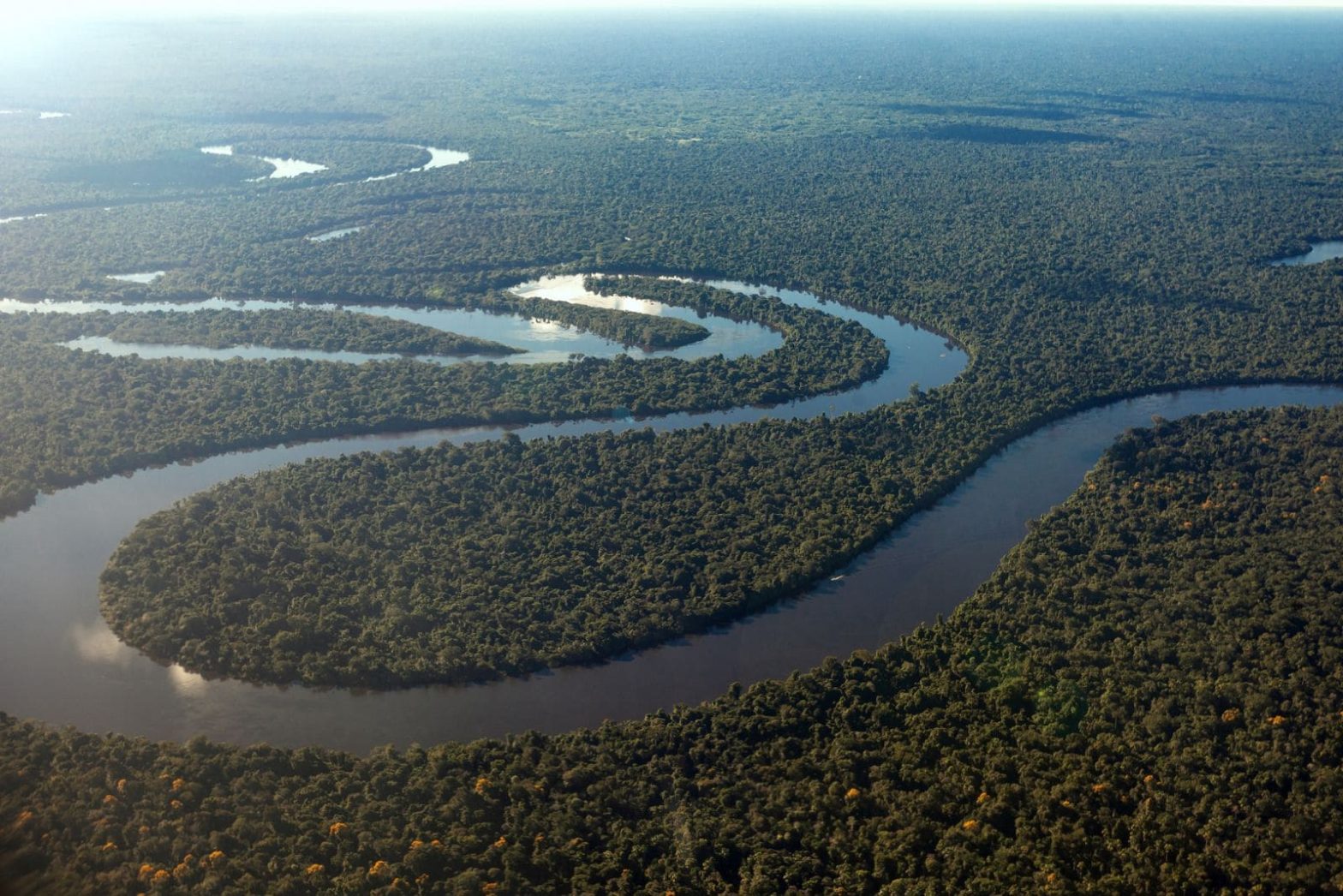
This impressive variety of landscapes includes a vast hydrographic system that favors the presence of minimally disturbed and highly conserved ecosystems.

The tropical forests of Manu have allowed ecological and evolutionary processes to develop almost without human intervention. This natural balance makes the park a unique place on Earth. Additionally, the area possesses enormous cultural richness represented by Indigenous populations at different levels of contact with the outside world, as well as an important—and largely unexplored—archaeological heritage.

International Recognition

In 1977, UNESCO granted MNP the title of Biosphere Reserve due to its extraordinary ecological and cultural importance.
Years later, in 1987, it was declared a Natural World Heritage Site, strengthening its position as one of the most valuable places for global conservation.

Within and around its boundaries lie other protected areas such as the Kugapakori and Nahua Territorial Reserve, the Megantoni National Sanctuary, and the Amarakaeri Communal Reserve, forming a fundamental biological corridor for the country.

Ancestral Territory of Indigenous Peoples

A large part of MNP’s territory has been ancestrally inhabited by various Amazonian Indigenous peoples, including the Yora, Mashko-Piro, Matsiguenka, Harakmbut, Wachipaeri, and Yine.
Two native communities located in the upper Manu River—Tayakome and Yomibato—have official recognition within the protected area.

WILDLIFE OF MANU

Flora and Fauna of Manu National Park: A Sanctuary of Unique Life on Earth

Manu National Park (MNP) is considered one of the territories with the greatest biological diversity on the planet. Within its area, thousands of animal and plant species coexist, many of them endemic or vulnerable, turning Manu into a natural laboratory of wildlife.

Fauna of Manu National Park

MNP hosts one of the highest concentrations of wildlife in the entire Amazon.
Approximately:

  • 160 species of mammals
  • More than 1,000 species of birds, mostly resident
  • 140 species of amphibians
  • 50 species of snakes
  • 40 species of lizards
  • 6 species of turtles
  • 3 species of caimans
  • 210 species of fish

Notable Mammals of Manu

Among the most emblematic mammals are large predators and unique Amazon species:

  • Jaguar (Panthera onca)
  • Jaguarundi (Felis yagouaroundi)
  • Amazonian tapir (Tapirus terrestris)
  • White-lipped peccary (Tayassu pecari) and collared peccary (Tayassu tajacu)
  • Red brocket deer (Mazama americana) and white-tailed deer (Odocoileus virginianus)
  • Giant river otter (Pteronura brasiliensis)
  • Capybara (Hydrochoerus hydrochaeris), the largest rodent in the world

Monkeys such as the red howler (Alouatta seniculus),
the black spider monkey (Ateles paniscus),
the woolly monkey (Lagothrix lagotricha),
the white-fronted capuchin (Cebus albifrons), and the brown capuchin (Cebus apella)

Diversity of Insects

The insect diversity in Manu is astonishing. It is estimated that there are around 30 million species, with notable records such as:

  • More than 1,300 species of butterflies
  • 136 species of dragonflies
  • At least 300 species of ants (over 40 found on a single tree!)
  • More than 650 species of beetles
  • Flora of Manu National Park

The flora of MNP is equally impressive. Botanical research has identified:

  • 162 plant families
  • 1,191 genera
  • 4,385 recorded species

In a single hectare, up to 250 different tree species have been counted, demonstrating the area’s ecological complexity.

Representative Ecosystems and Plant Species

One of Manu’s most characteristic ecosystems is the aguajales, formed in permanently flooded areas, especially on the right bank of the Manu River. Dominant species include:

  • Aguaje (Mauritia flexuosa)
  • Huasaí (Euterpe precatoria)
  • Among the region’s representative trees are:
  • Cedar (Cedrela sp.)
  • Cecropia (Cecropia sp.)
  • Tornillo (Cedrelinga catenaeformis)
  • Brazil nut (Bertholletia excelsa)
  • Lupuna (Chorisia sp.)
  • Rubber tree (Hevea brasiliensis)

Climate and Tourist Routes of Manu National Park

Climate of Manu National Park

The climate of Manu National Park varies greatly due to the steep altitudinal gradients across the protected area. Generally, the climate is warm and extremely humid, although rainfall and temperatures change notably with altitude.

  • Rainfall by Zone
  • Southern zone (high mountains): 1,500–2,000 mm annually
  • Middle zone: rainfall increases to 3,000–3,500 mm per year
  • Northwestern sector: the rainiest region, with more than 8,000 mm annually, one of the highest in the world

Dry Season and Temperatures

The dry season runs from May to September, when rainfall decreases and temperatures tend to drop.

  • Temperature patterns vary by region:
  • Amazon zone: warm and humid, with an average annual temperature of 25.6°C
  • Andean zone: cold climate, with an average temperature of 8°C

This climatic variability allows very different ecosystems to coexist within the same territory, from Andean puna to flooded rainforests.

Tourist Routes in Manu National Park

The lower basin of the Manu River offers visitors a deep experience within the Amazonian lowlands. The park has five official visitor zones, recognized for their spectacular diversity of flora and fauna:

  • Salvador (oxbow lake)
  • Otorongo (oxbow lake)
  • Juárez (oxbow lake)
  • Pakitza
  • Limonal
  • Experiences in the Visitor Zones

Each area offers trails and circuits that allow visitors to experience the essence of the tropical rainforest. The horseshoe-shaped lakes, or cochas, are one of the main attractions, where species difficult to spot elsewhere—like the giant river otter or the black caiman—can be observed.

The riparian forests along the Manu River are also ideal for wildlife viewing. Mammals, birds, reptiles, and lush Amazonian vegetation are commonly found there.

Clay Licks and Aguajales: Unforgettable Natural Spectacles

A major attraction is the clay licks, areas where many species gather to consume minerals from the soil. This phenomenon offers excellent opportunities to observe macaws, parrots, peccaries, and other emblematic animals.

Likewise, the aguajales, dominated by aguaje palms, are vital areas for specialized species and highly attractive to nature enthusiasts.

Tres Cruces Viewpoint: A Unique Experience

In the southernmost part of MNP lies the Tres Cruces Viewpoint, famous for its spectacular sunrises at more than 3,600 meters above sea level.
Between May and August, when the sky is clear, a unique optical phenomenon can be seen: the sensation of the sun rising twice in a single dawn.

  • From this point, two contrasting panoramic views can be enjoyed:
  • The Andean mountain range to the south
  • The Amazonian cloud forest to the north

The area also features a marked walking trail of 7 km (approx. 3 hours) connecting the Acjanaco ranger station with the Pillahuata farm.

Tourist and Research Infrastructure

Manu National Park hosts one of the world’s leading tropical research centers: the Cocha Cashu Biological Station.

In the lower Manu River basin, visitors have access to:

  • Five camp zones
  • Three viewpoints
  • Three lodges under concession
  • An 18-meter metal tower at Cocha Otorongo

An elevated walkway with a platform in the Limonal sector

Additionally, the Limonal Interpretation Center provides detailed information about the park’s fauna, flora, and cultural values.
Sandoval Lake

SANDOVAL LAKE:

Sandoval Lake National Reserve.

It is a tourist destination and paradise that is most visited by nature lovers, which is the Sandoval Lake Reserve,

located in the Madre de Dios River Basin. Lake Sandoval has a beautiful mirror of very clear crystalline water, it

has 127 hectares. Sandoval lake is very surrounded by many palm trees of different species

, full of birds such as macaws, herons, cormorants. Eagles, kingfishers and the prehistoric bird (shansho), river

otters, turtles, caiman and dwarf caiman and different species of monkeys such as the friar capuchin, musmuki,

emperor, spider and howler monkeys, and a variety of reptiles, batrachians, amphibians, insects,

butterflies and many mammals, Lake Sandoval natural paradise of biodiversity

Entrance to Lake Sandoval.

To enter the Sandoval Lake reserve, we have to register at the checkpoint with their respective passports and

guides or companies that provide the service.

Hike along the Sandoval Lake trail.

From the control post, walk along a boarded path 3 km from the pier, which includes a visit to the Interpretation

Center and where there are numerous species of wild flora and fauna.

Sandoval Lake Ride in a rowing cone.

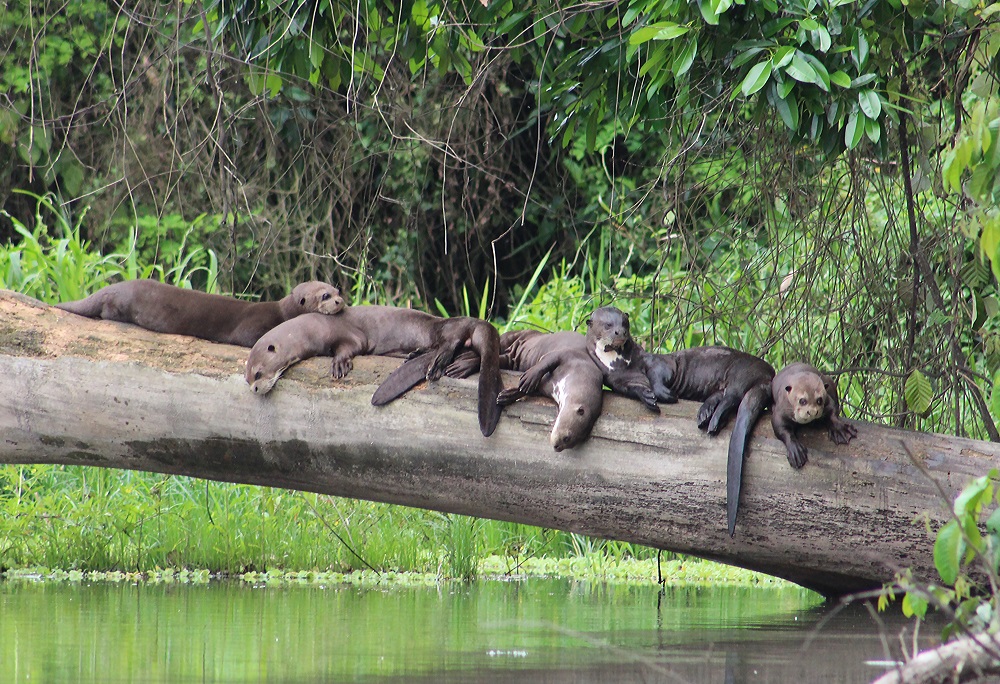
The walks or tour that are carried out in a rowing canoe. that has the capacity of 8 people, observing the wild

fauna. How it is inhabited by a large family of otters that it observes hunting and others on the logs of trees

basking in the sun and a variety of turtles basking on logs or fallen trees that are in the middle or on the edges of the lake.

Observation tower.

In the Sandoval Lake reserve we can appreciate an observation tower for a panoramic view and take the best

photographs of this Sandoval Lake, countries like sunrise and sunsets that are magical and the rides in our canoe.

Tambopata river basin upstream, we can see different lakes that are very important for the flora and fauna.

1: Coco Cocha Lake, which is located 2 hours from Puerto Maldonado, to get there we have to travel upstream

from the Tambopata reserve. It has a very incredible flora and fauna and more endemic species. How to observe

river wolves, birds and many mammals in their natural habitat. TOUR AMAZON  PERU

Tambopata river camping.

For those who love adventure, want to explore incredible flora and fauna, doing fishing, hiking trails and lakes in

the middle of the jungle. We have many opportunities to observe mammals and reptiles up close.

To the Tapir, anaconda, family of capybaras, caimans, monkeys and the king of the jungle (jaguar) that we mostly

observe on the beaches sunbathing or waiting to hunt their prey,

camping to spend the night on the beaches

del rio tambopata magical adventures. Just listening to the sounds of the forest, birds, animals and including the

noisy howler monkey, which is in charge of transporting the visitor to a magical dream and full of natural life that the Amazon jungle has

The macaw clay licks of the Tambopata Reserve.

This lick (mineral salts) is the main attraction for visitors, this place is very special as it is located on the edge of

the Tambopata River. where animals come to eat like deer, wild pig The wild boar, monkeys, Tapir and many

birds, especially the macaws, the 7 species, are clay licks or called mineral salts, have certain types of nutrients.

Clay licks are natural and are found in the clayey soils of a virgin forest where there is not much contact with humanity.

Show of the macaws in the clay licks of Tambopata.

The Chuncho clay lick is located to the left of the Tambopata river, 4 hours by river beyond the sea at Sentenciados

lakes, Colorado and a clay lick one and a half further on. The latter is considered the largest clay lick known in the

entire Peruvian Amazon. Sandoval Lake.

Also licks in La Torre A mammal clay lick just 15 min away by the La Torre and Nas river, peccaries and deer. A

parrot lick, a 5 min control job, with hundreds of parrots to dawn Finally,

SAKE SANDOVAL HOSTEL:

The great vastness and impenetrability of the Amazon basin has protected its diverse flora and fauna in this

Amazonian sandoval lake from the outside world since time immemorial. In its depths there are native peoples

who have never had contact with outside civilization. As the 21st century humbly dawns on this enticing expanse

of jungle territory, the abundance of The natural resources it contains, from oil to ranch land, threatens and

possibly changes it forever. The  Amazon jungle Lake Sandoval here comprises 50% of the nation, yet only 5% of Peruvians’

Lake Sandoval wildlife live in it.

Stretching from below the eastern flank of the Andes for thousands of kilometers to the Atlantic Ocean, this desert

has long been synonymous with the word “adventure” and Peru’s portion has been judiciously preserved.

More types of plants flourish here in a single hectare of rainforest than in any other European country. Some of

the world’s most diverse nature reserves the Amazon’s Lake Sandoval beckons, making it one of the continent’s top

wildlife viewing spots.

Divided into three main areas,

Sandoval Lake in the Peruvian Amazon not only offers a mix of bird and animal watching, jungle treks, and river

life, but also a dash of raucous urban life in the rainforest. There are only three towns of any size Pucallpa can be

reached by a paved road, Puerto Maldonado

It is accessible mainly by dirt roads and Iquitos is connected to the rest of Peru only by water and air. This lush

region begs the attention of adventure seekers, but it also begs for protection. Its natural wealth also attracts loggers,

energy companies, slash-and-burn farmers, and developers.

This is a border country. Travel is hard, but the rewards are limitless: making your way through rugged roads,

raging rivers and overgrown roads, you will feel like the first explorers who brought attention to this region in Puerto

Maldonado Sandoval Lake

LAKE SANDOVAL – VIDEOS – TRIPS TO THE JUNGLE OF MANU

Amazon Birding Peru

Amazon Birding Peru

PERUVIAN RAINFOREST  AMAZON BIRD

We have discovered 16 new species of birds in the Amazon Birding Peru over the past 10 years. New additions to the region bird cover a wide range of bird families and include the discovery of a bird of prey south of the Peruvian Amazon.

Birds of the Amazon in 2002 the cryptic wild falcon (Micrastur mintoni) was discovered. This Brazilian species

has bright orange skin around your eyes. It is assumed that the total population of this bird is great, considering its wide distribution, but overall little about this new species of Amazons known.

In 2007, a new bird of the Peruvian Amazonia described. The alitorcido rufous or rufous-fl Autin (Cnipodectes superrufus) has a multitude of variations in their colorful reddish-brownish.

Despite the extensive ornithological research has been conducted in the southeastern region of Madre de Dios, had

not detected this species, largely due to the inaccessibility of their natural habitat. The species is restricted to

the spiny thickets of bamboo (Guadua weberbaueri) reaching five meters in height, a little studied habitat of the Amazon bird.

Originally this bird had been observed only in a few sites in Madre de Dios- Amazon Birding Peru .

  In a nearby region. The known distribution of bird 3400-89000 km2 dominated by bamboos found in Madre de

Dios (Peru), Pando (Bolivia) and Acre (Brazil) forests Then spread; latter area includes the Manu National Park.

Birds of the Amazon according to scientists, the Rufous alitorcido is probably the least abundant of all bamboo

specialist birds in Amazonia. Your risk of extinction in the short term is low, but recent development projects, including the paving of the Inter-Oceanic

Highway will increase the number of human settlements and habitat destruction in the region. In addition, the

socio-economic value of bamboo and the growing tendency to harvest it suggests the extent of suitable habitat for the species may decrease in the future.

It is considered that the perlite Iquitos (Polioptila clementsi), discovered in 2005, is now critically endangered.

Also in the Peruvian Amazon, this new bird discovered in Allpahuayo Mishana-National Reserve, just west of Iquitos in the Peruvian region of  Amazon Bird Manu Jungle Trips .

Loreto Amazon Birding Peru .

Avistarla is rare in white-sand forests they inhabit. In surveys of available habitats within the Reserve are located only fifteen couples. And, since its discovery, every year seems to be more difficult to locate the species. The

species is in real danger of extinction due to its restricted distribution, its extremely small population and deforestation that occurs in the area.

Clearing for agriculture, facilitated by government incentives to promote the colonization of the land around

Iquitos, like forest clearing within a national reserve to boost the construction and fuelwood and charcoal vegetal56 continue to threaten the available habitat Amazon BirdThe ancient forests varillales, slow growth and habitat par excellence Polioptila clementsi are presented in particularly quartzite soils deficient in nutrients, and may never be able to regenerate if destroyed.

Amazonian forests growing on white sand and other nutrient-deficient soils ornithological saved many surprises.

Some years earlier, in 2001, another new species, the tyrant of Messana (Zimmerius villarejoi) described forest again white-sand beach near Iquitos in the Peruvian region of Loreto in the Peruvian jungle.

Among the many birds of the Amazon parrots

are often the most spectacular in their color. The bald parrot (Pyrilia aurantiocephala, originally known as Pionopsitta aurantiocephala), a member of the family of true parrots, caused a sensation when it was reported in 2002,

mainly because it is difficult to believe that such a large and colorful bird could have passed unnoticed in the world. As its name implies, the species has an amazing bald head, devoid of feathers, but other than that is a very colorful bird.

Presents an extraordinary range of colors: “orange head” Live yellowish green nape parrot green body with greenish wings bathed ultramarine blue, cyan, orange, emerald green and scarlet; Orange and yellow legs.

This parrot has been observed only in a few locations in the lower Rio Madeira and Tapajós rivers high in the Brazilian Amazon. Currently it has been only two habitat types and in a relatively small area.

Scientists say that although the region in which collected specimens Pionopsitta aurantiocephala is mainly

dedicated to ecotourism, nearby regions near the headwaters of the Manu Jungle Trips .

Tapajós River and across the southern Amazon Birding Peru .

are constantly threatened by the destructive activities of logging companies in the Peruvian jungle bieding . In lists, the

species is listed as “near threatened” because its population is small and moderately declining due to habitat loss in the birds of the Amazon.

In 2005 a new species of parakeet, Aratinga pintoi, was found in the Amazon River basin. Chest parrot sulfur was found, as the species is commonly known, only in open areas with sandy soils in Monte Alegre, on the north bank of the lower Amazon River, State of Pará, Brazil.

Its plumage is splendid colors is adorned with a green crown, orange front, yellow back mottled with green little

points, sulfur-colored chest and the tips of their wings deep blue. Initially it was believed that the juvenile form of another species or a hybrid of two species,

but surprisingly, scientists have been collecting, examining and identifying the wrong kind from the early twentieth century. Currently, Aratinga pintoi is a fairly common bird in Monte Alegre, easily located along the

main roads in groups of up to ten individuals, and flying over the city.

However, as is usual with new parrot species, scientists

now fear that farmers will soon begin to get and market these birds through illegal markets. Some scientists are

concerned not only for the preservation of the Amazon recently described birds, endangered and threatened, but mainly by “taxa forgotten.”

Many species are desperately waiting for some dedicated ornithologist or an employee of a South American

museum, often poorly funded, spend their own time and resources to formally describe the birds, while there is also a huge

demand for ecological studies to better understand and define the state of threat that are currently a number of species for which there are insufficient data. In a race against time, ornithological research to properly describe

the complex and rich avifauna of this planet is lagging behind the pace at which the region is developed, and many species are already endangered birds of the Amazon. Manu Jungle Trips .

PERUVIAN AMAZON:

The Peruvian Amazon is the largest rainforest on Earth. It is known for its unique biodiversity, with wildlife including jaguars, river dolphins, manatees, giant otters, capybaras, harpy eagles, anacondas and piranhas.

The large number of habitats, unique in its kind in this region hide important globally abundant species, scientists are discovering an incredible rate.

Between 1999 and 2009, have been discovered at least 1,200 new species of plants and vertebrates in the Amazon Biome (see map on page 6, which shows the extent that this biome covers).

The new species include 637 plants, 257 fish, 216 amphi bios, 55 reptiles, 16 birds and 39 mammals. Furthermore,

they have found many new species of invertebrates. Considering the huge number of invertebrate species, this report does not cover in detail.

The conservation of the Peruvian Amazon is essential for the future of humanity:

The multiple threats facing the Peruvian Amazon are increasing the pressure on natural resources and

environmental services on which millions of people depend.

These important threats are linked, ultimately, to international market forces and the everyday practices that depend on the Amazon for their goods and services.

The Peruvian Amazonia affects weather patterns worldwide and helps to stabilize the climate. Therefore it is vital

to conserve Amazonian forests if we are to address global climate change.

Any development in the Amazon should be managed in an integrated and sustainable manner, so that the key attributes and ecological functions of the area are maintained. Historically, each country in the region has only

considered part of the Amazon that is within their national borders, worrying about the benefits it provides to its citizens.

This has resulted in a fragmented policy-

making process, as well as the uncontrolled exploitation of goods and services in the Amazonia Manu Birding . This process has also overlooked the viability of the region as a whole.

Growth in key sectors such as agriculture, livestock and energy sectors, exacerbate the negative effects of this

approach. These economic sectors are expanding in response to global demand. Depend on investment in infrastructure development, such as those contained in the IIRSA.

These are the forces that currently form the basis for the “integration” of the Amazon in national and global economies. They are generating short-term revenue and improving national economic indicators. But should

incorporate consideration of environmental and social costs of such developments on the axis of development planning.

Around the world, are marginalized or minority groups within society, including indigenous peoples and rural communities, who suffer the environmental and social impacts of unsustainable development.

The Amazon is no exception.

The conservation of the Amazon is, first, crucial for the survival of the 2.7 million people in more than 320

indigenous groups have relied on their wealth for centuries. In this context, the fate of the Amazon depends,

ultimately, a signifi cant change in the way we understand the Amazonian countries development.

It is vital to manage sustainably the Amazon as a functional whole.

The desire to protect the functionality of the region for the common good must become the central task of Amazonian nations.

The responsible management of the Amazon

Peruvian Jungle Amazon

Peruvian Jungle Amazon

The Amazon rainforest in Peru, also known as the Peruvian jungle Amazon, is a vast and diverse natural region located in the northern part of the country, which is part of the Amazon River basin. It is one of the richest areas of

biodiversity in the world, hosting a wide variety of flora and fauna species, many of which are endemic and found only in this region.

Some highlights of the Amazon jungle in Peru include:

Biodiversity: The Peruvian Amazon is home to an astonishing diversity of species, including thousands of species of plants, mammals, birds, insects, and fish. Many of these species are unknown to science and have yet to be discovered.

Reserves and natural parks: Peru has established several reserves and natural parks to protect and conserve the rich biodiversity of the region. Among them is the Manu National Park, a Biosphere Reserve recognized by

UNESCO.

Indigenous Communities: The Peruvian Amazon is home to diverse indigenous communities that have lived in

harmony with nature for centuries. These communities have vast knowledge about medicinal plants and the sustainable way of life in the jungle.

Ecotourism: The Amazon jungle in Peru attracts many tourists interested in bird watching, canoeing on the rivers, jungle treks, and the opportunity to learn about indigenous cultures and environmental conservation.

Conservation Challenges: Despite its ecological importance, the Peruvian Amazon faces threats such as deforestation, illegal mining, poaching, and the expansion of agriculture. The conservation of this region is a crucial

issue to protect its rich biodiversity and ensure long-term sustainability.

It is important to remember that the Amazon is a large and complex region, and each part of it may have specific characteristics and challenges. If you are looking for information on a particular article about the Amazon rainforest

in Peru, I recommend that you do an online search using relevant keywords to get up-to-date and accurate information

Peru is a country with a population of almost 31 million people.

The Peruvian Jungle Amazon represents 60% of the national territory but is home to only 9.41% of the population. It is the territory with the greatest ethnic and linguistic diversity in Peru. There are five regions located in the Amazon

Peruvian (also called Peruvian jungle): Amazonas, Loreto, Madre de Dios, San Martin and Ucayali. Although the Peruvian Amazon is rich in natural resources,

this wealth has not translated into us being its inhabitants rainforest manu jungle. Activities such as the extraction

of rubber, oil and gold have exposed the Amazonian population to exploitation, migration and diseases of the western world. Accessing this area by land is difficult, if not impossible.

Providing basic health, education, protection, and water and sanitation services are some of the main challenges facing the Peruvian State. manu jungle amazon tour jungle trips

The exclusion of the communities of the Peruvian Amazon.

Amazon is reflected in the situation of children and adolescents. For example, chronic malnutrition affects 4 out of

100 children under the age of five in Lima (capital of Peru) compared to 29 out of 100 in the rural regions of the Amazon.rainfores jungle trips

The inequities between children who live on the coast, in the mountains and in the jungle are surprising, but they

are still higher when the comparison is made between the urban coast and the rural jungle. jungle trip 68% of

indigenous children and adolescents in the Peruvian Amazon live in poverty. three out of five Amazon regions

have the highest rates of multidimensional child poverty: Loreto (80%), Ucayali (77%) and Amazonas (76%). manu jungle trips

UNICEF  .

works in these three regions. Child Survival and Development, Education, Protection, Public Policies and

Prevention and Risk Management are the main areas of work of UNICEF for children and adolescents in Peru.
Amazon. manu jungle trips


AMAZON WILDLIFE NATURE

AMAZON WILDLIFE NATURE

Amazon .The Amazon River is the second longest river in the world Amazon Wildlife nature . This river is more than 4,000 miles long. The Amazon Rain Forest has two seasons, the rainy season and the dry season. In the dry season, the Amazon River can be up to 7 miles wide. During the rainy season, the river bank fl oods and gets wider. In the rainy season, the river can be up to 25 miles wide. Many animals live in the river. Some
of the animals in the river are piranhas, dwarf caimans, turtles and anacondas. in the amazon  manu jungle

PIRANHA – AMAZON WILDLIFE NATURE

The piranha is a small fi sh with very large teeth. Piranhas can be grey, blue or even black. Piranhas can be anywhere from 6 inches up to 12 inches long. Most piranhas live in warm, fresh water. Piranhas are omnivores. That means they eat both plants and animals. They also eat fruits and berries that fall from the trees above. Piranhas hunt in large groups called shoals, or packs. Other piranhas, caimans, snakes, turtles and birds all eat piranhas in the amazon wildlife nature  jungle trips .

DWARF CAIMAN – AMAZON WILDLIFE NATURE

The dwarf caiman is a member of the crocodile family. Caimans live mostly in fresh water. Sometimes you cannot see the caiman when it is in the water. The caiman’s eyes are above the water but the rest of its body is under water. They look like logs fl oating in the water. This is called camoufl age. This is the way that caimans make sure their food or prey does not know they are there. The caiman has hard scales on its body to protect it from predators. Caimans eat fi sh, crabs and shrimp. amazing   jungle trips .

AMAZON WILDLIFE NATURE – ANACONDA


The anaconda is one of the largest snakes in the world. This snake can grow up to 30 feet long. It is dark green or brown. The color helps the anaconda blend into the area where it lives. This snake lives on land near the edge of the water.  Anacondas also spend some time in the water. The eyes and nostrils of an anaconda are on the top of their head. This is so the snake can see and breathe when most of its body is under water.

Anacondas are constrictors.

This means that they wrap around their prey and squeeze tightly until their prey cannot breathe. Anacondas are very strong. They eat large rodents, small mammals, frogs and fi sh. Snakes grow by molting, or shedding, their skin. Anacondas are so big that they have to shed their skin in pieces. Snakes, like the anaconda, are cold-blooded, which means that they cannot control their body temperature. They bask in the sun on a hot rock to warm themselves and rest in the water or damp mud to cool themselves down. exploring   manu trips

GIANT AMAZON RIVER TURTLE


The giant Amazon River turtle is one of the largest freshwater turtles in the world.

These turtles are very good swimmers. Amazon River turtles stay in the water for most of their lives. Usually only the female leaves the water.
This is so she can lay her eggs. The giant Amazon River turtle eats fruits, leaves, plants and insects. Female turtles of this species can be up to 200 pounds. Many animals, like the black vulture, eat baby

Amazon River turtles. The adult giant Amazon River turtle is so big that it does not have many predators. Jaguars and black caimans are the only animals big enough to eat the giant Amazon River turtle

The Amazon Rain Forest jungle trips  .his book offers a lively introduction to the ecology, history and economy of the Amazon rain forest. It explains why the rain forest is important for the future of mankind, and it also highlights the pressures and problems that rainforests around the world face in today’s global economy. Students will all possess some general knowledge about the Amazon rain forest before they read the book.

The book begins with a multiple-choice quiz to test the readers’ knowledge and to arouse their curiosity about the questions they do not know the answers to. All the
answers can be found later in the book.

The Amazon  peru Manu Jungle .


This first section describes the course of the great Amazon River from its source, high in the Andes, to its exit into the Atlantic Ocean 6,400 kilometers downstream. Each part of the river is quite distinct – and the text describes the differences in landscape, vegetation and weather as well as some of the people that live along the river at different points.

What is a Rain Forest: This section describes some of the plants and animals of the forest and also explains how the warm, wet weather of the Amazon helps to maintain such an abundance of life.

The world’s rain forests are a rich resource of food and medicine that is currently not used or understood to its full potential. The text suggests that we could lose thousands of life-saving medicines and foods if the destruction of rain forests continues at its present rate.

Why are Rain Forests Disappearing:This section talks about the destruction of the world’s rain forests over the last 100 years. It also explores why this has happened and why it may continue to happen unless the world’s consumers, companies and governments change their current habits.

The People of the Rain Forest:


This section explores the lives of different people in the rain forest and presents their experiences through a series of first-person narratives. Here, readers learn about the relation between the people of the Xingu River and the white men through a story of an old man.

They also find out about the Kayapo Indians by means of an old man’s story and a short panel story which help to build a fuller picture of the Kayapo’s lives and concerns. Next, readers hear about how the Amazonian forests were cleared for farming, and how farms eventually failed

leaving people without money, through the story of a Brazilian taxi driver. Readers are then informed about the economic rise and fall of Manaus—the most important city in the Amazon

rainforest. Manaus became rich due to the rubber industry but it eventually suffered a severe economic decline in the 1920s when other countries started producing rubber more cheaply.

Finally, readers hear the views of a Brazilian cattle farmer who argues that Brazil, as a whole, will face a poor future if it does not use even more of the rain forest land for farming.

Plans for the Rain Forests: This final section ends by looking to the future and asking what can be done to save the rain forest whilst still safeguarding the livelihoods of the people who live in and around it. wild manu jungle

Background and themes Environmental issues:


These issues are the main theme of the book. With the destruction of the rain forests, thousands of the world’s animals and plants are becoming extinct even before we have the chance to discover and study them.

Also, the rapid disappearance of much of the world’s forests is contributing towards global warming. The world’s weather systems are changing and the results could be catastrophic.

The effect of colonization: The book also explores the role that history has had in the destruction of the Amazon rain forest. When the Europeans arrived in South America in the sixteenth century, they changed the continent for ever. Many indigenous people were killed in wars and by imported diseases.

By 1700 the colonists were plundering the rain forest’s resources to meet the demands of Europeans and North Americans for hardwood. And with the growth of the global economy through the nineteenth and twentieth centuries, Brazil became more and more reliant on its exports—rubber, wood and agricultural produce. All of these industries put more pressure on the forest’s resources. wild manu trips

The future of the Amazon: By presenting a number of different points of view, the book highlights the difficult job that Brazil’s government faces. The forest’s resources are wanted by a number of different groups of people, each with their own strong arguments. In addition to needing to take responsibility for the welfare of its own people, the Brazilian government is also under a lot of external pressure from environmental groups and other governments around the world. The future of the Amazon is an international affair and relies upon cooperation and
understanding among nations.

Discussion activities Before reading


1 Pair work and predict: Ask students to look at the cover of the book but not to open it. Based on their
own general knowledge, each pair should write an outline for a short book about rain forests. Guide
them with these instructions: Look at the book cover in pairs and imagine the main sections of your book.
Include also a short description of the content (including any pictures) of each section.

2Compare: When the pairs have finished their outlines, ask them to look at the book’s Contents page
and to flick through its pages to compare it with their own books:

The Amazon Rain Forest and compare its contents to your own book. How close were you?
3 Read carefully and pair work: Ask students to read the Introduction in pairs. Guide them with these
questions: Read the Introduction in pairs and (a) discuss with another student how it makes you feel. Then (b) try
to answer the question at the bottom of the Introduction together. flora and fauna manu trips

The future of the Amazon:


By presenting a number of different points of view, the book highlights the difficult job that Brazil’s government faces. The forest’s resources are wanted by a number of different groups of people, each with their own strong arguments.

In addition to needing to take responsibility for the welfare of its own people, the Brazilian government is also under a lot of external pressure from environmental groups and other governments around the world. The future of the Amazon is an international affair and relies upon cooperation and understanding among nations