Full 1
MANU TOURS
MANU TOUR ZONE RESERVED 4 DAYS
Full 1
previous arrow
next arrow
Shadow

Wayqecha Biological Station -Cloud Forest Birding

Wayqecha Biological Station -Cloud Forest Birding

The Wayqecha Biological Station –Cloud Forest Birding stands majestically in the heart of the cloud forest of

the department of Cusco, at an altitude of 2950 meters above sea level, marking the border between the

mysterious world of the cloud forest and the imposing landscape of the high Andean grassland or puna.

Its founding in 2006 marked a milestone in conservation and scientific research in the region. With approximately

700 hectares of extension, covering an impressive altitudinal gradient of 1,200 meters, from 2,300 meters at its

base to 3,500 meters at its highest point, the Wayqecha Biological Station is much more than a simple research center: it is a testimony I live from the commitment to the preservation of biodiversity.

Wayqecha is not only a Biological Station, but also a Private Conservation Area (PCA) with the same name, which

highlights its importance in protecting local ecosystems. Its innovative approach is based on the synergy between

scientific research and responsible ecotourism as a source of financing. Kosnipata Valley Manu Park

This pioneering model not only drives cutting-edge research, but also ensures long-term financial sustainability.

With a capacity to accommodate up to 50 visitors, the station facilities are a testament to sustainable engineering and design. manu jungle trips

A modern multipurpose hall serves as a nerve center, where researchers gather to exchange ideas, tourists feast on local culinary delights, and lecturers inspire with their wisdom.

Additionally, 25 kilometers of trails wind through lush vegetation, inviting visitors to immerse themselves in the area’s natural beauty. A skybridge offers a unique view of the forest canopy, providing an unrivaled experience of life high in the trees.

In short, the Wayqecha Biological Station is not only a beacon of scientific research and environmental conservation,

but also a must-see destination for nature lovers and travelers in search of authentic and enriching experiences.

Her visionary approach and commitment to sustainability make her a role model in the field of environmental conservation and responsible ecotourism. manu jungle trips

What is the elevation of Wayqecha biological station

The Wayqecha Biological Station, nestled within the captivating Amazon Conservation‘s Cloud Forest Research Station, sits at an elevation of 9,880 feet above sea level

. While this altitude is slightly lower than the renowned city of Cusco, which stands at 11,500 feet, it still presents a considerable altitude challenge for visitors.

Explorers navigating the station’s trails and stairways may find themselves easily winded due to the high elevation,

emphasizing the need for acclimatization and careful pacing when venturing through this breathtaking landscape . manu jungle trips

What species of birds are found in this area -Wayqecha Biological Station -Cloud Forest Birding .

On the trails and among the lush fruit trees that surround the Lodge, visitors have the opportunity to marvel at the presence of a variety of bird species, among which the beautiful tanagers stand out. These include the Golden-

collared Tanager, Grass-green Tanager, Scarlet-bellied Mountain-Tanager, and Hooded Mountain-Tanager, among other equally captivating species.

However, avian diversity in the region is not limited to just these mentioned species. On other trails and adjacent

habitats, birders can discover a wide range of species, each with their own unique characteristics and charms.

From colorful hummingbirds to majestic birds of prey and melodious singers, the variety of birdlife present in this area offers an unforgettable experience for lovers of nature and ornithology. manu jungle trips

Discover Wayqecha Cloud Forest Biological Station: A Hidden Gem in the Peruvian Andes

Looking for a truly immersive ecotourism experience in Peru? Wayqecha Cloud Forest Biological Station offers a rare opportunity to explore one of the world’s most biodiverse ecosystems—while supporting real scientific conservation efforts.

Nestled in the Kosñipata Valley of the Cusco region, just a scenic 3.5-hour drive from the city of Cusco, this unique cloud forest reserve sits on the edge of the legendary Manu National Park, a UNESCO Biosphere Reserve. At an altitude of nearly 10,000 feet (3,000 meters), Wayqecha—meaning “brother” in Quechua—bridges the gap between the Andean highlands and the Amazonian lowlands, offering travelers a truly unforgettable biological and cultural experience. manu jungle trips

Why Visit Wayqecha? A Unique Destination for Nature Lovers, Birdwatchers, and Researchers -Wayqecha Biological Station -Cloud Forest Birding .

Founded in 2005 by the nonprofit Amazon Conservation, Wayqecha is Peru’s only permanent field station dedicated to cloud forest ecology. The reserve spans 1,450 acres of pristine forest, serving not only as a scientific hub but also as a haven for eco-conscious travelers, birders, and nature photographers alike.

Biodiversity Hotspot

Thanks to the area’s year-round moisture from passing clouds and mist, the Wayqecha cloud forest teems with life. As of now, over 625 species have been documented here, including:

  • Rare and endemic birds like the Red-and-white Antpitta, Marcapata Spinetail, and Orange-breasted Falcon
  • Hundreds of orchids and flowering plants
  • Unique amphibians and mammals found only in this transitional ecosystem

Birders can explore over 9 miles (15 km) of well-marked trails, passing through elfin forest, cloud forest, and montane zones—all ideal habitats for vibrant tanager flocks and elusive songbirds. manu jungle trips

  Wayqecha Biological Station -Cloud Forest Birding -Location and Accessibility

Getting to Wayqecha is part of the adventure. The drive from Cusco takes you across the snow-draped Andes, descending gradually into the lush green cloud forest. Along the way, expect jaw-dropping views, remote Andean villages, and the chance to spot Andean condors soaring above the valleys.

  • Coordinates: -13.174800, -71.587200
  • Elevation: Ranges from 6,500 to 9,875 feet (2,000–3,010 m)
  • Climate: Mild temperatures averaging 54.5°F (12.5°C), cooler at night
  • Annual Rainfall: Approximately 67 inches (170 cm)
  • Comfortable Accommodations in the Heart of the Cloud Forest
  • manu jungle trips

Wayqecha offers six private, newly renovated cabins, designed to blend comfort with sustainability. Each cabin includes:

  • Your choice of single or double beds
  • Private bathroom with hot showers
  • Stunning views of the cloud forest from your porch

Locally sourced furnishings, all designed with eco-friendliness in mind

The central dining hall and lounge/bar provide a cozy place to unwind, socialize with fellow travelers or researchers, and enjoy hearty meals made with fresh, locally sourced ingredients—some grown in the on-site organic garden. manu jungle trips

  •  Max Occupancy: 18 guests (3 per cabin)
  •  Minimum Stay: 1 night
  •  Children Welcome: Kids under 13 receive a discounted rate
  • Meals: Vegetarian and gluten-free meals available with prior notice
  •  Note: Internet is limited; the station is not fully accessible for people with mobility challenges manu jungle trips

Wayqecha Biological Station -Cloud Forest Birding – A Gateway to Conservation and Citizen Science

Visiting Wayqecha isn’t just about sightseeing—it’s about connecting with conservation at a deeper level. Since its founding: MANU CLOUD FOREST BIRDING 

  • 80+ research projects have been hosted
  • 28 peer-reviewed scientific papers have been published
  • 56 academic grants have supported cutting-edge studies here

Travelers may have opportunities to interact with researchers, learn about ongoing ecological studies, and even participate in citizen science initiatives depending on the season. manu jungle trips

When to Visit

Wayqecha is open year-round, but the dry season (May–October) offers the best conditions for hiking, wildlife watching, and photography. Mornings tend to be clearer, while afternoons may bring mist or brief rains—creating the ethereal cloud forest atmosphere that defines the region. manu jungle trips

Sustainable Travel with Impact

Wayqecha is managed by Amazon Conservation, an NGO focused on protecting the Amazon through science and sustainable development. By choosing to stay at the Wayqecha Cloud Forest Biological Station, you are directly supporting forest conservation, local livelihoods, and biodiversity research in one of the most critical ecosystems on Earth. manu jungle trips

Your Stay at Wayqecha

Ready to step into the clouds? Whether you’re a seasoned birder, curious traveler, or a student of nature, Wayqecha offers a one-of-a-kind chance to disconnect from the modern world and reconnect with the rhythms of the natural one. manu jungle trips
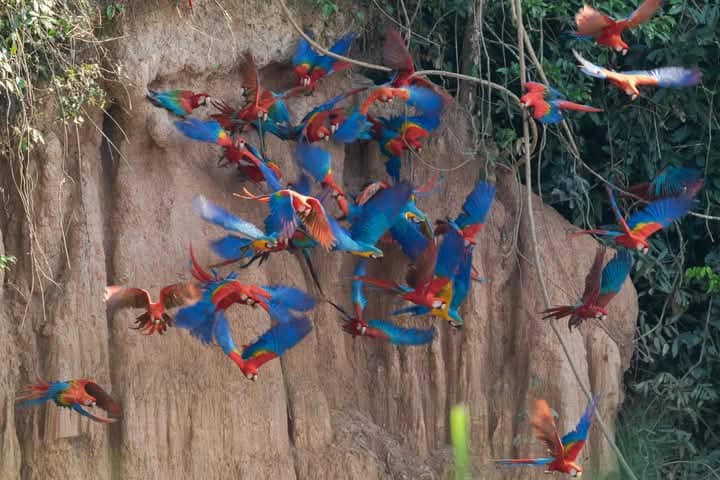
 

Rainforest Macaw Clay Lick in Manu Reserve Zone

Rainforest Macaw Clay Lick in Manu Reserve Zone

Rainforest Macaw Clay Lick in Manu Reserve Zone -The phenomenon of clay licking by macaws, parrots and parakeets in the Manu Biosphere Reserve, in southeastern Peru, has been the subject of deep interest by scientists and bird watchers.

Although this behavior is commonly observed in this region, its meaning and underlying reasons are topics that

continue to intrigue the scientific community.

A prevailing theory suggests that clay ingestion by these birds serves a crucial physiological function.

Specifically, it is believed that the macaws, parrots, and parakeets that visit the clay licks in southeastern Peru do so to help neutralize toxins present in their daily diet.

These birds primarily feed on a variety of fruits, seeds, and nuts, some of which may contain toxins or compounds

that could be harmful if they accumulate in their bodies over time. sandoval lake 

By consuming clay, these birds can effectively neutralize these toxins, thereby safeguarding their health and well-being. manu jungle trips

Clay acts as a natural adsorbent -Rainforest Macaw Clay Lick in Manu Reserve Zone.

capable of binding to toxins and preventing their absorption in the digestive system.

This detoxifying mechanism not only aids in the elimination of harmful substances, but also contributes to the

overall digestive process, potentially improving the absorption of nutrients from your regular diet.

However, it is important to note that clay licking behavior is not universal among all macaws, parrots, and parakeets.

While individuals in southeastern Peru and similar regions display this behavior as a regular part of their routine, counterparts in other

parts of the world may not demonstrate the same inclination toward clay consumption. manu jungle trips

The absence of this behavior in certain populations could be attributed to several factors,

Including differences in dietary composition, environmental conditions and genetic predispositions.

In regions where alternative detoxification mechanisms exist or where dietary toxins are less prevalent, the need to

consume clay may be diminished or even non-existent. manu jungle trips

Additionally -Rainforest Macaw Clay Lick in Manu Reserve Zone .

cultural transmission of behaviors within bird populations may also play a role in determining the prevalence of clay licking.

Birds in regions where this behavior is a well-established tradition within their species are more likely to exhibit it, while those in areas where it is not a prevalent practice may not learn or adopt it.

In conclusion, although the act of clay licking among macaws, parrots and parakeets is mainly associated with

detoxification in certain regions, its occurrence – or its absence – in different populations highlights the complex interaction between

dietary, environmental and behavioral factors in the ecology avian.

Additional research into the physiological mechanisms and evolutionary significance of this behavior promises to

deepen our Macaw Clay Lick -manu jungle trips 

understanding of these fascinating birds and their intricate adaptations to their respective habitats.

What type of bird licks clay for minerals

The habit of licking clay by some species of birds, such as parrots, has long been an object of study and fascination.

In southeastern Peru, specifically in the Colorado clay lick, a rock formation that rises above the Tambopata River in the western Amazon basin, remarkable behavior is observed by these colorful birds.

Every day, hundreds of parrots of up to 18 different species congregate here to enjoy a feast of sun-hardened clay. manu jungle trips

This phenomenon raises the question:

why do these birds feel such a powerful attraction to clay? One theory suggests that clay provides these

birds with essential minerals that may be scarce in their regular diet.Although parrots are known for their varied

diet that includes fruits, seeds, and nuts, some minerals necessary for

their health and optimal functioning may be absent in those foods. manu jungle trips

Clay, rich in a variety of minerals, could compensate for this deficiency, acting as a natural nutritional supplement for these birds.

In addition to its nutritional value, clay may also play a role in parrots’ digestion and intestinal health.

It has been suggested that clay can help neutralize toxins present in the diet of these birds, facilitating the

elimination of unwanted substances and promoting balance in the digestive tract.

This detoxifying function could be especially important in environments where parrots are exposed to potentially contaminated or toxic foods.

Another possible explanation lies in the behavior of parrots as an intelligent and socially complex species.

Clay licking at sites such as the Colorado clay lick has been observed to be a social activity, with hundreds of parrots interacting with each other while feeding on the clay.

This behavior could have social and cohesion benefits within parrot populations, strengthening social bonds and

facilitating communication between individuals.manu jungle trips

In summary, the habit of clay licking by parrots in places like the Colorado clay lick in southeastern Peru raises interesting questions

about the ecology, physiology and behavior of these birds.

While the search for essential minerals and nutrients may be a motivating factor, clay may also play a role in the

digestive health and social well-being of these species. Further study of this phenomenon could provide valuable

information on the adaptations and nutritional needs of parrots in their natural environment.

Why do wild parrots eat clay

The observation of wild parrots consuming clay in the Amazon has baffled scientists for decades.

However, recent research has shed light on this intriguing avian behavior.

Soils from clay licks in the Amazon Basin have been found to be especially rich in sodium, a finding that offers

important clues to the reasons behind this seemingly peculiar behavior.

Previous analyzes have revealed that sodium concentrations in clay lick soils are up to 40 times higher than those found in plant foods typically consumed by wild parrots.

Additionally, the sodium-potassium ratio of these soils is 4,500 times higher than that of plant foods.

These findings suggest that clay could serve as a vital source of sodium for parrots in the Amazon,manu jungle trips

whose natural diet may lack this essential mineral.

Sodium plays a crucial role in numerous physiological functions, including the regulation of water balance, nerve and muscle function, and blood pressure.

For wild parrots, which rely on a varied diet of fruits, seeds and nuts, getting enough sodium can be a challenge in an

environment where natural sources of this mineral may be limited.

Clay, being a concentrated source of sodium compared to plant foods, offers parrots a strategic solution for their nutritional needs.

By consuming clay, these birds can supplement their diet with the sodium necessary to maintain their health and

vitality in a demanding environment like the Amazon rainforest.

In addition to its nutritional value, clay may also play a role in detoxification and digestive health of parrots. It has

been suggested that clay may adsorb toxins present in the diet of these birds, thus helping to protect their digestive system from potential environmental hazards.

In conclusion, clay consumption by wild parrots in the Amazon is presented as a fascinating example of adaptation

and intelligent behavior in the animal kingdom.

Through this seemingly simple behavior, these birds manage to meet their nutritional needs and adapt to the unique

conditions of their habitat, highlighting the complexity and wonder of nature.manu jungle trips

Discover the Magic of the Chuncho Macaw Clay Lick in the Amazon Rainforest

A rainforest macaw clay lick is one of nature’s most breathtaking spectacles, where vibrant macaws, parrots, and parakeets gather by the hundreds to feed on exposed riverbank clay. These mineral-rich cliff faces, found deep in the Amazon rainforest, serve a crucial role in the birds’ diet. The clay helps neutralize toxins from the wild fruits and seeds they consume and provides essential minerals like sodium and calcium that are scarce in the tropical canopy.

One of the most remarkable places to witness this phenomenon is the Chuncho Macaw Clay Lick,

located within Tambopata National Reserve in southeastern Peru. As the first light of dawn touches the jungle, the

forest comes alive with the raucous calls and dazzling colors of scarlet macaws, blue-and-yellow macaws, and green parakeets descending on the clay walls.

From specially designed viewing platforms, travelers can safely observe this daily ritual from close range without

disturbing the wildlife. This unique wildlife experience is not only a photographer’s dream but also a must-see for

nature lovers, birdwatchers, and eco-tourists seeking an authentic encounter with Amazonian biodiversity.

Visiting the Chuncho Macaw Clay Lick is often part of a guided Amazon jungle tour,

with lodges and ecotourism operators offering multi-day packages that include expert naturalist guides, riverboat transport, and accommodations nestled in the rainforest.manu jungle trips

Whether you’re interested in birdwatching in Peru, exploring the Amazon rainforest, or simply looking for

unforgettable wildlife experiences, the Chuncho Macaw Clay Lick promises a rare and vibrant glimpse into the natural world—one that few places on Earth can match.


Amazon Trails Anteaters Sloths Fascinating

Amazon Trails Anteaters Sloths Fascinating

The  Amazon Trails Anteaters Sloths Fascinating  and giant anteater (Myrmecophaga tridactyla) is a fascinating and

unique mammal found in Central and South America. Here are some key characteristics and facts about this

remarkable animal Amazon Trails Giant Anteater .

Amazon Trails Anteaters Sloths : Ambling and Fascinating

Physical Characteristics: The giant anteater is a large and slender mammal with a distinctive appearance.

It has a long snout and a tubular mouth, which it uses to feed on ants and termites. The forelimbs are strong and adapted for digging into anthills, and each forelimb has three large, sharp claws. They use their strong forelimbs to

break open termite mounds and ant nests and then use their long, sticky tongue (up to 2 feet or 60 cm in length) to lap up the insects.

Size and Weight:Giant anteaters can vary in size, but on average, they weigh between 22 to 39 kg (48 to 86 lbs).

The length of their body can range from 1,000 to 1,900 cm (3.3 to 6.2 feet), and their tail can be as long as 1 meter

(3.3 feet)  – Amazon Trails Anteaters Sloths Fascinating .

Behavior:Giant anteaters are mostly solitary and prefer to live in grasslands, savannas, and open areas with plenty

of ant and termite nests. They are either diurnal (active during the day) or nocturnal (active during the night), and

they are excellent swimmers. Their primary food source is ants and termites, and they may consume up to 30,000 insects in a single day.

Hunting and Defense  the Amazon Trails Anteaters Sloths Fascinating

Despite their docile nature, giant anteaters have powerful forelimbs armed with sharp claws, which they can use for

defense if threatened. When attacked, they might rear up on their hind legs and lash out with their strong claws. This

can be a formidable defense against predators, including large animals like jaguars. Amazon Trails Anteaters Sloths Fascinating .

Conservation Status:  Amazon Trails Anteaters Sloths Fascinating and  Giant anteaters are considered

vulnerable and face threats such as habitat loss due to deforestation, wildfires, and human development. Additionally, they are sometimes hunted for their meat and face risks from encounters with vehicles on roads.

Distinctive Tail:The giant anteater’s tail is long, thick, and very shaggy, making it a distinguishing feature when identifying the species from a distance.

Lifespan:In captivity, giant anteaters can live up to 26 years, though their lifespan in the wild may be shorter due to various factors such as predation and habitat challenges.

Overall,the giant anteater is a remarkable creature with fascinating adaptations for its specialized diet and survival

in its unique environment. Conservation efforts are crucial to protecting these amazing animals and their habitats for future generations.

Manu Park, located in Peru   .Amazon Trails Anteaters Sloths Fascinating

is a vast and biodiverse national park amazon nature  that provides an ideal habitat for the giant anteater (Myrmecophaga tridactyla). Within the park, the giant anteater can be found in various ecosystems, including:


Tropical Rainforests: Manu Park is primarily composed of tropical rainforests, which offer a rich and diverse array of

insect populations. The giant anteater thrives in these lush rainforests, as it can find an abundant supply of ants and termites, its primary food source.

Grasslands and Savannas: Apart from rainforests, Manu Park also has extensive grasslands and savannas. These

areas are home to numerous ant and termite mounds, making them prime foraging grounds for the giant anteaters.

Riparian Zones: The park’s riparian zones, which are areas alongside rivers and streams, are also suitable habitats for giant anteaters. These areas provide a mix of vegetation and open spaces, creating opportunities for anteaters to find insects to eat. Amazon Trails Anteaters Sloths Fascinating

Transition Zones: Manu Park contains transitional zones between different ecosystems, such as the interface between rainforest and grassland. These areas may also support giant anteaters as they provide a mix of habitats and insect populations.

Giant anteaters   – Amazon Trails Anteaters Sloths Fascinating

are highly adaptable and can be found in various habitats within the park, depending on the availability of food and suitable shelter -Amazon Trails Anteaters Sloths Fascinating

. Their elusive nature and preference for solitary behavior make them more challenging to spot, but they play a vital role in the ecosystem by controlling insect populations and contributing to the overall balance of the rainforest ecosystem in Manu Park

Anteater – It’s called an anteater because it loves to eat little ants.

Don’t go thinking its dad is a bear and its mom is an ant. No, no, no. The name is misplaced. It’s because this animal is not a bear, nor is it remotely related to the bear family.

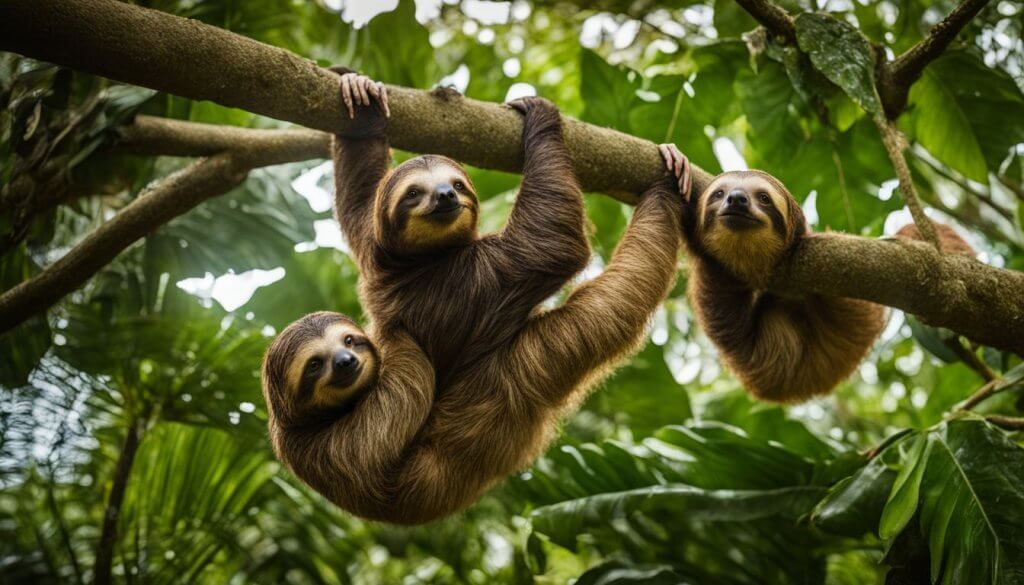
In reality, it’s related to sloths. In fact, they belong to the same order of mammals, the Pilosa order. So why are they called anteaters then?

Well, because back then, not much was known about classifying animals, and they saw an animal that walked like a bear and was hairy like a bear, and they said, ”

Look, there are four species of bears: the giant anteater, the northern and southern tamanduas, and the silky anteaters.”

They all live in the Americas. You won’t find bears in the middle of the ocean. You might be thinking the most curious thing about this animal is its snout. Haven’t you seen its tongue?

It might seem a bit long to you.

It starts at its sternum and can extend up to 60 cm long. But that’s not all; they’re covered in backward-facing spines and super sticky saliva to more easily collect insects. And it’s not just ants they eat; they also eat other types of insects, but mostly ants and termites.

After sucking up their little prey, they swallow the food without chewing it. Why, you ask? Well, they can’t because they don’t have teeth – Amazon Trails Anteaters Sloths Fascinating

They don’t need them since the insects are ground up by super strong muscles in their stomach. But anteaters aren’t social animals – Amazon Trails Anteaters Sloths Fascinating

They avoid contact with other animals and even avoid each other unless they only come together when they say, “I think it’s time to reproduce.”

But still, it’s like they don’t care much. There have been reported cases of anteaters still searching for ants while they’re in the middle of action.Amazon Trails Anteaters Sloths Fascinating

There are even cases where these actions end in very fierce fights. They won’t attack you unless they feel threatened.

But when they do, they’re usually very lethal

When threatened, an anteater will rear up on its hind legs, use its tail to balance, and charge at you, attacking you with knives.

Yes, those claws are some of the sharpest in the animal kingdom.

They’re knife-shaped and so long and sharp that anteaters have to walk on their knuckles and wrists to avoid stabbing themselves.

These claws serve them immensely to defend against all those who see them as prey but still eat them. If pumas and jaguars don’t mind facing the king of knives, it’s because they’re hungry.

The pygmy anteater or silky anteater is tiny. It weighs less than half a kilogram. But that doesn’t mean you can have them as pets. First of all, they’re incredibly reserved. tours amazon  manu reserved – 

So reserved that scientists know almost nothing about them. Secondly, silky anteaters need to live in the wild..

The Valley of Kñosnipata Manu Nature Ecological

The Valley of Kñosnipata Manu Nature Ecological

The Valley of Kñosnipata Manu Nature Ecological in Quechua, is a valley located at an elevation of 900 meters (approximately 3000 feet). It has a long history of inhabitation dating back many decades.

Initially, opportunists and missionaries were among the early settlers in the valley.

However, in more recent times, landless peasants from the highlands, particularly from Puno, have been migrating to the area.

The valley’s soil is described as gravelly, poor, and unforgiving due to millennia of torrential rains that have washed away much of its natural fertility.

Despite these challenging conditions, the inhabitants of the valley still engage in agriculture and cultivate various

crops such as rice, manioc, bananas, and different kinds of fruits, just as they have done for generations.

Within the valley, there are three main settlements: Chontachaca, Patria, and Pilcopata. However, the

population in the Valley of Kñosnipata has been declining over the last two decades due to soil exhaustion and the

depletion of exploitable timber resources .

The Kñosnipata Valley is located in the Manu  National Park Nature ,

which is located in the southeast of Peru. The park is known for its exceptional biodiversity and is considered one of the most biodiverse places in the world.

The Kñosnipata Valley is just one of the many natural wonders within this national park .

The Kñosnipata Valley is a region rich in biodiversity and is home to a wide variety of wildlife. As

part of the Manu National Park in Peru, this valley is home to various species of flora and fauna that have adapted to

the different ecosystems present in the area.

Fauna that can be found in the Kñosnipata Valley include -The Valley of Kñosnipata Manu Nature Ecological .

Mammals Amazon Nature: There is a wide range of mammals, including jaguars, pumas, tapirs, howler

monkeys, spectacled bears, tapirs, and various types of deer and rodents.

Birds Rainforest Nature : The bird life in this region is astonishingly diverse, with more than 1,000 recorded bird

species, such as macaws, parrots, toucans, hummingbirds, harpy eagles, and many species of songbirds.

Reptiles and amphibians Amazing Nature: There are numerous species of snakes, frogs, toads and lizards,

some of which are endemic to the area.

Insects and butterflies: The variety of insects and butterflies in the area is impressive, and many entomologists

find this place a paradise for their research.

Fish: The rivers and streams of the Kñosnipata Valley are home to a diversity of fish, some of which are unique to this region

The Kñosnipata Valley Nature is located at an altitude of approximately 900 meters above sea level (m.s.n.m.). This elevation is equivalent to about 3000 feet. It is important to take this altitude into account, as it can influence

the climate and vegetation found in this region of the Manu National Park in southeastern Peru.

As of my last update in September 2024,

I am not aware of a specific place called “Manu Park Nature” that would be considered the second-best natural place on the planet.

It is possible that you are referring to the Manu National Park, which is a real and significant natural area.

Manu National Park is a UNESCO World Heritage Site located in Peru nature , South America. It is one of the most

biodiverse areas on Earth and is renowned for its rich and unique ecosystems.

The park spans a vast area that includes Andean highlands, cloud forests, and lowland rainforests, making it home to

a wide variety of plant and animal species.

The biodiversity in Manu  Nature National Park

is extraordinary, with thousands of plant species, numerous bird species, and many mammals, including jaguars,

pumas, tapirs, and various monkey species. The park’s remote and pristine nature adds to its allure, offering a genuine and untouched wilderness experience for those who visit.

While Manu National Park  Nature is undeniably a remarkable place, it is essential to remember that ranking natural

places can be subjective and may change over time. Many other stunning locations on the planet hold unique and

valuable attributes, making them equally deserving of recognition and appreciation.

Each natural place offers its own magic and plays a crucial role in preserving the planet’s biodiversity and ecological balance.