Full 1
MANU TOURS
MANU TOUR ZONE RESERVED 4 DAYS
Full 1
previous arrow
next arrow
Shadow

Manu Rainforest Birds Peru

Discover the Wonders of Manu Rainforest Birds: Amazonia’s Birdwatching Adventure

Manu Rainforest Birds Peru: Experience the unparalleled beauty of Manu National Park in Peru, a haven for birdwatchers and nature enthusiasts. Home to over 500 bird species and up to nine monkey species, this pristine Amazon rainforest offers an adventure unlike any other. Manu jungle Trips

The Journey Begins -Manu Rainforest Birds Peru

Your journey starts on the scenic road to the Cock-of-the-Rock Lodge, where you’ll spend two nights immersed in the vibrant Andean cloud forest. Next, head to Amazonia Lodge for another night surrounded by lush wildlife before venturing deeper into the heart of the jungle Trips .

Explore the Rio Manu and Manu Rainforest Birds Peru

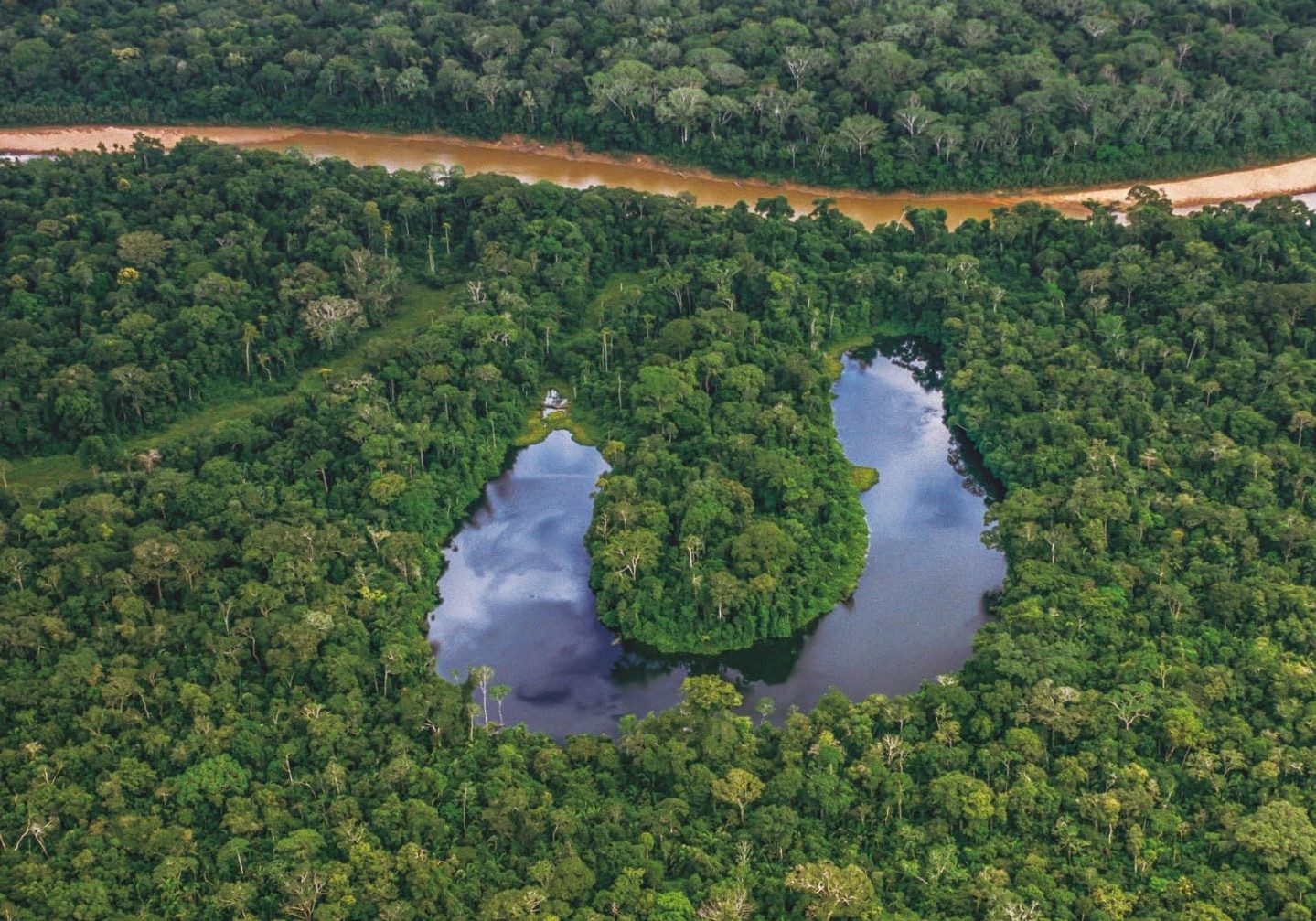
Travel up the Rio Manu for a three-night stay at a comfortable tent camp near Cocha Salvadore. Witness breathtaking oxbow lakes, remarkable mammals like the Tapir and Giant Otter, and perhaps catch a glimpse of

the elusive Jaguar. Delight in the symphony of birds from the canopy towers, which provide an unmatched view of the thriving rainforest.

Manu Wildlife Center

The adventure culminates in a five-night stay at the renowned Manu Wildlife Center, featuring luxurious

accommodations amidst the wild. This destination promises the ultimate wilderness experience, complete with a visit to a famous Macaw Clay Lick, where colorful macaws and parrots gather in a dazzling display.Manu jungle Trips

Special Highlights -Manu Rainforest Birds Peru

  • Iconic species like the Andean Cock-of-the-Rock and toucans.
  • Birdwatching from canopy towers for an extraordinary aerial perspective.
  • Seasonal sightings of migratory birds from Patagonia and North America.
  • Rare mammals and a diverse range of wildlife unique to the Amazon.
  • Beyond Manu: Extensions to Machu Picchu and More

Enhance your adventure with an optional extension to iconic destinations like Machu Picchu, the Sandoval Lake Reserve, and Tambopata Reserve  Candamo. These add-ons offer an incredible blend of cultural and natural experiences.

Birdwatching Highlights of Amazonia

Amazonia hosts an astounding 1,800–2,000 bird species, vastly outnumbering the 500 species across all of Europe.

The numbers swell seasonally with migratory birds, including the Summer Tanager and Yellow-Billed Cuckoo, highlighting the Amazon’s global ecological importance.

Even casual bird enthusiasts can enjoy the vibrant spectacle of toucans, macaws, and parrots—known for their colorful plumage and lively behaviors.

Species such as hawks, kingfishers, orioles, and flycatchers are also easier to spot near water edges or open spaces, adding to the diversity of birdwatching opportunities. Manu jungle Trips

Parrots and Macaws: Nature’s Living Rainbows

Parrots, with their striking colors and mimicry skills, are a quintessential feature of the Amazon. Macaws, the largest of the parrot family, captivate travelers with their long tails and social behaviors, often seen in dazzling pairs.

Watch them feast on the seeds of the macula and Tucuman palms, their powerful beaks breaking through hard shells with ease.

At the Macaw Clay Licks, these magnificent birds gather in stunning congregations, creating a spectacle of sound and color that you’ll never forget.

Plan Your Manu Rainforest Birds Peru

Whether you’re a seasoned birder or an avid nature explorer, this journey through the Manu rainforest promises unforgettable moments.

Book your Amazon Peru adventure today and immerse yourself in the vibrant life of one of the most biodiverse places on Earth. Manu jungle Trips

Macaws and Toucans: The Vibrant Birds of Peru’s Manu Rainforest

The Manu Rainforest in Peru is a haven for vibrant birdlife, with macaws and toucans as two of its most iconic inhabitants.

Whether soaring through the canopy or gathering at clay licks, these birds captivate visitors with their stunning appearances and fascinating behaviors. in the rainforest Manu jungle Trips

Macaws: Splashes of Color in the Canopy

Macaws are easily recognized by their vivid plumage and long tail feathers, setting them apart from smaller parrots. While most parrots are greenish with similar silhouettes, macaws boast striking colors that make them

unmistakable. Common parrot species, such as festive parrots (Amazona farinosa) and white-eyed parakeets

(Aratinga leucophthalmus), often fly in flocks along riverbanks or feed on coral tree blossoms near maripa palms.

For bird enthusiasts, distinguishing between different parrot species can be challenging, as their subtle differences

in head-feather coloring are difficult to observe in flight. However, one of the best places to marvel at macaws in their natural habitat is at Manu’s famous clay licks. Here, these birds gather to consume mineral-rich clay, which

helps neutralize toxins from their fruit-heavy diet. The sight of dozens of macaws in a vibrant, chattering congregation is an unforgettable experience. Manu jungle Trips

Toucans: Icons of the Manu Rainforest Birds Peru

With their oversized, colorful bills, toucans are true symbols of the rainforest. Their bills, among the largest relative to body size of any bird, are lightweight yet strong, thanks to an internal honeycomb structure. This unique

adaptation allows toucans to access fruits, such as figs and berries, that grow at the ends of delicate branches.

Toucans are not only fruit-eaters but also opportunistic predators, consuming small animals, eggs, and nestlings. These birds often roost and nest in tree holes, either natural or previously made by woodpeckers, to which they are distantly related.

One of Manu’s most striking toucans is the white-throated toucan (Ramphastos tucanus). With its black body, white chest, yellow rump, and blue ring of bare skin around its eye, it’s a sight to behold. Its bill—black with a yellow ridge—is as long as its body. This toucan’s croaking call sets it apart from the yellow-ridged toucan (Ramphastos culminatus), which has a distinct, multi-syllable yelp.

Other toucan species to look out for in Manu include the chestnut-eared aracari (Pteroglossus torquatus) and the dazzling golden-collared toucan (Selenidera reinwardtii).

Experience the Avian Wonders of Manu

The Manu Rainforest offers unparalleled opportunities for birdwatching, from the colorful flocks of macaws at the clay licks to the playful toucans perched among the treetops. Local guides can enrich your experience, helping you

identify species and uncover their unique behaviors. A visit to this biodiverse paradise is sure to leave you in awe of nature’s brilliance.

Raptors, and the Unique Hoatzin

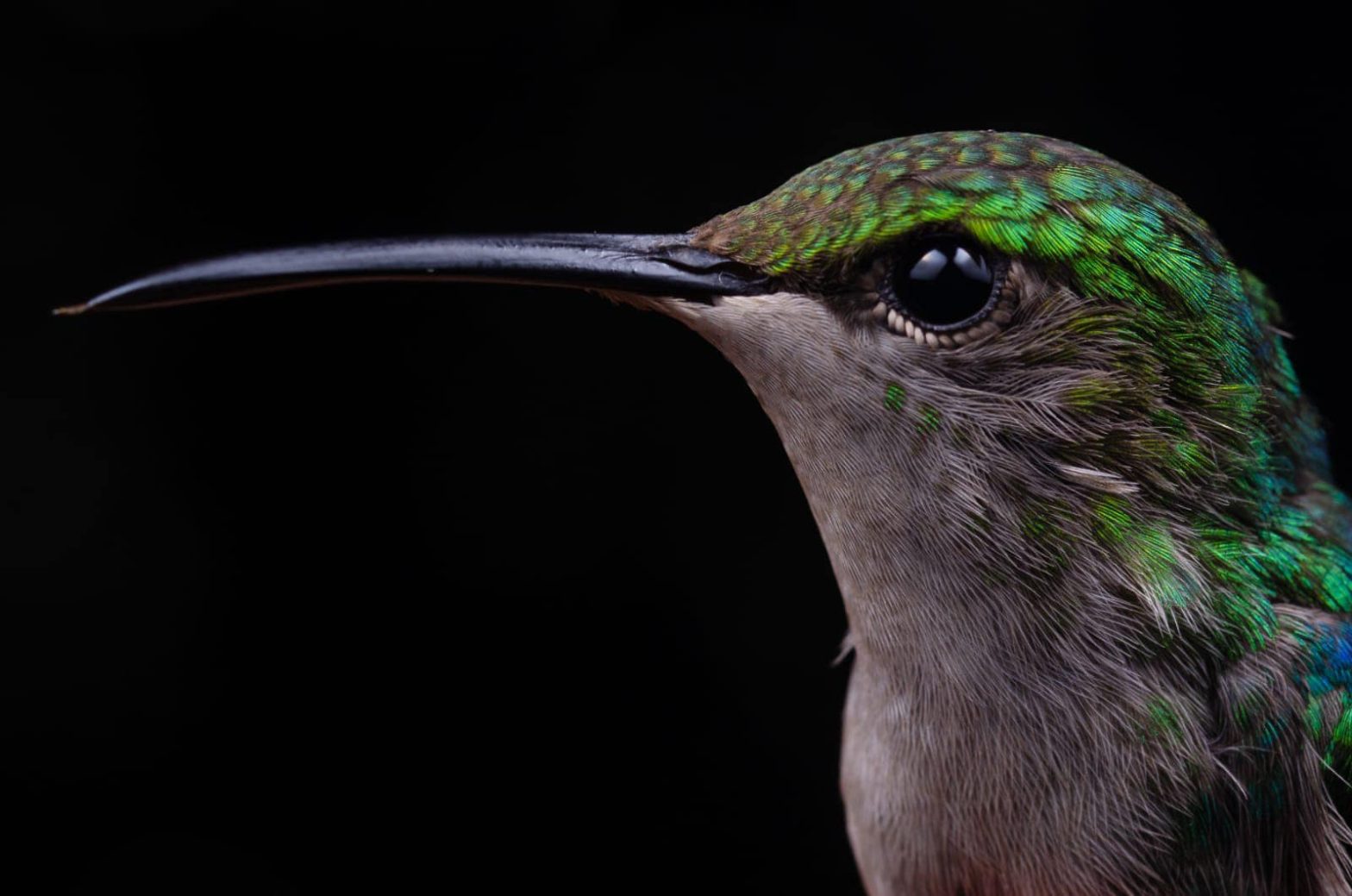
Hummingbirds: Nature’s Jewel-Like Pollinators
In pre-Colombian legends, hummingbirds were considered divine messengers—tiny beings with an almost

supernatural aura. These captivating creatures, often heard before seen, dart between flowers with wingbeats of up to 80 beats per second, creating their signature hum.

Despite their petite size—many are under 8 cm long—hummingbirds are ecological powerhouses. They pollinate a myriad of plants, including the vibrant Heliconia and Aphelandra, favoring red, orange, and yellow blooms.

Their fast metabolism requires them to feed on nectar every two hours, and at night, they enter a torpid state to conserve energy.

Their nests are just as extraordinary: delicate structures crafted from down, plant fibers, lichen, moss, and even spider silk. Measuring only 2.5 cm across, these tiny marvels may be tucked under leaves, sheltering pea-sized eggs.  Manu jungle Trips

The Best Place to See Hummingbirds? Manu Rainforest.

The Manu cloud and montane forests in the eastern Andes host Peru’s richest hummingbird diversity, with over 1,200 species recorded. While lowland rainforests harbor fewer hummingbirds, lucky visitors might spot species like the glittering-throated emerald, golden-tailed sapphire, or black-eared fairy hovering for a magical moment.

Amazon Raptors: Majestic Predators of the Sky
The harpy eagle (Harpia harpyja) reigns supreme as the Amazon’s most powerful bird of prey. Standing nearly a meter tall, with a wingspan exceeding 1.8 meters and formidable yellow talons, this apex predator targets monkeys and sloths. Although rare, these eagles occasionally soar above undisturbed rainforest canopies, hunting for their next meal.

Other Amazon raptors include in the Manu jungle Trips  :

Yellow-headed caracara: Common near settlements.

Black-collared hawk: Often seen in wetlands.

Roadside hawk: Frequently spotted along roads.

Turkey vulture and king vulture: These scavengers dominate the skies, with the latter boasting a striking crown of orange, yellow, and purple wattles.
In swampy areas, look out for the slender-billed kite, perched high and scanning for freshwater snails.

Hoatzin: The Quirky “Stink Bird”

A bird unlike any other, the hoatzin (Opisthocomus hoazin), or shansho, is a sight to behold. Resembling a turkey, it sports a scruffy Mohican crest, blue eye-rings, and an unusual reputation for its odor. Its nickname, the “stink bird,” comes from its fermentation-heavy diet of leaves, which produces a pungent smell.

Hoatzins are clumsy flyers due to their small pectoral muscles, but their oversized crop aids in leaf digestion.

When threatened, they often flee to safety, but during mating season, shyness takes a backseat. Flocks gather near swampy areas, their loud calls filling the air as they build nests above water, aided by cooperative helpers. Manu jungle Trips

Why Visit the Amazon for Birdwatching?

The Amazon Rainforest, particularly the Manu Reserved Zone, offers unparalleled opportunities for bird enthusiasts. From the dazzling agility of hummingbirds to the commanding presence of raptors and the quirky

charm of the hoatzin, the diversity here is unmatched Plan your adventure to explore this avian wonderland and witness the unique behaviors, dazzling colors, and ecological significance of these incredible birds.

Nature’s Marvels: The Unforgettable Wildlife of the Amazon Manu jungle Trips

The Hoatzin: A Bird Like No Other
In the heart of the Amazon, the hoatzin—a strikingly unique bird—captures the imagination of travelers and nature

enthusiasts alike. Nicknamed the “stinkbird” for its distinct odor, this creature is a marvel of evolution. When

threatened, hoatzin chicks display a remarkable survival tactic: they leap fearlessly into the water below, swim to

safety, and use their specialized bill, feet, and wing-claws to climb back to the treetop nest.


Mammals of the Amazon

Mammals of the Amazon

Mammals of the Amazon of the Rainforest Peru . Within four hours by boat to Bolivia, Reserva Amazónica sits along the Mammals of the Amazon Basin in Tambopata Perù. The exclusive resort resides within a one-hour boat

ride from the nearest city, Puerto Maldonado. Reserva Amazónica allows each guest personalization of theirrainforest excursions regardless of weather conditions and length of stay. Bilingual nature interpreters, specialized in the flora and fauna of the Tambopata trips region, facilitate these excursions in jungle trips.

Visitors can walk along well established trail systems, including a wetlands boardwalk; they can take canoe

excursions around lake Valencia and Sandoval Lake, as well as Gamitana Creek; or they can take a tour to a river island, a large butterfly house, orchid and medicinal plant gardens, and more. The

packages resonate with all levels of biological and travelenthusiasts. Beyond the natural marvels, the resort encompasses full bar services, exquisite three-course cuisine (vegetarian

options included), and river front massage therapy.

The giant anteater (Myrmecophaga tradactyla) Mammals of the Amazon

is the largest edentate and among the largest rainforest animals, up to 2.8m long and weighing 39kg. Strictly terrestrial, it searches the forest floor where ants and termites are most plentiful.

Insects are no match for the anteater whose claws rip open nests in seconds, while tough hairy skin protects it against stings and bites in jungle. With a long snout and sticky tongue it probes for its abundant food. If you walk off a forest track a short way you often see holes where an anteater has dug through an ant’s nest in jungle.

Its digging tools also come in handy to defend itself and it can easily kill a dog. Rare in rainforest and locally extinct in many places, the giant anteater is threatened anteaters are easiest to see in grassland savannah habitats

In the same order as sloths and anteaters, armadillos are well-known to southerners, familiar with the nine- banded armadillo (Dasypus nouemcinrtus) whose range from South America, stretching ever further north, makes

it the most widespread armadillo in amazon rainforest mammals. The largest is giant armadillo (Priodontes Maximus) at over 1.5m long from head to tail and up to 30kg in weight.

Due to over-hunting the giant armadillo is extinct over much of its former range (Armadillos are rarely seen in jungle peruvian, on account of their quiet, nocturnal and solitary habits. If you do see one it will more than likely be curled up in a

tight ball to protect the vulnerably soft parts of its body. Broadly omnivorous, they feed on ants and other insects, various small animals, carrion, fungi and fruit. The biggest forest herbivore is the amazon Manu park and tambopata.

 Discover the Enigmatic Tapir: Mammals of the Amazon

Meet the tapir, one of the Amazon rainforest’s most intriguing inhabitants. Renowned for their exceptional swimming skills, these fascinating mammals thrive in lowland tropical and subtropical forests, favoring lush, wet environments and seasonally flooded areas.

A Master of Adaptation While tapirs are remarkable swimmers, they can also sprint at surprising speeds on land, showcasing their versatility. These nocturnal creatures are most active at night, foraging for a diet rich in leaves, fruits, grasses, and

aquatic plants. Adults can grow to about 2 meters in length and weigh over 227 kg, making them a true marvel of the rainforest.

Mammals of the Amazon   Facing Challenges

Despite their adaptability, tapirs are under threat. Deforestation, hunting, and competition from domestic livestock have significantly reduced their populations across their natural habitats. Ongoing habitat loss remains apressing concern for these gentle giants.

Conservation Efforts

To protect tapirs and their ecosystems, conservation initiatives are crucial. Supporting sustainable tourism and

responsible wildlife management can help ensure a brighter future for this unique species.

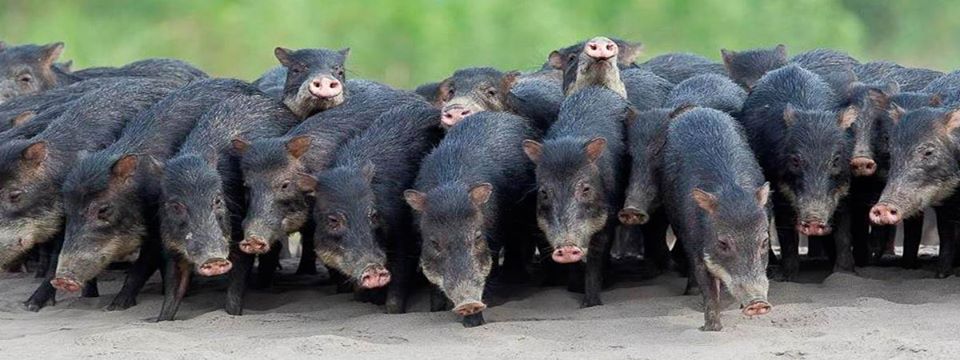
Mammals of the Amazon Peccaries or Sajino (Tayassu spp) –  

also called boars, are smaller than tapir, weigh around 30kg and are related to pigs. Commonest is the widespread

collared peccary ( tajacu) which is omnivorous and consumes any edible plant, small animals or carrion in jungle.

Roaming in groups of ten or more, pungent cheesy smells reveal their presence long before sight or sound.

Aggressive animals, they can inflict serious wounds with their 8cm-long tusks. Intensively hunted for meat,

peccaries are listed as threatened in amazon rainforest .

Mammals of the Amazon -Red brocket deer (Mazama amerbana) 

 venture into forest clearings or even to the edge of gardens and plantations. Although common and widespread,

deer are shy and retiring Carnivores Carnivores are well represented, with the main terrestrial ones being cats or weasels in jungle.

The dog family, with two rare and obscure species, is relatively insignificant the cot family ( felidae) At the top of

the food chain, wild cats are uncommon everywhere the amazon rainforest.

Their Conservations prospects are worsened by over-hunting. All South American felids Are officially endangered

Four are spotted cats; golden yellow with Black spots or stripes.

Two others are uniform color For many, seeing a cat would be the ultimate goal of a trip to the Amazon,

but cats are extremely unlikely to be seen in the wild on an overage length visit. They are rare, wary of humans and

in the main nocturnal, but observe carefully and you can pick up evidence of activity.

Look for tracks by muddy rivers or claw on a tree Cats may be seen on trails at night or around water margins in remote areas.

Local zoos sometimes display captured jaguars and smaller cats.

Encounter the Majestic Jaguar: The King of the Americas
Jaguar (Panthera onca)

The jaguar, a symbol of power and mystery, reigns as the largest cat in the Americas. Found primarily in the heart of the Amazon rainforest, these magnificent creatures are revered yet feared for their stealth and strength. While

they inhabit diverse ecosystems—from lush rainforests and flooded swamps to arid thorn scrub woodlands—their populations are dwindling, especially outside their Amazonian stronghold.

Master of Adaptation

With a sleek physique built for agility, jaguars are remarkable swimmers, climbers, and sprinters. Their powerful limbs enable them to navigate various terrains with ease, showcasing a prowess that few other predators possess. Jaguars primarily hunt large ungulates, such as deer, but they are opportunistic eaters, preying on peccaries and

even caimans. Their extraordinary bite force allows them to penetrate the tough shells of turtles, making them formidable hunters in their domain.

Facing Peril

Sadly, the jaguar’s future hangs in the balance. Habitat destruction, decreased prey availability, and human conflict have led to a significant decline in their population, estimated at fewer than 50,000 mature individuals in

the wild. While hunting for their striking pelts has greatly reduced since the 1970s, jaguars still face threats from ranchers who perceive them as a danger to livestock.

Meet the Ocelot: The Enchanting Miniature Jaguar
Ocelot (Felis pardalis)

Discover the ocelot, a captivating feline that resembles a miniature jaguar. This stunning creature measures just over one meter in length, yet its sleek, graceful form weighs around 11 kg, making it a lightweight marvel of the wild.

A Beautiful Hunter

Ocelots are renowned for their striking coat, adorned with beautiful spots and rosettes that provide perfect

camouflage in their lush tropical habitats. Found throughout the neotropics, from the southern United States to

South America, these elusive cats are primarily nocturnal, showcasing their hunting skills under the cover of darkness.

Adaptable and Agile

Despite their size, ocelots are agile hunters, preying on a variety of animals, including rodents, birds, and even reptiles. Their adaptability to different environments, from dense forests to savannas, makes them a versatile predator in the animal kingdom.

Conservation Concerns

While ocelots are resilient, they face threats from habitat loss and hunting. Conservation efforts are essential to protect their natural habitats and ensure that future generations can enjoy the beauty of these remarkable cats.

Discover the Wild Dogs of the Rainforest: Nature’s Mysterious Canids
Dogs (Canidae)

Venture into the heart of the rainforest and meet two of its most elusive inhabitants: the bush dog (Speothos venaticus) and the short-eared dog (Atelocynus microtis). These fascinating canids are small, raccoon-like creatures that embody the spirit of the wild.

The Enigmatic Bush Dog

The bush dog is known for its unique appearance and social behavior. This small canid thrives in groups,

showcasing a remarkable hunting strategy that allows them to navigate their wetland habitats. Despite their

intriguing social structure, much of what we know about them comes from observations of captive individuals,

leaving a significant gap in our understanding of their natural behaviors.

The Mysterious Short-Eared Dog

Similarly elusive, the short-eared dog is a rare sight in the wild. With its distinctive ears and compact build, it is

perfectly adapted to the dense underbrush of the rainforest. Like the bush dog, our knowledge of the short-eared

dog is primarily based on a few specimens and limited field studies, making them one of the most intriguing mysteries of the rainforest.

Meet the Tayra: The Agile Jungle Forager
Tayra (Eira barbara)

Introducing the tayra, a fascinating mammal that roams the lush landscapes of Central and South America.

Resembling a larger, darker version of the grison, the tayra stands out with its long legs and tail, making it an agile

and versatile creature in its natural habitat.

A Versatile Feeder

The tayra is a true opportunist, boasting a varied diet that includes small vertebrates, insects, and ripe fruits. This

adaptability allows it to thrive in diverse environments, from dense rainforests to open woodlands. While

primarily ground-dwelling, the tayra occasionally takes to the trees, showcasing its climbing skills as it forages for food

Discover the Fascinating World of Large Rodents

As you navigate the enchanting trails or glide through the waterways of the rainforest, keep your eyes peeled for a

remarkable creature that resembles an oversized guinea pig. This intriguing animal is likely a large rodent, with

the capybara being the most famous among them.

Meet the Capybara

Known as the world’s largest rodent, the capybara is a unique sight for wildlife enthusiasts. These fascinating

animals are strictly terrestrial, often seen lounging by rivers and in lush grasslands. With their distinctively smooth

coats and stout bodies, capybaras exhibit a low stance, long legs, and minimal tails, making them easily

recognizable in their natural habitat.

Why You Should Look for Large Rodents

Spotting a capybara or other large rodents in the wild is an unforgettable experience for travelers. Their social

nature and calm demeanor offer a rare glimpse into the rich biodiversity of the rainforest. Observing these gentle

giants in their natural environment adds a unique dimension to any wildlife adventure..

The Capybara (Hydrochaeris hydrochaeris) 

the world’s largest rodent, weighs up to 113kg and can grow to be 1.4m long Tan to yellow-brown, it feeds on grass

and leaves and has a squarish muzzle. Easily tamed by natives as pets, the capybara could soon be bred

commercially in ranches as food as a sustainable rainforest industry to the benefit of the eco-system agoutis

(Dasyprocta spp), pagl (Agouti paca) and acouchys(Myoprocta spp) are coloured orange-red to grey to black. Of

these only the widespread paca has any markings rows of white spots.

No agoutis overlap in distribution with the black agouti (fulignosa) limited to western Amazonia with the red-

rumped agouti (agouti) prevalent only in Brazil and the Guyanas. Feeding on a variety of seeds and forage foods,

agoutis use their sharp incisors to open the tough coconut -sized Outer shell of the Brazil nut opossums .Normally

associated with Australia, the New world marsupial opossums are the living survivors of the time before South

America became an island continent when south America,

Africa and Australia were conjoined while Australian marsupials have flourished, their distant South American

relatives have lost out to Placental mammals. There are at present 41 species of opossum. Amazon opossums, like

most species, are nocturnal, sleeping by day and foraging at night.

Amazon Wildlife Mammals

Amazon Wildlife Mammals: A Guide to Manu Jungle Trips

Amazon Wildlife Mammals  Manu National Park,   nestled within the tropical Andes, stands out as a global hotspot for mammal diversity and endemism. This unparalleled biodiversity makes Manu a must-visit destination for wildlife enthusiasts and nature lovers. Manu Road

Mammal Diversity in Manu National Park

The tropical Andes region boasts exceptional mammal diversity, with many species still awaiting discovery. South America continues to reveal new mammal species, especially in regions like the tropical Andes and Brazil.

Small mammals, including bats and rodents, are particularly abundant and account for over half of the mammal species in any area. These creatures play pivotal roles in their ecosystems, contributing to pollination, seed dispersal, insect control, and more. Notably, small mammals like bats serve as excellent indicators of habitat health and disturbance.  Manu Jungle Trips

 Mammal Groups in Manu Bats

Vital for pollination and seed dispersal, bats contribute significantly to forest regeneration. Some species are adapted to specific plants, showcasing the intricate relationships within this ecosystem. Peruvian Amazonia

Rodents : These small mammals influence forest composition through seed predation and dispersal. Their activities shape the dynamics of plant populations and the overall ecosystem of the Manu Jungle Trips

Predators :Larger mammals, such as jaguars and pumas, thrive in Manu’s lush landscapes. These apex predators maintain balance within the food chain, controlling populations of herbivores and smaller carnivores.

Primates :Manu is home to several primate species, including capuchins, howler monkeys, and spider monkeys. These intelligent mammals captivate visitors with their dynamic behaviors and intricate social structures.

Aquatic Mammals ;Rivers and oxbow lakes in Manu provide habitats for species like the Amazonian manatee and the playful giant otter, a true highlight for wildlife enthusiasts.  Manu Jungle Trips

Why Explore Manu’s Mammals?

Manu’s mammal diversity offers a unique chance to observe species found nowhere else in the world. Visitors can experience the wonder of the Manu Jungle Trips

  • Nocturnal bat tours to learn about their fascinating ecology.
  • Spotting elusive jaguars on riverbanks.
  • Hiking trails to encounter monkeys and rodents in their natural habitats.
  • How to Maximize Your Jungle Adventure

To fully appreciate Manu’s wildlife, plan your visit during the dry season (May to October), when mammals are more active and visible. Expert-guided tours and jungle lodges provide immersive experiences, allowing travelers to connect deeply with nature. Peruvian rainfores Manu 

Exploring the Mammals of Peru: A Guide for Wildlife Enthusiasts

Peru ranks as the fifth most diverse country for mammals worldwide, offering unparalleled opportunities to witness an extraordinary array of species. This guide delves into the unique mammal diversity found in Peru, particularly in its highland and Amazonian regions.Manu Jungle Trips

Mammal Diversity in Peru’s Tropical Andes

The tropical Andes of Colombia, Ecuador, Peru, and Bolivia are renowned for their rich biodiversity. In Peru, mammal groups include:

  • Marsupials: Families like Didelphidae and Caenolestidae
  • Rodents: Abrocomidae, Caviidae, Cricetidae, and more
  • Shrews: Soricidae

Bats: Including Phyllostomidae, Molossidae, and Vespertilionidae

Peru’s incredible mammal diversity places it alongside other megadiverse countries like Brazil and Mexico. For instance, elevational gradient studies highlight how different habitats host unique species, offering visitors a chance to explore ecological niches from lowland rainforests to the high-altitude puna in the Manu Jungle Trips

Mammals of the Puna and Paramo Ecosystems

The puna rodent fauna of Peru and Bolivia surpasses the diversity of the paramo ecosystem in Colombia, Ecuador, and northern Peru. This richness arises from the puna’s greater environmental heterogeneity and historical factors that encouraged species diversification.

  • Notable Species in the Dry Puna:
  • Phyllotis osilae osilae
  • Auliscomys boliviensis
  • Necromys amoenus
  • Species Found in the Humid Puna:
  • Phyllotis osilae phaeus
  • Punomys kofordi
  • Auliscomys pictus

Recent studies reveal that mammal assemblages in the humid puna share similarities with the paramo, distinguishing them from the dry puna zones. Manu Jungle Trips

Why Peru Stands Out for Mammal Observations

With its vast array of ecosystems, Peru provides exceptional opportunities to observe species such as:

  • Jungle Bats: Key contributors to pollination and seed dispersal
  • Highland Rodents: Influencing plant populations in the Andes
  • Majestic Predators: Jaguars and pumas in the lowlands
  • How to Explore Peru’s Mammals
  • To maximize your experience:
  • Visit during dry seasons for better visibility.
  • Choose guided tours that specialize in both Amazon and highland ecosystems.
  • Stay in eco-lodges to access remote habitats and expert-led nocturnal explorations.

Discover Manu National Park: A Haven for Amazon Wildlife Mammals

A Global Leader in Mammalogical Research

Peru’s Manu National Park (340 – 3,675 meters above sea level) is a crown jewel of biodiversity and the most thoroughly studied protected area in the tropical Andes. With over 20 years of focused mammalogical research, it stands apart in advancing our understanding of mammal diversity and distribution in this unique ecosystem. Manu Jungle Trips

Elevational Gradients and Mammal Diversity

  • Studies in Manu reveal fascinating patterns of mammal richness along elevational gradients:
  • Eastern Versant: Species richness decreases with elevation, as demonstrated by research in Manu National Park (R² = 0.82, P = 0.0001).
  • Contrasting Findings: This decrease contrasts with mid-elevation richness peaks found in other regions, highlighting Manu’s distinct ecological dynamics.
  • Rodent assemblages in Manu display clear zonal restrictions, with species, genera, and even tribal replacements occurring along these gradients.

Insights from Comparative Research

Studies on the western slope of the Peruvian Andes reveal diversity increases with elevation (R² = 0.44, P = 0.0001), likely driven by enhanced precipitation and vegetation at higher altitudes. This pattern contrasts with the arid coastal deserts and emphasizes the importance of localized speciation in the puna biome.

  • However, similar studies remain sparse for:
  • Pacific Slope: The humid, diverse forests of Colombia, Ecuador (Chocó), and northern Peru.
  • Bolivia and Ecuador: Limited or incomplete research on elevational gradients hinders a full understanding of mammal distribution in these regions.

Call for Further Exploration

While Manu National Park’s extensive research sets a high bar, other areas in the tropical Andes warrant detailed studies. Testing historical and environmental hypotheses in regions like the Pacific tropical forests could unlock critical insights into mammal diversity across varying ecosystems. Manu Jungle Trips

Why Visit Manu National Park?

Manu’s unique positioning along elevational gradients offers an unparalleled opportunity to observe mammal species in distinct ecological zones: Manu Reserved Zone 

  • Lowland Rainforests: Rich in species diversity, with iconic Amazonian wildlife.
  • Andean Highlands: Host to specialized rodent species and unique ecosystems.
  • With expert-guided tours, you can delve into this incredible world of biodiversity, witnessing firsthand the interplay of elevation, vegetation, and wildlife.

Plan Your Visit

Manu National Park invites you to explore the wonders of the tropical Andes. From lush lowlands to misty highlands, the park’s diverse habitats promise unforgettable wildlife encounters. Book your trip today and experience the marvels of Amazonian biodiversity .Manu Jungle Trips

Amazon Wildlife Mammals: Discover the Spectacular Diversity of the Peruvian Rainforest

The Amazon rainforest is a treasure trove of biodiversity, offering travelers a rare chance to witness an array of fascinating wildlife in their natural habitats. From stealthy predators to quirky herbivores, here’s an exciting guide to some of the most iconic mammals you can encounter in the Amazon jungle.

Iconic Predators of the Amazon

Jaguar (Panthera onca): The elusive king of the jungle, known for its stealth and power.
Puma (Puma concolor): A majestic big cat, revered for its adaptability.
Ocelot (Leopardus pardalis): A spotted feline beauty with nocturnal habits.
Margay (Leopardus wiedii): Also called “Huamburushu,” an arboreal hunter.
Jaguarundi (Herpailurus yagouaroundi): A small, sleek wildcat.

Unique Mammals of the Rainforest Canopy

Red Howler Monkey (Alouatta seniculus): Famous for its echoing roar across the jungle.
Black Spider Monkey (Ateles belzebuth chamek): Agile acrobat of the treetops.
Dusky Titi Monkey (Callicebus spp.): A charming, small primate found in family groups.
Squirrel Monkey (Saimiri sciureus): Known for its playful antics and striking patterns.
Brown Capuchin (Cebus apella): A clever primate often seen foraging with curiosity.

Ground-Dwellers and Aquatic Marvels

Tapir (Tapirus terrestris): The rainforest’s gentle giant.
Capybara (Hydrochoerus hydrochaeris): The world’s largest rodent, often seen near water.
Giant Anteater (Myrmecophaga tridactyla): Known for its impressive size and unique feeding habits.
Southern River Otter (Lontra longicaudis): A playful aquatic dweller.
Giant Otter (Pteronura brasiliensis): A social and energetic carnivore, often

found in family groups.

    • Mysterious Nighttime Foragers
    • Common Opossum (Didelphis marsupialis): A shy, nocturnal marsupial.
    • Silky Anteater (Cyclopes didactylus): Tiny and arboreal, it clings to tree branches.
    • Short-Eared Dog (Atelocynus microtis): A rare and enigmatic rainforest canid.
    • Crab-Eating Raccoon (Procyon cancrivorus): A semi-aquatic scavenger.

      Herbivores, Foragers, and More

  • Collared Peccary (Tayassu tajacu) & White-Lipped Peccary (Tayassu pecari): Essential to the Amazon’s ecosystem, these social creatures roam in herds.
  • Spined Porcupine (Coendou bicolor): A nocturnal rodent with sharp quills for defense.
  • Red Brocket Deer (Mazama americana) & Gray Brocket Deer (Mazama gouazoubira): Elusive forest grazers.
  • Brown Agouti (Dasyprocta variegata): A vital seed disperser in the rainforest.


Amazon Expedition River

Embark on the Legendary  Amazon Expedition River

The Amazon Expedition River  is one of the world’s most fascinating waterways, with a rich history and an unmatched influence in the natural world. Join us on a journey through time and nature to explore its discovery and why this magnificent river stands as one of Earth’s great wonders. Manu jungle trips

The Historic Discovery of the Amazon Expedition River

In 1541, Gonzalo Pizarro, brother to the renowned conquistador Francisco Pizarro, was tasked with exploring the eastern reaches of the Andes near Quito (modern-day Ecuador). Accompanied by soldiers and local allies, Gonzalo embarked on a journey that would lead to one of the world’s most significant geographic discoveries: the Amazon River.

On December 26, 1541, Pizarro’s expedition set off from Santa Ana, a settlement near the Coca River. Leading the expedition was Francisco de Orellana, who captained the ship “San Pedro” through rugged territories. By February 8, 1542, they reached the Napo River, which led to the vast, mighty river that Orellana famously named the Amazon River, inspired by the female warriors he encountered, after the Greek myth of the Amazons. rainforest  jungle trips

The Adventurous Journey Through the Heart of the Amazon Jungle

Orellana’s journey through the Amazon was anything but easy. The expedition traveled through dense rainforests, encountering indigenous groups, navigating turbulent waters, and overcoming immense challenges. The travelers faced constant threats from locals, which led Orellana to name the river the “River of the Amazons.”

The Amazon is now regarded as the world’s largest river by discharge volume, stretching its mighty waters across an extensive network that nourishes one of Earth’s most biodiverse regions. From the Peruvian Amazon to the Brazilian heartlands, the Amazon River meanders through lush landscapes and provides vital waterways for communities and wildlife alike. travel manu jungle trips

The Peruvian Amazon: Gateway to the Greatest -Amazon Expedition River .

The Peruvian Amazon is a stunning ecological zone that harbors some of the world’s most biodiverse areas, including Manu National Park and the Pacaya Samiria National Reserve. These areas are marked by their thick jungles and intricate waterways, home to fascinating wildlife and unique human communities. A visit to the Amazon here allows travelers to experience one of the richest ecosystems on Earth firsthand.

Did you know that the confluence of the Ucayali and Marañón Rivers forms the source of the Amazon? In this region, you can explore flooded forests known locally as “Tahuampas,” offering an unparalleled opportunity to experience nature at its wildest and most pristine. Manu Trips 

Facts You Didn’t Know the Amazon Expedition River

A Massive Basin: The Amazon Basin spans over 7.35 million square kilometers, with 68% in Brazil and the rest

spread across Peru, Bolivia, Ecuador, Colombia, Venezuela, and Guyana. It’s the largest drainage basin on the planet!

Rivers That Shape the Forest: The Amazon River is fed by Andean mountain rivers known as “white-water”

rivers because of their nutrient-rich waters. These rivers fertilize the basin, sustaining the lush rainforest that

depends on them.

Length Controversy: Traditionally, the Amazon is considered the second-longest river in the world after the Nile.

However, recent studies suggest the Amazon may be longer. New measurements have extended its length to about

7,000 kilometers, placing it definitively at the top of the classification.

The Mighty Flow: The Amazon carries more water than the Mississippi, Nile, and Yangtze combined—an

astounding 120,000 cubic meters per second on average, and up to 300,000 during the rainy season. It discharges

one-fifth of the world’s freshwater into the Atlantic Ocean. jungle trips

Seasonal Flooding: Half the year, vast areas of the Amazon basin are flooded.

These annual floods are critical to the region’s ecology, providing fertile grounds for fish and plants. The seasonal

flooding also affects the Amazon’s tidal ecosystem, especially near its estuary.

A World of Wonders Await

The Amazon River is an invitation to an unforgettable adventure—rich with history, brimming with natural wonders,

and teeming with diverse wildlife. From vibrant cultures and unique wildlife to the raw power of the river itself, it’s

no wonder the Amazon is a bucket-list destination for nature lovers and adventurers alike.

Ready to discover the world’s greatest river?

Whether you seek thrilling expeditions, awe-inspiring wildlife encounters, or a glimpse into ancient civilizations, the

Amazon River offers an experience unlike any other.

Plan your Amazon Jungle expedition now and explore the heart of the wilderness that has captivated explorers for centuries.

Amphibians Amazon Rainforest

Amphibians Amazon Rainforest

  Amphibians Amazon Rainforest-  Travel of Tambopata reserve region of Perù yields the highest biodiversity of reptiles and amphibians amazon

rainforest in the world and includes more than 210 amphibian and reptilian species (Doan and Arizábal 2002).

Previous surveys of the region’s biodiversity have been used to categorize the IUCN and CITES status of species and

contributed to future reserve design (von May et al. 2007). At the epicenter of this diversity lies one of the

world’s most prominent facilities for ecotourism and conservation, Reserva Amazónica, formerly Cusco Amazónico

in jungle trips.

Amphibians Amazon Rainforest to Manu  Wildlife :

Amazon Rainforest in Peru, the People are rarely ambivalent towards amphibians to many they are sluggish and

slimy on top of which many amazon amphibians have the liability of being poisonous others admire them because

most are active beautiful and on the whole harmless in jungle trips.Amphibians Amazon Rainforest

The first vertebrates – Amphibians Amazon Rainforest .

To live on land and still need water to reproduce to overcome this limitation they evolved ingenious strategies and fill

a myriad of ecological niches today amphibians are the most diverse and abundant terrestrial vertebrates and are

at peak biodiversity in the lowland tropical rainforest species in jungle peruvian.

Just the insects comprise 34 orders compared with 16 orders of mammals there are 20 families of flies (order

Diptera), compared with seven families in the order Primates in amazon rainforest.

almost know more about rocks on the moon than about forest insects whatever we feel about insects, without them

life on land would quickly collapse down to a few simple plants and microbes and the rainforest would not

function or even exist Incessantly active, countless tiny hexapods sustain our world unchanged. Forest insects

rerycle nutrients, maintain soil structure and fertility, pollinate plants, disperse seeds, control populations of other

organisms and are a major food source for birds, mammals, reptiles, amphibians, other insects… even carnivorous plants.

Tight, mutually beneficial interactions are common among rainforest organisms, but especially between

plants and insects. Indeed, some plant-insect relationships are almost unbelievably elaborate in manu national

park and sandoval lake and tambopata trips adventure.

Beetles in Amazon Rainforest:

The famous English biologist J B S Haldane remarked ‘God must have been inordinately fond of beetles’, and with

good reason as beetles are the most diverse group of terrestrial animals in jungle peruvian. Indeed, far too many

beetle species exist for a systematic treatment here in jungle. The exercise would require a book, several books, and

this has not, as yet, been attempted. Of the 1.75 million species so far described, some 60% are insects and a

third of these are beetles, amounting to about 350,000 known beetles in amazon rainforest. Of these perhaps half

are from the tropics. On a single leguminous tropical entomologist Terry Erwin found 1,500 beetle species, 163 of

whichspecialized on that tree alone. Such discoveries are the basis of seemingly extravagant claims that rainforest

holds 95% of the world’s species with jungle trips peruvian.

Amazon rainforest despite the wide range

of shapes  and sizes among beetle species, they all have a single pair of membranous wings covered by a pair of

hard chitinous plates called elytra. This gives the order its name Coleoptera, meaning sheath-wing

. The tough elytra are mounded by evolution into a wide variety of forms to exploit an equally varied range of

niches in jungle.

Among others, an especially favored life-style which provides both food and shelter is that of wood-boring.

The palm beetle (Rlryrchophorus palmarum) lays its Eggs in fallen euterpe and bacteria palms. The grown beetle

¿larvae are harvested by jungle trips. Indians for a handy, nutritious snack.

Among the most exquisite specimens is the golden tortoise beetle (Chrysomelidae). This looks like a living

Egyptian scarab, carved in gold, under a curious transparent tortoise-shaped carapace. Chrysomelids, or leaf

beetles, are among the most diverse beetle families in manu. Many feed on live plant material and some are pests,

though others have been employed to control weeds and others to pollinate flowers in jungle. In the same super

family as chrysomelids are the long-horned beetles (Cerambicidae). Among the longest insects, these giants of the

beetle world include Tetanus gigantean which is up  to 20cm long and comes from northern Brazil and French

Guiana to Peru with jungle trips..

Although the golden tortoise beetle may look like a jewel scarab, real scarabs are usually quite plain, though some are pretty.

This family, the Scarabidae, consume dung and are important recyclers in the nutrient cycle.

Large scarabs tend to be black or dark brown, smaller ones vary from green to orange or blue. They all share the

dungball-rolling ability and powerful limbs to push this precious cargo around. This is buried in a suitable spot

where the female scarab lays her eggs, from one or two to a couple of dozen, depending on the species. But nor all

combined.scarabs have scatological tendencies; one species (Cydocephala spp) pollinates the giant water

lily.Fire-flies, also called lightning bugs, are neither flies nor bugs but beetles (Lampyridae) responsible for

spectacular displays along river edges and lowland areas at certain times of year in manu national park and

sandoval lake and tambopata reserve. The light is generated by a non-heat-producing enajlme reaction. Each

species has its own identification code of short and long flashes, used to attract mates. Iridescent click beetles

(Elateridae) are also bioluminescent.Another important beetle family is coccinellids or ladybirds in jungle peruvian.

Coccinellid adults and larvae are important predators of aphids, voracious pests. Weevils are notable pests of

stored grains but wild species abound.

Indeed, the weevils (Curculionidae), numbering some 60,000 described species, have more species than any other beetle family

, about a fifth of the entire order of Coleoptera.-weevil lifestyles vary widely. In nature of amazon rainforest, they

use their snout to bore into plant leaves, stems, seeds and roots for feeding or oviposit ion. These beetles look like

miniature tanks, armed with a large nozzle-like proboscis, antenna and a set of jaws attached to its end, and a

rounded carapace lined with small longitudinal pits. .Among the most beautiful insects are the wood boring beetles

(Buprestid) including the above-mentioned palm beetle.

Serious pest’s of wooden buildings, in nature their feeding habits help speed up decomposition of dead wood in

jungle peruvian. Popular with collectors, buprestids are also called jewel beetles because of their dazzling iridescence.

Natives use metallic green elytra from a buprestid, Euehroma §gantea,for necklaces and other adornments in

amazon rainforest.

The rhinoceros beetles (Megasoma actaeon, Manubis)

are large, robust beetles up to 8cm long. The males’ impressive antlers occasionally end up in handicrafts in jungle.

The socalled ground beetles (Carabidae) are a cosmopolitan group of small to medium-sized, shiny black,

fast-moving predators of other insects and small invertebrates. Despite the name, many types of carbide are found

in trees. The rove beetles (Staphylinidae) can be recognized by their foreshortened elytra which leave the posterior abdomen exposed.

This seems no hindrance to success as they are very diverse in jungle peruvian, ranging in size from tiny (under

5mm) to over 2.5cm. Some are black and dull; others may be iridescent green or blue. Aggressive predators of

other insects, rove beetles are creatures of dark, damp crevices and comers, living among leaf litter, under rocks

and logs and along muddy waterways in jungle.

Darkling beetles (Tenebrionidae) are found worldwide and eat dead or dry vegetation, ideal for the rainforest but

not so good in your house in amazon rainforest.

Here are some amphibian species found in the Amazon Rainforest .

Glass Frog (Centrolenidae family)

Known for their translucent skin on their underside, the Glass Frog’s internal organs are visible, offering a unique glimpse into their biology. These frogs are small and primarily arboreal, found in rainforest areas, particularly in Manu’s cloud forests.

Poison Dart Frog (Dendrobatidae family)

Brightly colored with hues of blue, green, yellow, and red, these small frogs produce toxins that are potent when ingested. They are found in humid, tropical rainforests and are famous for their striking appearance and protective toxins.

Amazon Milk Frog (Trachycephalus resinifictrix)

These arboreal frogs are known for their ability to secrete a milky substance for defense. With vibrant blue and green markings, they dwell in the canopies of the Amazon Rainforest and Manu’s cloud forest areas, often in moist, humid environments.

Manu Poison Frog (Oophaga manuensis)

Native to the Manu National Park, this striking frog has bright coloration with a golden yellow to reddish-orange hue. It is adapted to the humid and moist conditions of the lowland rainforests and the cloud forests of the region.

Andean Stream Frog (Hyla bergeri)

Found at higher altitudes in the cloud forests of Manu, this frog’s specialized adaptations help it thrive in fast-moving mountain streams. Its vivid green skin helps it blend into the wetland environment.
Surinam Toad (Pipa pipa)