The Most Common Mammals in Manu National Park: A Wildlife Haven in Peru
Most Common Mammals Manu Park in Peru is a biodiversity hotspot, renowned for its incredible array of wildlife and its commitment to conservation. Located in the heart of the Peruvian Amazon, Manu is home to an extensive variety of mammals, birds, and other wildlife species, many of which are endemic to the region. The park plays a crucial role in preserving some of the world’s most endangered species, offering a glimpse into the heart of an untouched ecosystem.
The Purús-Manu Conservation Corridor: A Hub of Biodiversity -Most Common Mammals Manu Park
One of the key features of Manu National Park is its location within the Purús-Manu Conservation Corridor, a region recognized for its rich biodiversity. This corridor spans vast areas of pristine rainforest, providing critical habitats for many species, including some that are on the brink of extinction.
The area is so ecologically significant that researchers have discovered ancient fossils in the river sediments, some dating back to the Miocene era, shedding light on the region’s long evolutionary history.
In addition to its wildlife, the Purús-Manu Corridor is a cultural treasure, preserving the way of life of indigenous communities while promoting sustainable tourism that benefits both nature and people.
Exploring the Most Common Mammals of Manu National Park
Manu National Park is home to a variety of iconic mammal species, many of which are unique to the Amazon rainforest. Here are some of the most common mammals found in this incredible park:
1. Jaguar (Panthera onca)
The jaguar is the largest cat in the Americas and a key predator in the Amazon ecosystem. Known for its distinctive rosette-patterned coat, the jaguar is elusive and powerful, capable of taking down prey as large as tapirs and caimans.
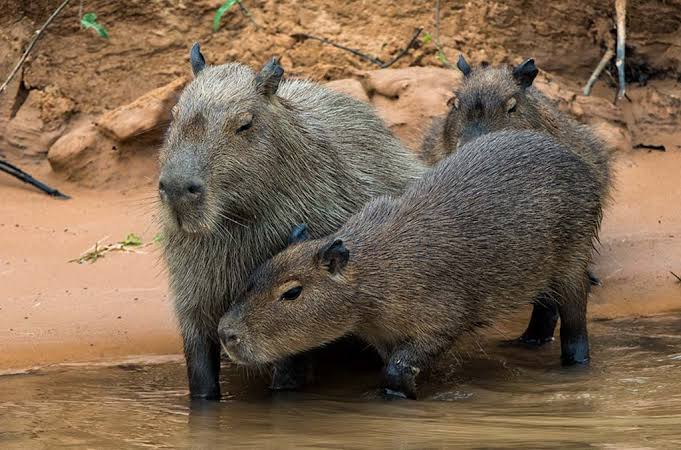
2. Capybara (Hydrochoerus hydrochaeris)
The capybara, the world’s largest rodent, is a common sight in Manu National Park. These social animals are
typically found in groups near rivers and lakes, where they feed on grasses and aquatic plants. Their calm demeanor
and impressive swimming abilities make them a favorite for wildlife watchers.
3. Amazonian Tapir (Tapirus terrestris)
The tapir is a large, herbivorous mammal with a distinctive trunk-like nose. Known for its excellent swimming skills,
the tapir is an essential part of Manu’s ecosystem, feeding on vegetation and spreading seeds throughout the rainforest.
4. Ocelot (Leopardus pardalis)
The ocelot is a small, spotted cat that is often mistaken for a jaguar at first glance. Although it’s elusive, the ocelot
is frequently spotted in Manu’s dense forests, where it hunts small mammals, birds, and reptiles.
5. White-Lipped Peccary (Tayassu pecari)
The white-lipped peccary is a social wild pig found in the forests of Manu National Park. These animals live in large,
organized groups and have an omnivorous diet, which includes fruits, roots, and small animals.
6. Giant River Otter (Pteronura brasiliensis) Most Common Mammals Manu Park
The giant river otter is a social, endangered species that thrives in the waterways of Manu National Park. Known for
their playful behavior and strong swimming abilities, these otters are often seen in family groups hunting fish and
other aquatic prey.
7. Spectacled Bear (Tremarctos ornatus)
The spectacled bear, also known as the Andean bear, is the only bear species native to South America. While
primarily found in the Andes, they can also be spotted in the cloud forests of Manu National Park.
8. Jaguarundi (Herpailurus yagouaroundi)
Also known as the otter cat, the jaguarundi is a small, agile feline found in various habitats across the park. It is a
solitary animal with a versatile diet, preying on small mammals, birds, and reptiles.
Manu’s Unique Ecosystems: A Biodiversity Paradise
Manu National Park spans over 1.7 million hectares, offering a wide range of ecosystems that support diverse wildlife.
The park’s varied terrain includes cloud forests, lowland rainforests, and the Amazon Basin, each with its
unique flora and fauna.
Flora: With over 4,000 plant species, Manu boasts some of the highest levels of plant diversity in the world. A single
hectare can contain as many as 250 tree species, creating a complex and vibrant ecosystem that sustains the park’s
incredible wildlife amazon .
Fauna: In addition to its mammals, Manu is home to over 1,000 bird species, including the iconic macaws and
toucans. The park’s insect diversity is also astounding, with millions of individual insects, including over 1,300
butterfly species.
Conservation Efforts and Sustainable Tourism – Most Common Mammals Manu Park
Manu National Park has earned recognition for its commitment to conservation. As a UNESCO Natural Heritage Site and a Biosphere Reserve, it plays a crucial role in protecting the Amazon’s biodiversity. Sustainable tourism is
encouraged, allowing visitors to experience the park’s wonders while ensuring the continued protection of its ecosystems and indigenous communities.
Tourists can explore the park’s diverse habitats through carefully curated routes, such as the Salvador, Otorongo, and
Juárez cochas, which offer a chance to observe species like the giant river otter and black caiman. Manu’s pristine
environment provides a rare opportunity to witness animals in their natural habitats, from the dense rainforests to the tranquil riverbanks.
Why Visit Manu National Park?
Manu National Park is a must-visit destination for nature lovers, wildlife photographers, and adventurers. Whether
you’re hoping to spot a jaguar on the prowl, photograph the stunning macaws, or simply immerse yourself in the rich
biodiversity of the Peruvian Amazon, Manu offers an unforgettable experience.
The park’s combination of ecological diversity, rare species, and conservation efforts make it an essential destination
for anyone interested in the natural world. Visit Manu National Park, and step into one of the most biodiverse places on Earth.