Full 1
MANU TOURS
MANU TOUR ZONE RESERVED 4 DAYS
Full 1
previous arrow
next arrow
Shadow

Most Common Mammals Manu Park

The Most Common Mammals in Manu National Park: A Wildlife Haven in Peru

  Most Common Mammals Manu Park in Peru is a biodiversity hotspot, renowned for its incredible array of wildlife and its commitment to conservation. Located in the heart of the Peruvian Amazon, Manu is home to an extensive variety of mammals, birds, and other wildlife species, many of which are endemic to the region. The park plays a crucial role in preserving some of the world’s most endangered species, offering a glimpse into the heart of an untouched ecosystem.

The Purús-Manu Conservation Corridor: A Hub of Biodiversity -Most Common Mammals Manu Park

One of the key features of Manu National Park is its location within the Purús-Manu Conservation Corridor, a region recognized for its rich biodiversity. This corridor spans vast areas of pristine rainforest, providing critical habitats for many species, including some that are on the brink of extinction.

The area is so ecologically significant that researchers have discovered ancient fossils in the river sediments, some dating back to the Miocene era, shedding light on the region’s long evolutionary history.

In addition to its wildlife, the Purús-Manu Corridor is a cultural treasure, preserving the way of life of indigenous communities while promoting sustainable tourism that benefits both nature and people.

Exploring the Most Common Mammals of Manu National Park

Manu National Park is home to a variety of iconic mammal species, many of which are unique to the Amazon rainforest. Here are some of the most common mammals found in this incredible park:

1. Jaguar (Panthera onca)
The jaguar is the largest cat in the Americas and a key predator in the Amazon ecosystem. Known for its distinctive rosette-patterned coat, the jaguar is elusive and powerful, capable of taking down prey as large as tapirs and caimans.

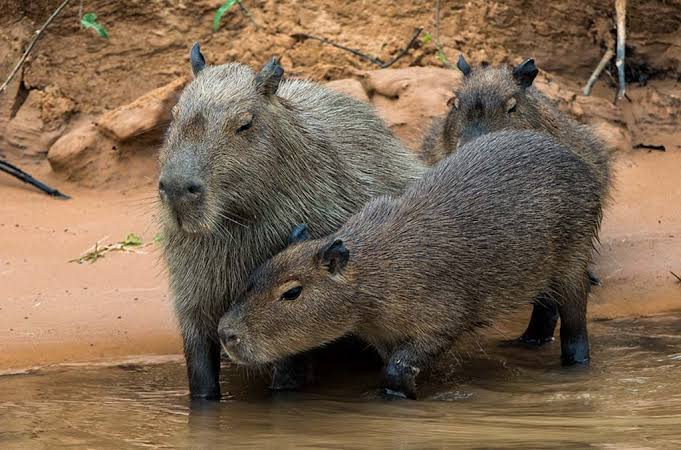
2. Capybara (Hydrochoerus hydrochaeris)

The capybara, the world’s largest rodent, is a common sight in Manu National Park. These social animals are

typically found in groups near rivers and lakes, where they feed on grasses and aquatic plants. Their calm demeanor

and impressive swimming abilities make them a favorite for wildlife watchers.

3. Amazonian Tapir (Tapirus terrestris)

The tapir is a large, herbivorous mammal with a distinctive trunk-like nose. Known for its excellent swimming skills,

the tapir is an essential part of Manu’s ecosystem, feeding on vegetation and spreading seeds throughout the rainforest.

4. Ocelot (Leopardus pardalis)

The ocelot is a small, spotted cat that is often mistaken for a jaguar at first glance. Although it’s elusive, the ocelot

is frequently spotted in Manu’s dense forests, where it hunts small mammals, birds, and reptiles.

5. White-Lipped Peccary (Tayassu pecari)

The white-lipped peccary is a social wild pig found in the forests of Manu National Park. These animals live in large,

organized groups and have an omnivorous diet, which includes fruits, roots, and small animals.

6. Giant River Otter (Pteronura brasiliensis) Most Common Mammals Manu Park

The giant river otter is a social, endangered species that thrives in the waterways of Manu National Park. Known for

their playful behavior and strong swimming abilities, these otters are often seen in family groups hunting fish and

other aquatic prey.

7. Spectacled Bear (Tremarctos ornatus)

The spectacled bear, also known as the Andean bear, is the only bear species native to South America. While

primarily found in the Andes, they can also be spotted in the cloud forests of Manu National Park.

8. Jaguarundi (Herpailurus yagouaroundi)

Also known as the otter cat, the jaguarundi is a small, agile feline found in various habitats across the park. It is a

solitary animal with a versatile diet, preying on small mammals, birds, and reptiles.

Manu’s Unique Ecosystems: A Biodiversity Paradise

Manu National Park spans over 1.7 million hectares, offering a wide range of ecosystems that support diverse wildlife.

The park’s varied terrain includes cloud forests, lowland rainforests, and the Amazon Basin, each with its

unique flora and fauna.

Flora: With over 4,000 plant species, Manu boasts some of the highest levels of plant diversity in the world. A single

hectare can contain as many as 250 tree species, creating a complex and vibrant ecosystem that sustains the park’s

incredible wildlife amazon .

Fauna: In addition to its mammals, Manu is home to over 1,000 bird species, including the iconic macaws and

toucans. The park’s insect diversity is also astounding, with millions of individual insects, including over 1,300

butterfly species.

Conservation Efforts and Sustainable Tourism – Most Common Mammals Manu Park

Manu National Park has earned recognition for its commitment to conservation. As a UNESCO Natural Heritage Site and a Biosphere Reserve, it plays a crucial role in protecting the Amazon’s biodiversity. Sustainable tourism is

encouraged, allowing visitors to experience the park’s wonders while ensuring the continued protection of its ecosystems and indigenous communities.

Tourists can explore the park’s diverse habitats through carefully curated routes, such as the Salvador, Otorongo, and

Juárez cochas, which offer a chance to observe species like the giant river otter and black caiman. Manu’s pristine

environment provides a rare opportunity to witness animals in their natural habitats, from the dense rainforests to the tranquil riverbanks.

Why Visit Manu National Park?

Manu National Park is a must-visit destination for nature lovers, wildlife photographers, and adventurers. Whether

you’re hoping to spot a jaguar on the prowl, photograph the stunning macaws, or simply immerse yourself in the rich

biodiversity of the Peruvian Amazon, Manu offers an unforgettable experience.

The park’s combination of ecological diversity, rare species, and conservation efforts make it an essential destination

for anyone interested in the natural world. Visit Manu National Park, and step into one of the most biodiverse places on Earth.
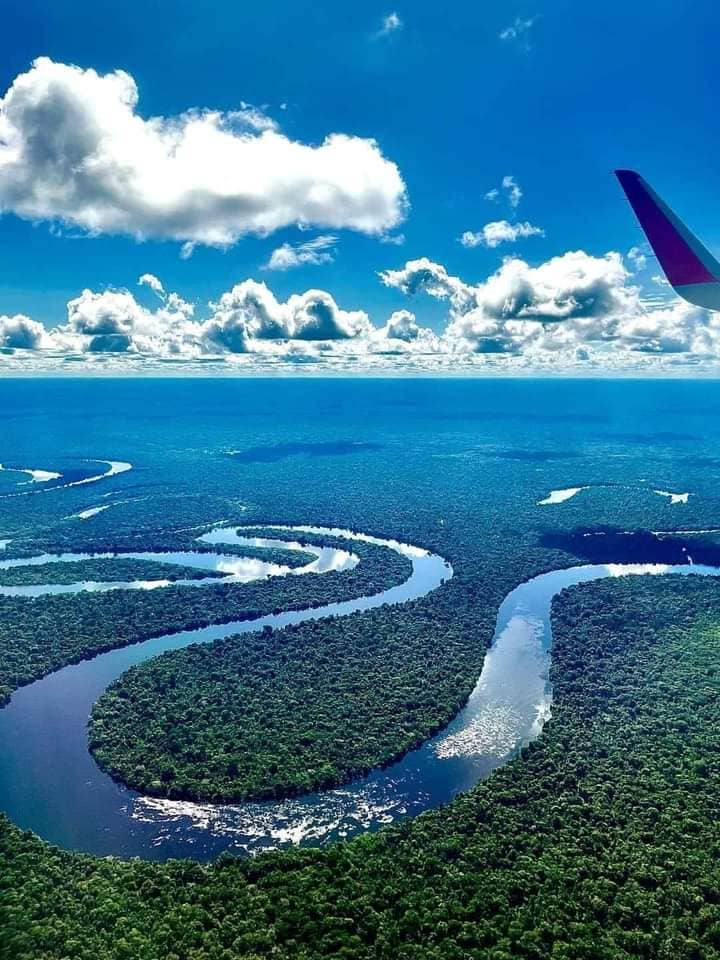
 

The Peruvian Island Titicaca Lake

The Peruvian Island Titicaca Lake

The Peruvian Island Titicaca Lake: Discover the Hidden Treasures of Lake Titicaca and the Peruvian Coast

Peru not only dazzles with its mountains and millennia-old history, but also with its unique islands, where ancestral culture and nature coexist in perfect harmony. From the magical floating islands of Lake Titicaca to marine reserves teeming with life along the Pacific coast, these destinations offer authentic, sustainable, and unforgettable experiences for any traveler. Amazon Tour Peru 

If you’re looking for cultural tourism, local experiences, and extraordinary landscapes, this journey through Peru’s main islands will amaze you.

 The Peruvian Island Titicaca Lake: Living Culture at Over 3,800 Meters Above Sea Level

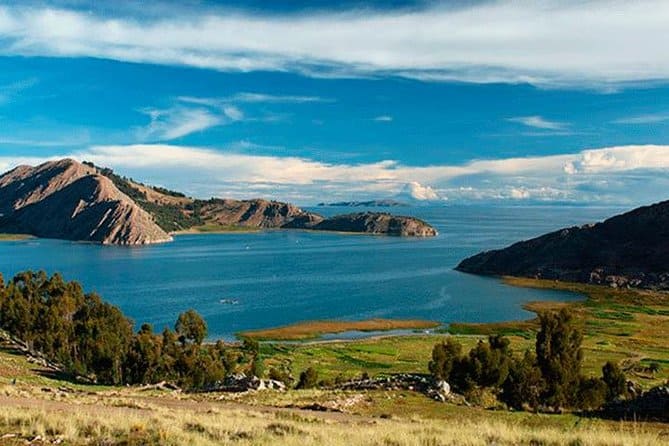
Located between Peru and Bolivia, Lake Titicaca is home to some of the most fascinating islands in South America. Here, communities preserve traditions that have endured for centuries.

 Uros Floating Islands

The Uros Islands are one of Peru’s most iconic destinations. They consist of more than 40 artificial islands built entirely from totora reeds, an aquatic plant that grows in the lake.

The inhabitants use totora not only to create the island floors, but also their homes, boats, and even watchtowers. Visiting this place means stepping into a way of life unlike any other in the world.

Things to do:

Sail on traditional totora reed boats
Learn about the community’s daily life
Discover ancestral construction techniques

The Peruvian Island Titicaca Lake &Taquile Island: Textile Tradition Recognized by UNESCO

Taquile Island is famous for its extraordinary textile tradition, recognized as Intangible Cultural Heritage by UNESCO. Here, men knit fine garments that reflect their marital status and cultural identity.

What stands out most is the lifestyle: there are no cars, conventional hotels, or urban noise, making it a perfect destination to disconnect.

Highlights:

Hikes with panoramic lake views
Cultural exchange with local communities
Purchase of high-quality handmade textiles

 Amantaní Island: Experiential Tourism and Spiritual Connection

Known as the “Island of Love,” Amantaní is ideal for those seeking a deeper experience. Its two sacred mountains, Pachamama and Pachata, offer spectacular sunset views over the lake.

Tourism here is community-based: visitors stay in family homes, share traditional meals, and participate in local activities. Tour cusco 

Must-do activities:

Stay with local families
Hike to pre-Inca temples
Enjoy cultural nights with music and dance

  The Peruvian Island Titicaca Lake & Suasi Island: Nature and Total Tranquility

Less known but equally impressive, Suasi is a private island focused on eco-tourism. It’s perfect for those seeking peace, nature, and complete disconnection.

Ideal for:

Birdwatching
Silent hikes
Sustainable tourism experiences

Peruvian Coastal Islands: Biodiversity and Adventure

Beyond the Andes, Peru’s coast is also home to fascinating islands full of marine life.

 Palomino Islands (Callao)

Located near Lima, these islands are part of a natural reserve inhabited by thousands of sea lions. It’s one of the few places where you can swim alongside them in their natural habitat.

Unique experience:

Boat tour from Callao
Swimming with sea lions
Birdwatching

Foca Island: A Hidden Paradise in the North -The Peruvian Island Titicaca Lake .

In northern Peru, Foca Island stands out for its biodiversity. Here you can find Humboldt penguins,  birds, and a wide variety of marine species.

Perfect for:

Ecotourism
Nature photography
Off-the-beaten-path exploration

Useful Information for Travelers – The Peruvian Island Titicaca Lake .

 How to get there:
Most tours to Lake Titicaca depart from the city of Puno, easily accessible from Cusco or Juliaca.

Where to stay:

Amantaní: family homes (experiential tourism)
Puno: hotels for all budgets

 What to do:

Traditional fishing
Local farming
Participation in ancestral rituals and customs

 Why Visit the Islands of Peru?

Traveling to these islands is not just tourism—it’s an authentic life experience. Here you can:

  •  Connect with ancestral cultures
  •  Support sustainable tourism
  •  Discover unique landscapes in the world
  •  Step off the traditional tourist routes

Adventure Route Manu Park

Adventure Route Manu Park

Amazon Get to know the Route of the Manu National Park.

The Adventure Route Manu Park Ninamarca means town of fire in the Queshua language, nina means fire and marka means place or town.
This importance could be due to the fact that, especially during winter, people can see small bonfires burning on the ground from a distance.
The traditional belief is that these fires mark the hiding places of the Inca treasure. In Ninamarka there are chullpas or beautifully carved pre-Inca stone funerary towers.
Possibly important people were buried in these tombs, such as local chiefs or priests. These are remnants of the kingdom of Lupaca, whose center was just north of Lake Titicaca.
Both the Incas and the Lupacas were masters in the cultivation of the different ecological zones offered by the Andes Mountains. Unfortunately, there are no archaeological studies that analyze Ninamarka.

Entrance to the Manu Acjanaco Park – Adventure Route Manu Park

Acjanaco is located at the beginning of the Manu Biosphere Reserve on its route, and is also the southernmost part of the Reserve. Acjanaco is at an altitude of 3200 meters.
The path to your left leads to the Tress Cruces viewpoint, famous for its spectacular sunrise, which can only be seen in Acjanaco and in Japan.
The best time to see it is during July and August. During the rest of the year, the area is usually too cloudy.
The clouds form due to moisture rising from Thunor on the jungle side of the mountains.
The Incas used to observe the summer and winter solstices from Tress Cruces. From this natural platform they also contemplated the immense expanse of the Amazon jungle.
That view was the eastern limit of his known world. On the east side you can see the highest mountain in the Biosphere, the mountain “Apu Kanahuay” with its 4050 meters of altitude.
The translation of “Apu Kanahuay” from Queshua is “he who is close to God”.
Driving from Acjanaco, the treeless alpine wasteland at high altitudes begins to change into a strange goblin forest.
Upon reaching lower altitudes, the pixie forest changes to a mysterious cloud forest, before reaching the tropical jungle.

THE VALLEY OF KNOSNIPATA  .Adventure Route Manu Park

Known as Knosnipata in Queshua, this valley is located at 900 meters, 3,000 feet elevation. It has been inhabited for many decades.
First came opportunists and missionaries, but more recently the settlers have been landless peasants from the highlands, especially from Puno.
The gravel floor is poor and unforgiving. Millennia of torrential rains have washed away all natural fertility.
Despite this, the inhabitants of the valley still cultivate crops (rice, cassava, coca, plantains, other types of fruits), as they have done for decades.
There are three main settlements in the valley: Chontachaca, Patria, and Pilcopata. However, the Knosnipata Valley has been losing population in the last two decades due to depletion of soil and stocks of exploitable timber.

MANU NATIONAL PARK – ALTO MADRE DE DIOS –

Large open walls on the river side are visible shortly after leaving the port of Atalaya. Take a closer look and you can see three different layers on the wall.
The lower reddish colored land is the ancient seabed. This is from millions of years ago when the Amazon Basin was an inland sea.
Above this is a layer of large stones, which is the old bottom of the river. Above that is the actual soil layer.
The Alto Madre de Dios River extends about 150 km in length. It obtains its water from the snowy Pucará mountain in the southeast of Paucartambo.
Smaller rivers such as Pilcopata and Piñi Piñi and Tono form the Alto Madre de Dios, which is later joined by the Manu River.
This then forms the Madre de Dios River. This water then joins the Beni River in Bolivia and forms the Madeira River in Brazil, eventually flowing into the Amazon Manu Park .

MANU NATIONAL PARK – BOCA MANU

The small town of Boca Manu (La Boca del Manu) is the capital of the Fitzcarrald District. It is located at the junction of the Alto Madre de Dios and Manu rivers.
It is here that the dark brown, sediment-laden waters of the Manu River meet the clearer waters of the Alto Madre de Dios River.
Alto Madre de Dios is clearer because its origins are high in the Andes.
The creators of Manu:
Celestino Kalinowski was a naturalist by vocation and heritage. His dream was the establishment of a natural museum in Manu.
His great concern was to preserve this area from human depredation. He visited Felipe Benavides, president of National Parks, to tell him about the need to close the path to loggers, hunters, and prospectors

In May 1973, the Manu National Park Reserve was declared. Since 1977 the park enjoys the status of Biosphere Reserve, granted by

UNESCO.

In 1887 John Kalinowski came to Peru to investigate the jungle of Madre de Dios. The discovery of valuable specimens for our fauna and rich in our flora is due to him.
The world began to learn about the great diversity and lost interest in those areas of southeastern Peru. Some species even adopted the name of its discoverer, such as Dasyprocta – Kalinowski.
His son, Celestino Kalinowski Villamonte, inherited his vision and passion for the intricate foliage of the Peruvian jungle,
precisely because those enigmatic territories kept the great Païtiti, the longed-for lost city of the Incas, for myth and mystery.
Such was the concern of Celestino Kalinowski Manu, who in 1964 visited Felipe Benavides Barreda, then president and Zonal of National Parks,
to warn of the need to close the way to loggers, hunters and gold prospectors.
He feared that the beautiful confluence of rivers and forests would be at the mercy of humans. In a letter he suggested that the Manu Reserved Zone be declared.
Benavides sought out British naturalist Ian Grimwood, who undertook Alinowski a scientific expedition in 1967, this could show evidence of growing dangers and great natural wealth.
Based on the data collected and under the draft reports, it was possible to support the character of a natural reserve.
This effort paid off with the recognition of the Manu River Basin Reserved Zone in 1968. In May 1973, the reserve was declared a National Park. In that area, flora and fauna have enjoyed full support ever since. Since 1977, the park has the status of Biosphere Reserve, granted by UNESCO.
Ten years after being declared a World Heritage Site, Peru became a symbol in the world. What Manu is, has its origin in the inspiration and effort of a few enthusiasts and lovers of nature.

RAINFOREST TO AMAZON ROUTE PARQUE MANU .

A MODEST MAN. The British Ian Grimwood Kalinowski said that he was simple and a born naturalist.
NATURAL WEALTH. Protected area thanks to the efforts of some nature lovers like Kalinowski and Benavides.
FELIPE BARREDA BENAVIDES. It was a permanent fight for the care of the environment of nature.
The Undefeated Jungle – Manu National Park:
The oldest evidence of Manu dates from 1,750 years before Christ and belongs to the Arahuac.
Neither the Incas nor the Spanish dominated this territory, which was associated with Paititi and would suffer the depredation of rubber tappers and loggers.
the Manu, the mystery is a primal instinct. The origin of its inhabitants is lost among jaguars, warrior ants and legends of floods, blood and gold.
The oldest archaeological evidence is remains of cassava and avocado, cultivated between 1750 and 1000 BC by the Arahuac, who are the mythical ancestors of the current Manu ethnic groups (especially the Matsiguengas).
The great French anthropologist Alfred Métraux vindicated them: “The role of the Arahuac in the development
of civilization in South America has been considerable. Unfortunately, in the absence of synthetic works, it is difficult to appreciate this civilizing effort”.
And they were the mediators in the exchange of products and divinities between the hidden jungle and the mountains.

The Ultimate Guide: From Cusco to Manu National Park

Embarking on the journey from Cusco to Manu National Park is nothing short of extraordinary. This route unveils Peru’s awe-inspiring landscapes, transitioning from majestic high mountain passes to the enchanting lush rainforests of the Amazon. Prepare for a transformative adventure, but remember: acclimating to Cusco’s altitude before departure is crucial.

Adventure Route Manu Park-  Immerse Yourself in Biodiversity

Manu National Park, a UNESCO World Heritage Site, is one of the world’s most biodiverse regions. Home to over 1,000 bird species, hundreds of mammals, and countless plants and insects, this park promises unforgettable encounters with nature. Don’t forget your camera to capture iconic species like jaguars, tapirs, and playful monkeys in their natural habitat.

Cultural Experiences Along the Journey -Adventure Route Manu Park

The path to Manu offers more than scenic beauty; it provides unique cultural encounters. As you pass through charming local communities, immerse yourself in the traditions and daily lives of the people. These interactions offer a rich tapestry of Peruvian heritage, fostering a deeper connection with the region. Remember, showing respect for local cultures enhances your travel experience.

Essential Travel Tips for a Smooth Journey

  • Stay Hydrated: Combat the Amazon’s humidity with plenty of water.
  • Respect Wildlife: Admire animals from a distance to keep both you and them safe.
  • Hire a Local Guide: Their expertise enriches your journey and provides valuable insights into the park’s ecology.

Why Choose a Guided Tour -Adventure Route Manu Park

Opting for a guided tour from Cusco to Manu ensures a hassle-free experience. Professional tour operators handle logistics, including transportation and accommodations. Knowledgeable guides provide fascinating context about the park’s history and biodiversity while helping you spot elusive wildlife. They also prioritize safety and environmental conservation, ensuring your visit leaves a positive impact.

Navigating the Majestic Madre de Dios River

The Madre de Dios River is more than just a passageway; it’s a lifeline for the Amazon’s ecosystems. Its winding path teems with diverse wildlife, making it a highlight of any trip. Glide through its serene waters and witness the extraordinary interconnectedness of this vibrant environment.

Travel Responsibly: Safety and Conservation

Choosing eco-conscious tour operators helps protect Manu National Park for future generations. Responsible travel includes minimizing environmental footprints and adhering to park guidelines. Always follow your guide’s advice to ensure both personal safety and environmental preservation.

Connecting with Nature: Journey from Cusco to Manu

Embarking on the journey from Cusco to Manu is much more than travel—it’s a transformative experience that reconnects you with the raw beauty of nature. Along the way, you’ll witness the incredible biodiversity of one of the most diverse ecosystems on the planet and gain a renewed appreciation for conservation.

Whether you’re an avid nature enthusiast or just beginning your exploration of the natural world, this trip offers countless unforgettable moments. From towering Andean peaks to the lush green expanses of the Amazon, the route to Manu promises the adventure of a lifetime.


Videos Manu Amazon Jungle

Videos Manu Amazon Jungle

These Videos Manu Amazon Jungle have been carefully edited to capture the natural and authentic essence of our tour, an experience designed especially for you, our valued client. Through them, we invite you to explore breathtaking landscapes, fascinating wildlife, and unique moments that you can only experience with us.

Each scene reflects not only the beauty of the surroundings but also our commitment to providing an unforgettable journey that deeply connects with nature and local cultures

Peruvian Amazonia  .

  Videos Manu Amazon Jungle  of Manu National park Reserve is located in the  River basin, as is Cocha Salvador,

Cocha Otorongo, which is the most visited this videos  manu amazon jungle . Among these regions is located

– Cusco and Madre de Dios.  The  Reserve, This natural area is highly protected because it houses a great biodiversity

of species that is the only one on this planet.  Because this area has different ecological levels and

forests such as the low jungle and high jungle, lakes, lagoons, oxbow lakes, primary forests, secondary forests, virgin

forests, tropical forests, purmas,  aguajales, etc . They are very rich in nutrients that give a lot of life. to these

species that live in this natural area, as endemic species were found and not recorded because they are

studying the behavior of thousands and different species – Amazon Jungle

as we can mention some. at least 2,000 to 5,000 species; and some are in extinction the fauna and flora of the

Peruvian Amazonia is very important for humanity because this magical jungle, rainforest, wild, , fauna, Explorer,

wildlife peruvian amzon gives a lot of life. They are very well known by this name in the wild World.

They are videos

of the Peruvian jungle such as the cultural zone of  the reserve zone are 2 places rich in wild flora and fauna

there you can see the videos made by our clients who visited this paradise of flora and fauna of Peruvian.

OF SPECIES OF BIRDS OF PERUVIAN –  Manu Amazon Jungle

(O’Neill 1992), over 35% of amphibian species (Tovar 2010), 41% of mammals (Pacheco et al. 2009) and more than

3000 species of vascular plants (YOUNG AND LION 1999 2001). : It is also worth noting that these numbers are

only approximate because the Yungas are biologically very unexplored territory where each basin can present

particular species. The PNBS and its importance as protected area The PNBS plays a role in conservation at several

levels: within Puno and Madre de Dios regions nationwide as part of the National System of Protected Natural travel

Areas by the State and globally as part of the conservation corridor Vilcabamba -Amboró. Nationally, it is

clear that part of the importance of PNBS lies in the great biological diversity that remains. Being part of the

Convention on Biological Diversity, signed at the Earth Summit of 1992, Peru recognizes the importance of

preserving to ensure sustainable development. The protected areas play a key role in fulfilling the National Strategy

on Biological Diversity, which responds to the president before quoted, character and PNBS agreement as

protected area plays an important role within that concept. As part of the National System of Protected Natural


Videos  Manu National Park/ Amazon Jungle

Areas by the State, whose governing body is the Service National Protected Natural Areas by the State The PNBS and

its importance as naturalprotegida area


Amazon Explorer – Pusharo Petroglyphs 5 days

5-Day Expedition to the Pusharo Petroglyphs from Cusco

  Amazon Explorer – Pusharo Petroglyphs : Embark on an extraordinary expedition from Cusco into the Peruvian Amazon and discover some of the most remarkable natural and cultural landscapes in southern Peru.

Over five days, we will travel across the Andes, cloud forest, and Amazon rainforest before reaching the Palotoa–Teparo Native Community, the cultural territory of the Matsigenka people. From

there, we will begin our expedition to the Pusharo Petroglyphs, one of the most enigmatic collections of rock art in this region.

The journey combines nature, wildlife observation, Amazonian river navigation, cultural experiences, and archaeological exploration, while always promoting respect for cultural heritage and local

communities.

Day 1: Cusco – Ninamarca – Paucartambo – Cloud Forest – Pilcopata

Our adventure begins at approximately 6:00 a.m. in the city of Cusco, traveling by private transportation toward the Amazonian slopes of the Andes.

Along the way, we will make our first stop to visit the pre-Hispanic funerary structures, or chullpas, of Ninamarca before continuing to the traditional town of Paucartambo.

After crossing this Andean region, we will ascend toward Acjanaco, one of the highest points on our route, at approximately 3,900 meters (12,795 feet) above sea level. From here, we will begin our

descent into the spectacular cloud forest.

This ecosystem is characterized by high humidity, abundant vegetation, and extraordinary floral diversity. During the journey, we may observe orchids, ferns, bromeliads, and other species typical of

this environment.

After lunch, we will continue with birdwatching and wildlife observation. Depending on the conditions and the luck of the day, we may encounter species such as trogons, quetzals, the Andean cock-

of-the-rock, Andean motmots, and different species of monkeys.

With some luck, we may also encounter one of the cloud forest’s emblematic species, the spectacled bear.

In the afternoon, we will arrive at our lodge, where we will have time to rest and enjoy the surrounding natural environment.

Overnight: Lodge in Pilcopata.

Day 2: Pilcopata – Atalaya – Machuhuasi Lake – Palotoa–Teparo

After breakfast, we will continue by road toward Atalaya, where we will leave our land transportation and continue the expedition by river.

During the journey, we will observe the gradual transformation of the landscape as we move from the cloud forest into the lowland Amazon rainforest.

From Atalaya, we will navigate the Alto Madre de Dios River toward our next exploration point. One of the main activities will be a visit to Machuhuasi Lake, where we will take a raft excursion to

observe the surrounding wildlife and vegetation.

This environment is ideal for birdwatching and observing other Amazonian wildlife. Species we may encounter include hoatzins, herons, toucans, caimans, and different species of monkeys.

After lunch, we will continue navigating toward the relevant checkpoint before entering the area of our expedition.

We will then board a local boat and continue along the Teparo River toward the Palotoa–Teparo Native Community, which is culturally connected to the Matsigenka people.

Our arrival at the community will allow us to experience a territory where nature, culture, and traditional activities maintain a close relationship.

At night, we will take a guided nocturnal walk through the rainforest, always accompanied by our guides and following the safety and conservation conditions established for the area.

Overnight: Palotoa–Teparo Native Community.

Day 3: Palotoa–Teparo – Expedition to the Pusharo Petroglyphs

This will be one of the most important days of our expedition.

We will start very early and continue along the Teparo River aboard a small boat. Due to the characteristics and water levels of the river, certain sections may require us to walk, help carry or move

the boat, or travel through shallow stretches.

Our journey will take us toward the area known as Pongo de Megantoni, in the surroundings where the Pusharo Petroglyphs are located.

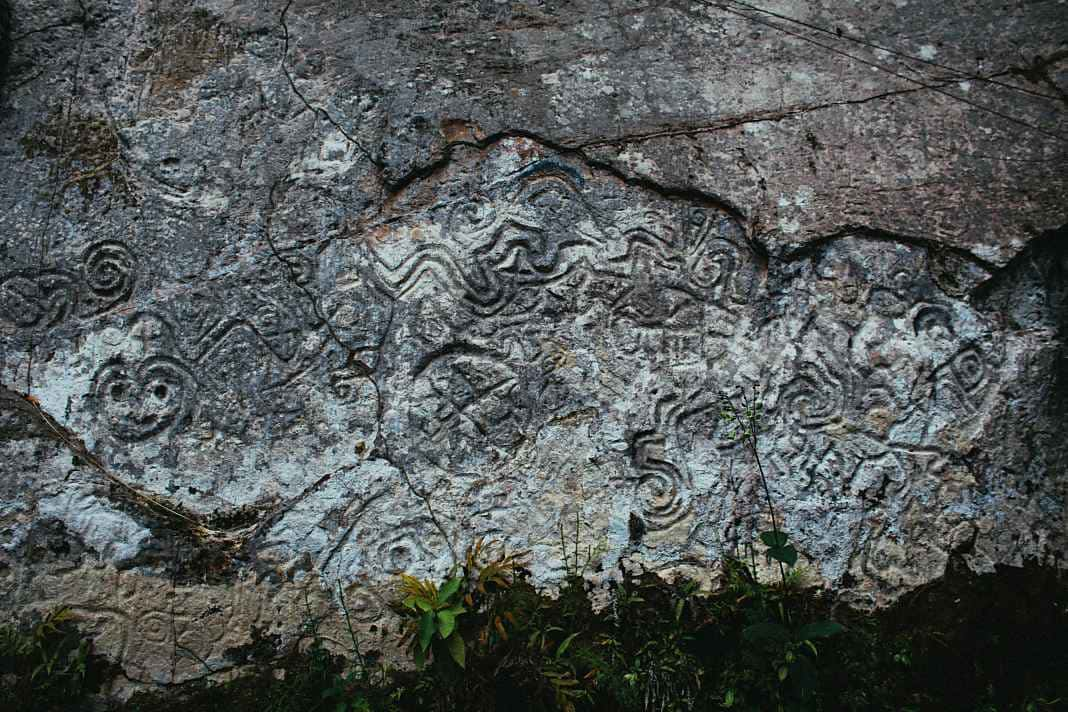
Upon arrival, we will begin exploring the rock art site. The representations carved into the rock surfaces are among the most striking cultural features of this part of the Amazon.

Pusharo is also surrounded by stories, interpretations, and traditions that connect the site with ancient territories, sacred places, and Amazonian legends. Some popular narratives have associated

the area with Paititi or with the search for lost ancient cities. These references form part of the traditions and cultural imagination associated with the region and should not be confused with

conclusive archaeological evidence. Bird of Peru

For the Palotoa–Teparo Native Community, Pusharo also holds cultural significance connected to the territory of their ancestors and to knowledge passed down through generations.

During our visit, we will learn about the cultural importance of the site and the need to preserve the petroglyphs by avoiding any contact with, alteration of, or damage to the carved surfaces.

At the end of the day, we will set up our camp at an authorized location near the river.

Overnight: Jungle campsite.

Day 4: Pusharo Petroglyphs – Palotoa–Teparo

After breakfast, we will continue exploring the surroundings of Pusharo and its rock art.

Our guides will help us understand the characteristics of the landscape, its biodiversity, and the cultural context of the petroglyphs, distinguishing observable evidence from traditional interpretations and stories associated with the site.

The experience will also allow us to appreciate the primary rainforest and the diversity of species that inhabit this part of the Amazon.

We will then begin our return journey to the Palotoa–Teparo Native Community by boat.

Depending on river conditions and the safety regulations established for the expedition, we may participate in recreational activities such as wildlife observation, traditional fishing, or simply enjoy

selected areas along the river.

The day will end back at the community, where we will have time to rest and share our experiences from the expedition.

Overnight: Palotoa–Teparo Native Community.

Day 5: Palotoa–Teparo – Parrot Clay Lick – Atalaya – Cusco

We will wake up early to visit a parrot clay lick, where we will have the opportunity to observe different species of parrots and parakeets that gather at these sites to consume minerals found in the soil.

The activity will depend on natural conditions and the presence of birds at the time of the visit.

After breakfast, we will begin our return journey to Atalaya, where we will continue by road toward Cusco.

Along the way, we will make necessary stops to rest and, when conditions allow, observe the landscape and wildlife along the route.

We expect to arrive in the city of Cusco at approximately 7:00 p.m., although the schedule may vary depending on road conditions, weather, and the development of the activities.

This marks the end of our five-day expedition through the Andes and the Peruvian Amazon, an experience that combines nature, Matsigenka culture, wildlife observation, and exploration of the

Pusharo Petroglyphs.  MANU  NATIONAL PARK,

Tarjetas y métodos de pago aceptados - Visa, MasterCard, PayPal